


Futures
Hundreds of contracts settled in USDT or BTC
TradFi
Gold
Trade global traditional assets with USDT in one place
Options
Hot
Trade European-style vanilla options
Unified Account
Maximize your capital efficiency
Demo Trading
Futures Kickoff
Get prepared for your futures trading
Futures Events
Participate in events to win generous rewards
Demo Trading
Use virtual funds to experience risk-free trading
Launch
CandyDrop
Collect candies to earn airdrops
Launchpool
Quick staking, earn potential new tokens
HODLer Airdrop
Hold GT and get massive airdrops for free
Launchpad
Be early to the next big token project
Alpha Points
Trade on-chain assets and enjoy airdrop rewards!
Futures Points
Earn futures points and claim airdrop rewards
Investment
Simple Earn
Earn interests with idle tokens
Auto-Invest
Auto-invest on a regular basis
Dual Investment
Buy low and sell high to take profits from price fluctuations
Soft Staking
Earn rewards with flexible staking
Crypto Loan
0 Fees
Pledge one crypto to borrow another
Lending Center
One-stop lending hub
VIP Wealth Hub
Customized wealth management empowers your assets growth
Private Wealth Management
Customized asset management to grow your digital assets
Quant Fund
Top asset management team helps you profit without hassle
Staking
Stake cryptos to earn in PoS products
Smart Leverage
New
No forced liquidation before maturity, worry-free leveraged gains
GUSD Minting
Use USDT/USDC to mint GUSD for treasury-level yields






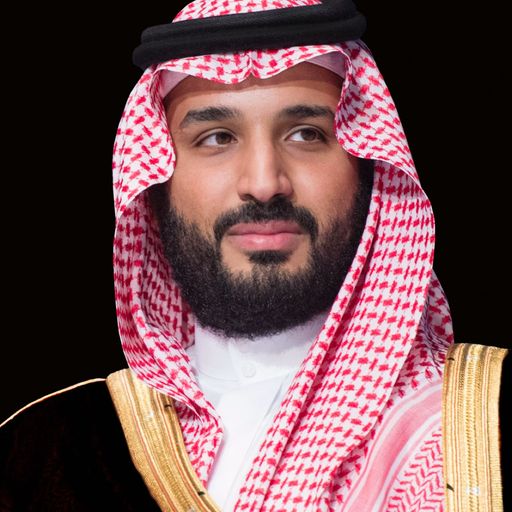
From Tom Perkins' Legacy to Mamoon Hamid's Revival: How Kleiner Perkins Staged an Improbable Comeback
When Mamoon Hamid announced his move to Kleiner Perkins in the summer of 2017, Silicon Valley erupted in disbelief. Here was a venture capital champion—someone who had helped build Social Capital into one of the region’s most formidable firms through major wins in Box and Slack—walking away from momentum to join what many saw as a dying institution. The parallels to a Hollywood remake of a fading franchise were impossible to miss. Yet beneath the skepticism lay a deeper truth: Hamid wasn’t just chasing a paycheck or a prestigious nameplate. He was drawn to the firm’s DNA, forged by its co-founders Tom Perkins and Eugene Kleiner more than four decades earlier, and refined by John Doerr into a golden standard for Silicon Valley investing. The question wasn’t whether Hamid could save Kleiner Perkins—it was whether the firm’s legendary foundations, built by pioneers like Tom Perkins, could be excavated and refreshed for a new era.
The Architects of an Industry: Tom Perkins and the Birth of Modern Venture Capital
To understand Kleiner Perkins’ journey, one must first grasp how Tom Perkins and Eugene Kleiner reimagined entrepreneurial finance in 1972. That year, they launched their firm during a cultural moment dominated by The Godfather and Atari’s Pong—symbols of bold ambition and technological possibility. Their early bet spoke volumes: a $100,000 investment in Genentech that would eventually return 42 times the original stake. This wasn’t luck; it was a methodology.
Tom Perkins’ vision extended beyond capital deployment. He and his partners—including Frank Caufield and Brook Byers—were building a template for how venture capital should function: deep domain expertise, patient capital, and genuine partnership with founders. When John Doerr joined the firm, the combination became unstoppable. Doerr’s prescient backing of Amazon, Google, Sun Microsystems, and Netscape turned Kleiner Perkins into the architect of the internet economy. According to Sebastian Mallaby’s The Power Law, Kleiner’s portfolio at one point represented a third of the entire internet’s market value.
The era that Tom Perkins inaugurated became the benchmark against which all venture firms would measure themselves.
The Long Decline: How a Titan Lost Its Way
The unraveling began subtly. As the 2000s progressed, John Doerr shifted the firm’s strategic focus to cleantech, betting it would eclipse the internet in transformative impact. Bloom Energy and SolarCity showed promise, but expensive failures like Fisker Automotive and MiaSolé mounted. More damaging than capital losses were the internal tensions: foundational questions about direction, succession, and identity fractured the partnership. Vinod Khosla, whose Juniper Networks investment had been enormously lucrative, departed to start his own shop. Then came Ellen Pao’s high-profile gender discrimination lawsuit—ultimately unsuccessful in court but deeply corrosive to institutional reputation.
By the mid-2010s, Kleiner Perkins resembled a grand old building with a pristine exterior but crumbling foundations. Limited partners approached the firm with hesitation. One institutional investor later recalled seriously considering withdrawal around 2015, held back only by the faint hope that the brand’s historical prestige might kindle a resurrection. Ted Schlein, a longtime partner, crystallized the paradox: “You need a group of partners who consistently make good decisions together, and that’s not easy.”
The machinery that Tom Perkins and his peers had built was sputtering.
The Unexpected Catalyst: Mamoon Hamid’s Contrarian Gambit
Ted Schlein began pursuing Hamid while Hamid still worked at Social Capital. Their meetings at Menlo Park’s Allied Arts Guild were deliberately informal—long conversations focused on philosophy and possibility rather than dealmaking. Schlein had tracked Hamid’s trajectory since his early days at U.S. Venture Partners and saw something that transcended typical investor skill: a rare combination of competitive fire and genuine compassion.
Hamid’s background held clues to his later choices. Raised in Germany and Pakistan in conditions of material scarcity, he learned early that security came only through agency and excellence. A dinner table without enough food became the furnace of his ambition. After immigrating to the United States and earning an engineering degree from Purdue, Hamid pursued only one graduate school: Harvard Business School, following a specific hero and path.
“I studied the backgrounds of John Doerr and Vinod Khosla,” Hamid recalled later. “Both were electrical engineers who worked in semiconductors and then went to business school. My Harvard application essay was literally about wanting to work at Kleiner Perkins and following Doerr’s playbook.” At 24, venture capital wasn’t a generic career choice—it was a deliberate pilgrimage to a specific temple.
That temple had lost its glow by 2017. Yet Hamid saw past the doubt. He promised his wife, Aaliya, an 18-month deadline to move the needle. By all rational measures, he could have raised his own fund or joined an ascendant competitor. Instead, he chose resurrection.
Reimagining Culture: The Systematic Transformation
Upon arrival, Hamid’s first priority was organizational archaeology. He met with everyone—receptionists, executives, support staff—to excavate the firm’s living history and identify systemic friction. He sought a co-conspirator and found one in Ilya Fushman, a former Dropbox executive then at Index Ventures. Fushman had attended grade school in Germany with Hamid’s sister—a small-world connection that carried unexpected weight. Though initially skeptical about joining a faltering institution, Fushman was seduced by the challenge itself: “There aren’t many iconic tech turnarounds, but if we could pull this off, it would be incredible.”
The chemistry between Hamid and Fushman became the engine. Where Hamid brought both toughness and empathy, Fushman brought precision and candor. This complementarity extended to their vision for culture. They introduced firm-wide retreats, demolished the cubicle farm in favor of open collaboration, and established a new north star: to be the first call for founders aspiring to reshape their industries.
Not every transition succeeded. Mary Meeker, a powerful voice in Kleiner’s late-stage practice, clashed with the new leadership and eventually departed to launch Bond Capital. The departure stung but also clarified: Hamid and Fushman were willing to shrink the firm rather than dilute its operating philosophy. Kleiner contracted from ten partners to five, a counterintuitive move in an industry that typically equates growth with success.
New talent emerged: Leigh Marie Braswell, a standout from Scale AI and Founders Fund, brought specialized AI expertise exactly when the market was shifting. The smaller team proved operationally elegant—founders valued the intimacy and responsiveness that fewer decision-makers enabled.
The Proof: Translating Vision Into Venture Returns
The turnaround crystallized around a single deal that would echo through the decade. Hamid, still transitioning from Social Capital, met Dylan Field, Figma’s ambitious founder. While other investors remained skeptical of design tools as a venture-scale business, Hamid grasped the vision immediately. When Hamid moved to Kleiner Perkins, the relationship persisted and deepened.
Kleiner’s $25 million Series B investment in Figma became the symbolic turning point. When Figma IPO’d at a $19.3 billion valuation, Kleiner’s initial stake had multiplied 90 times over—one of the firm’s finest returns and a public demonstration that the revival was real, not theoretical.
The exits that followed came like dominoes falling in the right direction: AppDynamics, Beyond Meat, DoorDash, Nest, Peloton, Pinterest, Slack, Spotify, Twilio, Uber, and UiPath. Since 2018, Kleiner has returned $13 billion to its limited partners—a velocity that silenced even skeptics. The latest AI bets, including investments in OpenEvidence and Harvey, signaled that Hamid and team weren’t merely riding exiting waves but steering toward new opportunities.
Fund-raising reflected the restored confidence. Kleiner has now assembled over $6 billion across multiple vehicles, with the most recent round reportedly exceeding the previous cycle, which included an $825 million early-stage fund and a $1.2 billion thematic opportunity fund. John Doerr remained involved, leveraging his legendary relationships and judgment to close major deals alongside Hamid’s team.
The New Operating System: Speed, Debate, and Founder Centricity
The internal machinery shifted noticeably. The rigid hierarchy that had characterized Kleiner under earlier regimes gave way to a conviction-driven model where partners present and debate deals in real time, making decisions through dialogue rather than formal voting structures. Josh Coyne, a partner since 2017, observed the difference: “We have more room for open debate now. There used to be more hierarchy, but that’s changed.”
The shift reflected a deeper philosophy: venture capital’s value proposition was no longer capital itself—mega-funds had ensured capital was abundant—but rather speed and judgment. In 2018, Kleiner launched a scout program to accelerate deal sourcing and decision cycles. After Meeker’s departure, the firm doubled down on early-stage investment, where agility and founder relationships compounded over time.
Parker Conrad, CEO of Rippling, an enterprise software company backed by Kleiner in 2019, captured the firm’s new essence: “What struck me about KP was the combination of a storied brand and the drive of a startup—nothing was taken for granted.”
Competing Against the Titans: The Lean Firm Thesis
Can a deliberately lean operation hold its own against capital-heavy giants and sovereign wealth funds? Hamid’s answer is philosophically uncompromising: better small and excellent than large and diluted. “We’d rather stay small than risk diluting the brand,” he declared. “Our partners are the face of Kleiner Perkins, and if they don’t represent us well, we’d rather not have them.”
This stance flies against conventional wisdom in an era of mega-funds and mega-rounds. Yet it echoes something Tom Perkins understood in 1972: venture capital is ultimately a personal business, where judgment and relationships generate returns, not operational scale alone.
The institutional investor who had contemplated exiting a decade earlier now described the trajectory differently: “He’s destined for the pantheon. He’s already on Mount Olympus—the only question is where he’ll stand.” The observation carried implicit weight: Mamoon Hamid’s contribution wasn’t restoring a brand but rather extending a lineage that stretched from Tom Perkins through John Doerr and into a new chapter.
The Perpetual Challenge: Staying Paranoid at the Summit
Yet Hamid harbors no illusions about sustainability. The venture industry’s graveyard is filled with firms that peaked, declared victory, and promptly faded. The secret to avoiding that fate, he insists, is institutional paranoia. “You have to stay paranoid. The moment you think you’re on the right track, you risk losing your edge.”
With smaller capital bases and slimmer margins for error than mega-competitors, Kleiner Perkins is betting that nimbleness, founder intimacy, and conviction-driven decision-making will yield outsized returns. Every partner must remain deeply, personally engaged with the next wave of transformative founders. The alternative is slow irrelevance.
Eight years into Hamid’s tenure, Kleiner Perkins has moved from epitaph to resurgence. Whether that trajectory continues will depend on the firm’s ability to retain the intensity that Hamid brought and to extend the DNA that Tom Perkins and his peers encoded into the organization decades ago. The opportunity is undeniable. The execution must be relentless.