


Futures
Access hundreds of perpetual contracts
TradFi
Gold
One platform for global traditional assets
Options
Hot
Trade European-style vanilla options
Unified Account
Maximize your capital efficiency
Demo Trading
Introduction to Futures Trading
Learn the basics of futures trading
Futures Events
Join events to earn rewards
Demo Trading
Use virtual funds to practice risk-free trading
Launch
CandyDrop
Collect candies to earn airdrops
Launchpool
Quick staking, earn potential new tokens
HODLer Airdrop
Hold GT and get massive airdrops for free
Launchpad
Be early to the next big token project
Alpha Points
Trade on-chain assets and earn airdrops
Futures Points
Earn futures points and claim airdrop rewards


More





Economist: Iran War Could Trigger Worst Recession for Gulf Economies Since the 1990s
How does the blockade of the Strait of Hormuz by AI impact the global energy market?
Cailian Press, March 16 (Editor: Xia Junxiong) Economists point out that if the Iran conflict cannot be resolved quickly, major Gulf economies such as Saudi Arabia, the United Arab Emirates, and Qatar will face significant setbacks.
Goldman Sachs economist Farouk Soussa said that if the conflict continues into April, causing a two-month blockade of the Strait of Hormuz, Qatar and Kuwait’s GDP could shrink by 14% this year.
This would be the most severe economic recession for these countries since the early 1990s, when Iraq invaded Kuwait, triggering the Gulf War and causing turmoil in the global oil market.
While Saudi Arabia and the UAE could reroute oil shipments around the Strait of Hormuz, their situations would be relatively better, but their GDPs could still decline by about 3% and 5%, respectively, marking the largest economic impact since the COVID-19 pandemic outbreak in 2020.
“For many Gulf economies, the short-term impact of this war could be greater than that of COVID-19,” Soussa said. “Once the dust settles, they will rebuild and recover, but how deep the scars are left on market confidence remains to be seen.”
Three weeks into the conflict, there are still few signs of easing, with the US and Israel continuing to bomb Iran, while Iran retaliates by attacking neighboring countries.
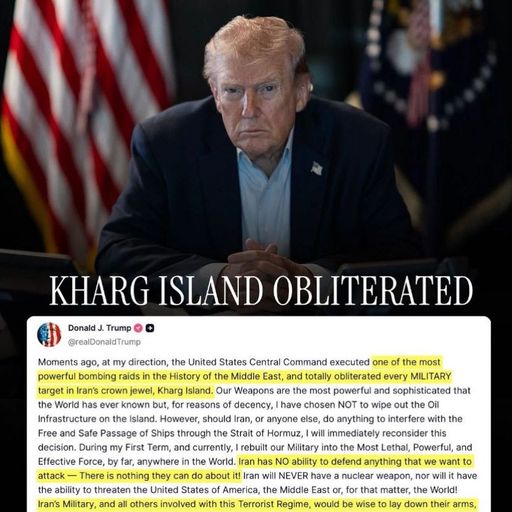
Last weekend, the US attacked military facilities on Hormuz Island, a key hub for Iranian oil exports, and warned that if Iran continues to interfere with shipping through the Strait of Hormuz, the US will target energy facilities.
According to US officials, the Pentagon estimates that the Iran conflict could last four to six weeks.
Due to the disruption of Hormuz Strait transportation and limited production in countries like Saudi Arabia and the UAE, Brent crude oil prices continued to rise on Monday, surpassing $104 per barrel. Over the past two weeks, crude futures prices have increased by more than 40%.
The global natural gas market has also been thrown into chaos due to a sharp drop in Qatar’s liquefied natural gas (LNG) exports, and Bahrain has begun reducing output at its largest aluminum smelter, partly due to the disruption of Hormuz Strait shipping.
Although Saudi Arabia and the UAE are less affected in the oil sector compared to neighboring countries, they may face widespread pressure in non-oil sectors, with impacts spanning real estate, tourism, and investment activities.
Several economists believe that if the war continues, Saudi Arabia might perform the best among Gulf countries. So far, Saudi Arabia has successfully thwarted most Iranian attacks, and its airspace and commercial activities remain largely open, with only limited disruptions.
Optimistically, if oil prices and exports stay high, Saudi Arabia’s fiscal performance by 2026 could even surpass pre-war expectations, with deficits potentially lower than previously forecasted.
In other countries, Abu Basha of EFG Hermes predicts that the UAE may still achieve a fiscal surplus this year, while Qatar’s fiscal deficit could widen.
To ease fiscal pressures, Gulf economies may continue to turn to bond markets for financing. Fady Gendy, portfolio manager at Arqaam Capital, said that currently, bond investors have not shown significant concern about the impact of the war on regional finances.
“If the conflict persists long-term, genuine worries will arise, but the market pricing has not yet reflected such expectations,” Gendy said.
(Cailian Press, Xia Junxiong)