ETHFI vs BCH: Comparing the Performance and Potential of Two Prominent Cryptocurrencies

Introduction: ETHFI vs BCH Investment Comparison
In the cryptocurrency market, ETHFI vs BCH comparison has always been a topic that investors cannot avoid. The two not only have significant differences in market cap ranking, application scenarios, and price performance, but also represent different positioning of crypto assets.
Ether.Fi (ETHFI): Launched in 2024, it has gained market recognition for its role as a new staking protocol for Ethereum.
Bitcoin Cash (BCH): Since its inception in 2017, it has been hailed as a "peer-to-peer electronic cash system," and is one of the cryptocurrencies with the highest global trading volume and market capitalization.
This article will comprehensively analyze the investment value comparison between ETHFI and BCH, focusing on historical price trends, supply mechanisms, institutional adoption, technical ecosystems, and future predictions, and attempt to answer the question that investors care about most:
"Which is the better buy right now?"
I. Price History Comparison and Current Market Status
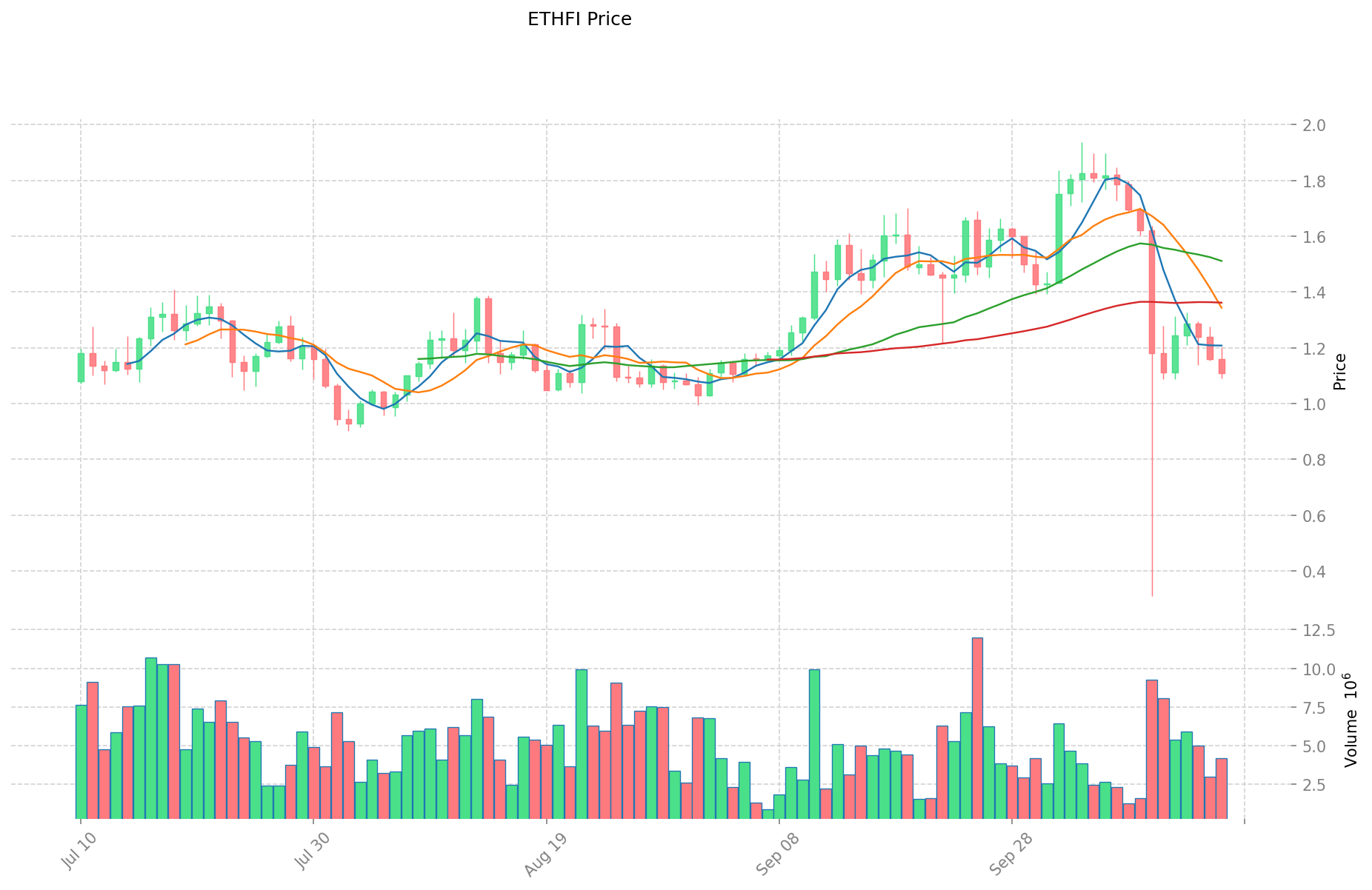
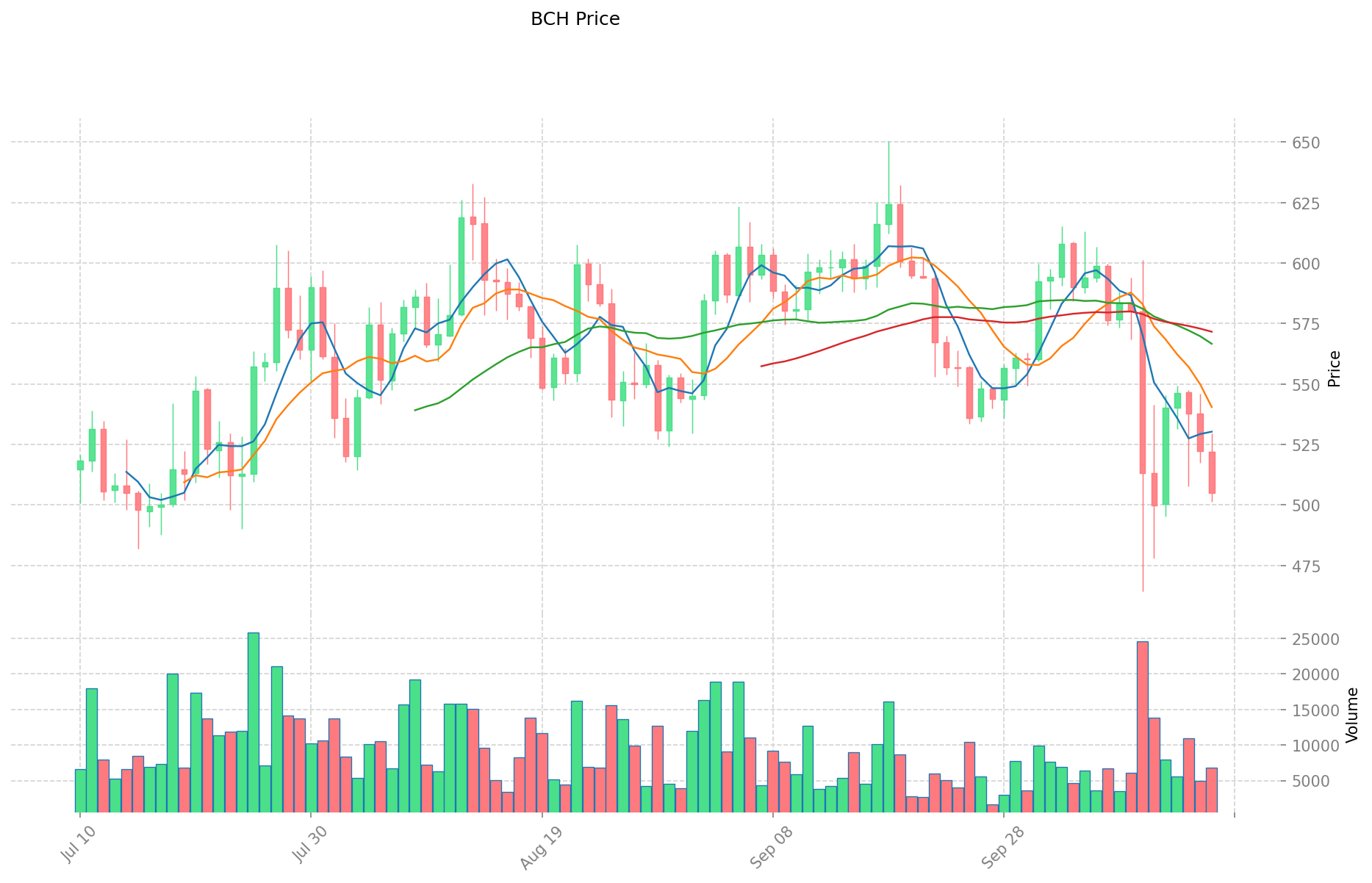
ETHFI and BCH Historical Price Trends
- 2024: ETHFI reached its all-time high of $8.658 on March 27, 2024.
- 2017: BCH was created through a Bitcoin hard fork, with an initial price of $555.89.
- Comparative analysis: In the recent market cycle, ETHFI dropped from its peak of $8.658 to a low of $0.3086, while BCH has shown greater stability, currently trading at $503.66.
Current Market Situation (2025-10-17)
- ETHFI current price: $1.1064
- BCH current price: $503.66
- 24-hour trading volume: ETHFI $4,798,666 vs BCH $3,441,496
- Market Sentiment Index (Fear & Greed Index): 28 (Fear)
Click to view real-time prices:
- Check ETHFI current price Market Price
- Check BCH current price Market Price
II. Key Metrics Comparison
Market Capitalization
- ETHFI: $572,397,613
- BCH: $10,042,920,538
Circulating Supply
- ETHFI: 517,351,422 ETHFI
- BCH: 19,939,881 BCH
All-Time High / All-Time Low
- ETHFI: ATH $8.658 (2024-03-27) / ATL $0.3086 (2025-10-10)
- BCH: ATH $3,785.82 (2017-12-20) / ATL $76.93 (2018-12-15)
Price Change (24h)
- ETHFI: -4.68%
- BCH: -3.53%
III. Technology and Development
ETHFI (Ether.Fi)
- A new staking protocol for Ethereum
- Deposits are natively re-staked with Eigenlayer
- Users receive eETH, a liquid staking token usable across DeFi protocols
BCH (Bitcoin Cash)
- Created as a hard fork from Bitcoin in 2017
- Focuses on on-chain scaling with larger block sizes (8MB)
- Aims for global adoption as a peer-to-peer electronic cash system
IV. Ecosystem and Adoption
ETHFI
- Integrates with various DeFi protocols to enhance eETH utility
- Focuses on decentralized governance through the ETHFI token
BCH
- Widely accepted as a payment method by numerous merchants
- Active development community working on various applications and improvements
V. Future Outlook and Potential Risks
ETHFI
- Potential for growth as Ethereum staking becomes more popular
- Risks include competition from other liquid staking solutions and regulatory uncertainties
BCH
- Continues to focus on improving as a medium of exchange
- Challenges include market competition and maintaining network security with lower hash rates compared to Bitcoin
VI. Conclusion
While ETHFI represents a newer, innovative approach to Ethereum staking, BCH has established itself as a stable alternative in the cryptocurrency market. ETHFI shows potential for growth but faces higher volatility, as evidenced by its recent price history. BCH, with its larger market cap and longer history, demonstrates more stability but may have limited growth potential compared to newer projects. Investors should carefully consider their risk tolerance and investment goals when evaluating these assets.
Investment Value Analysis: ETHFI vs BCH Core Factors
I. Comparative Analysis of ETHFI and BCH
ETHFI Overview
ETHFI is an emerging cryptocurrency that provides seamless and secure delegated staking services, addressing challenges associated with traditional staking platforms. As a relatively new digital asset with lower liquidity compared to established tokens, ETHFI's market awareness is gradually increasing.
BCH Overview
Bitcoin Cash (BCH) emerged from a 2017 Bitcoin fork, focusing on being a "peer-to-peer electronic cash system" with larger block sizes (32MB vs Bitcoin's 1MB). This enables BCH to process more transactions simultaneously, resulting in faster confirmation speeds and significantly lower fees.
II. Core Factors Affecting ETHFI vs BCH Investment Value
Supply Mechanism Comparison (Tokenomics)
- ETHFI: Emerging token with relatively lower circulation volume compared to established cryptocurrencies
- BCH: Fixed supply with limited circulation similar to Bitcoin's model
- 📌 Historical Pattern: Limited supply cryptocurrencies typically experience price appreciation when demand increases while circulation remains constrained.
Institutional Adoption and Market Applications
- Institutional Holdings: BCH has wider recognition as a major cryptocurrency with trading pairs across major exchanges
- Enterprise Applications: BCH excels in payment processing with its low fees making it suitable for daily transactions, online payments, and cross-border transfers
- National Policies: Regulatory changes directly impact market confidence in both assets
Technical Development and Ecosystem Building
- ETHFI Technical Focus: Provides staking services that are particularly attractive to Ethereum validators who play crucial roles in maintaining network integrity
- BCH Technical Development: Increased block size from 8MB to 32MB enabling faster processing and lower fees
- Ecosystem Comparison: BCH supports small-scale DApps development while focusing primarily on payment applications; particularly well-suited for micropayments in gaming, content creation, and streaming platforms
Macroeconomic Factors and Market Cycles
- Performance in Inflationary Environments: BCH is viewed by some investors as a diversification asset to hedge against traditional market uncertainties
- Macroeconomic Policy Impact: Traditional market volatility, inflation pressures, interest rate policies, and geopolitical risks affect capital allocation between traditional and crypto assets
- Geopolitical Factors: BCH offers advantages for cross-border transfers with lower costs and faster settlement times, particularly attractive in developing countries and among cross-border workers
III. 2025-2030 Price Prediction: ETHFI vs BCH
Short-term Prediction (2025)
- ETHFI: Conservative $0.77 - $1.11 | Optimistic $1.11 - $1.25
- BCH: Conservative $438.26 - $503.75 | Optimistic $503.75 - $695.18
Mid-term Prediction (2027)
- ETHFI may enter a growth phase, with expected prices ranging from $1.16 to $1.79
- BCH may enter a consolidation phase, with expected prices ranging from $587.00 to $880.49
- Key drivers: Institutional capital inflow, ETF, ecosystem development
Long-term Prediction (2030)
- ETHFI: Base scenario $1.69 - $2.14 | Optimistic scenario $2.14 - $2.46
- BCH: Base scenario $733.39 - $965.00 | Optimistic scenario $965.00 - $1,399.23
Disclaimer: The information provided is for informational purposes only and should not be considered as financial advice. Cryptocurrency markets are highly volatile and unpredictable. Always conduct your own research before making any investment decisions.
ETHFI:
| 年份 | 预测最高价 | 预测平均价格 | 预测最低价 | 涨跌幅 |
|---|---|---|---|---|
| 2025 | 1.249328 | 1.1056 | 0.77392 | 0 |
| 2026 | 1.49537928 | 1.177464 | 0.85954872 | 6 |
| 2027 | 1.7908049976 | 1.33642164 | 1.1626868268 | 20 |
| 2028 | 2.314147711824 | 1.5636133188 | 1.078893189972 | 41 |
| 2029 | 2.34604542352752 | 1.938880515312 | 1.20210591949344 | 75 |
| 2030 | 2.463832414832724 | 2.14246296941976 | 1.69254574584161 | 93 |
BCH:
| 年份 | 预测最高价 | 预测平均价格 | 预测最低价 | 涨跌幅 |
|---|---|---|---|---|
| 2025 | 695.175 | 503.75 | 438.2625 | 0 |
| 2026 | 623.441 | 599.4625 | 497.553875 | 19 |
| 2027 | 880.49052 | 611.45175 | 586.99368 | 21 |
| 2028 | 977.22218685 | 745.971135 | 432.6632583 | 48 |
| 2029 | 1068.379859547 | 861.596660925 | 654.813462303 | 71 |
| 2030 | 1399.2329773422 | 964.988260236 | 733.39107777936 | 91 |
IV. Investment Strategy Comparison: ETHFI vs BCH
Long-term vs Short-term Investment Strategies
- ETHFI: Suitable for investors focused on Ethereum ecosystem potential and staking innovations
- BCH: Suitable for investors seeking stability and payment use cases
Risk Management and Asset Allocation
- Conservative investors: ETHFI: 20% vs BCH: 80%
- Aggressive investors: ETHFI: 60% vs BCH: 40%
- Hedging tools: Stablecoin allocation, options, cross-currency portfolios
V. Potential Risk Comparison
Market Risk
- ETHFI: Higher volatility due to lower market cap and newer project status
- BCH: Susceptible to overall crypto market trends and competition from other payment-focused cryptocurrencies
Technical Risk
- ETHFI: Scalability, network stability, smart contract vulnerabilities
- BCH: Hash rate concentration, potential security vulnerabilities
Regulatory Risk
- Global regulatory policies may impact both differently, with BCH potentially facing more scrutiny as a payment-focused cryptocurrency
VI. Conclusion: Which Is the Better Buy?
📌 Investment Value Summary:
- ETHFI advantages: Innovative staking solution, potential for growth in Ethereum ecosystem
- BCH advantages: Established history, wider acceptance as a payment method, larger market cap
✅ Investment Advice:
- New investors: Consider a higher allocation to BCH for its stability and established market presence
- Experienced investors: Balanced approach with exposure to both, leveraging ETHFI's growth potential
- Institutional investors: Evaluate BCH for its liquidity and market cap, while monitoring ETHFI's development in the Ethereum staking landscape
⚠️ Risk Warning: Cryptocurrency markets are highly volatile. This analysis does not constitute investment advice. None
VII. FAQ
Q1: What are the main differences between ETHFI and BCH? A: ETHFI is a new staking protocol for Ethereum, while BCH is a fork of Bitcoin focused on being a peer-to-peer electronic cash system. ETHFI offers liquid staking tokens (eETH) usable in DeFi, while BCH provides faster and cheaper transactions with larger block sizes.
Q2: Which has a higher market capitalization, ETHFI or BCH? A: BCH has a significantly higher market capitalization. As of the latest data, BCH's market cap is $10,042,920,538, while ETHFI's is $572,397,613.
Q3: How do the price trends of ETHFI and BCH compare? A: ETHFI, being newer, has shown higher volatility, dropping from its all-time high of $8.658 to a low of $0.3086. BCH has demonstrated greater stability, currently trading at $503.66.
Q4: What are the key factors affecting the investment value of ETHFI and BCH? A: Key factors include supply mechanisms, institutional adoption, technical development, ecosystem building, and macroeconomic factors such as inflation and geopolitical risks.
Q5: How do the future price predictions for ETHFI and BCH differ? A: By 2030, ETHFI is predicted to reach $1.69 - $2.46 in optimistic scenarios, while BCH is expected to reach $733.39 - $1,399.23. ETHFI shows potential for higher percentage growth, while BCH offers more stability.
Q6: What are the main risks associated with investing in ETHFI and BCH? A: ETHFI faces higher volatility and technical risks due to its newer status. BCH is susceptible to overall crypto market trends and potential regulatory scrutiny as a payment-focused cryptocurrency. Both face market, technical, and regulatory risks.
Q7: Which is considered a better buy for different types of investors? A: New investors might consider a higher allocation to BCH for stability. Experienced investors could take a balanced approach with exposure to both. Institutional investors may evaluate BCH for liquidity while monitoring ETHFI's development in the Ethereum ecosystem.
Share
Content
Introduction: ETHFI vs BCH Investment Comparison
I. Price History Comparison and Current Market Status
II. Key Metrics Comparison
III. Technology and Development
IV. Ecosystem and Adoption
V. Future Outlook and Potential Risks
VI. Conclusion
I. Comparative Analysis of ETHFI and BCH
II. Core Factors Affecting ETHFI vs BCH Investment Value
III. 2025-2030 Price Prediction: ETHFI vs BCH
IV. Investment Strategy Comparison: ETHFI vs BCH
V. Potential Risk Comparison
VI. Conclusion: Which Is the Better Buy?
VII. FAQ
How to Buy Cryptocurrency


Trending Cryptocurrencies



why is crypto crashing and will it recover ?

Crypto Crash or Just a Correction?

Best Crypto To Buy, Outperforming XRP
Crypto Market Pullback: What's Behind the Drop in BTC, ETH, SOL, and DOGE

How Has the Crypto Market Volatility Affected Price Trends in 2025?
How Does Cryptocurrency Price Volatility Compare to Traditional Markets in 2025?
Bitcoin Halving: What You Need to Know About Price Impact and History

Ripple's $40B Valuation and No IPO Plans: What It Means for XRP and Growth

Rumble Wallet Launch: How Rumble and Tether Are Empowering Creator Payments with Crypto
Why MSCI Is Keeping Bitcoin-Heavy Firms in Its Global Indexes Explained

Record Precious Metals Prices: Could Gold Hit $5,000 and Silver Test $100 in Q1 2026?