SDM vs SNX: Comparing Two Leading Synthetic Asset Protocols in DeFi


Introduction: Investment Comparison of SDM vs SNX
In the cryptocurrency market, the comparison between Shieldeum (SDM) and Synthetix (SNX) remains a topic of interest for investors. The two not only differ significantly in market cap ranking, application scenarios, and price performance but also represent different positions in the crypto asset landscape.
Shieldeum (SDM): Launched in 2024, it has gained market recognition for its focus on providing secure computing power through AI-driven Decentralized Physical Infrastructure Network (DePIN).
Synthetix (SNX): Introduced in 2018, it has been recognized for its role in creating decentralized synthetic assets, supporting a variety of comprehensive assets including fiat currencies, precious metals, indices, and other cryptocurrencies.
This article will comprehensively analyze the investment value comparison between SDM and SNX, focusing on historical price trends, supply mechanisms, institutional adoption, technological ecosystems, and future predictions, attempting to answer the question investors care about most:
"Which is the better buy right now?"
I. Price History Comparison and Current Market Status
Shieldeum (SDM) and Synthetix (SNX) Historical Price Trends
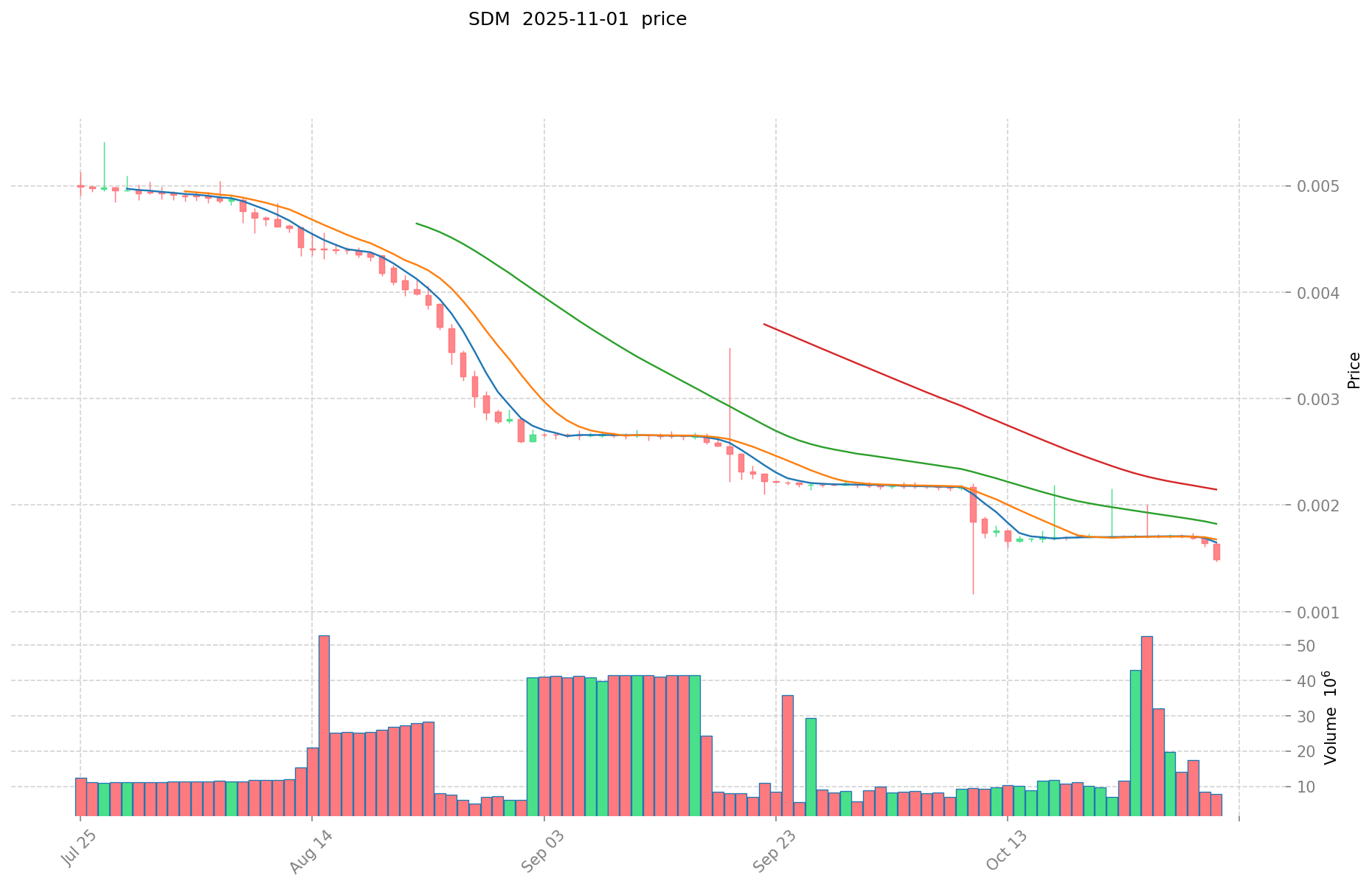
- 2024: SDM reached its all-time high of $0.261739 on December 9, 2024.
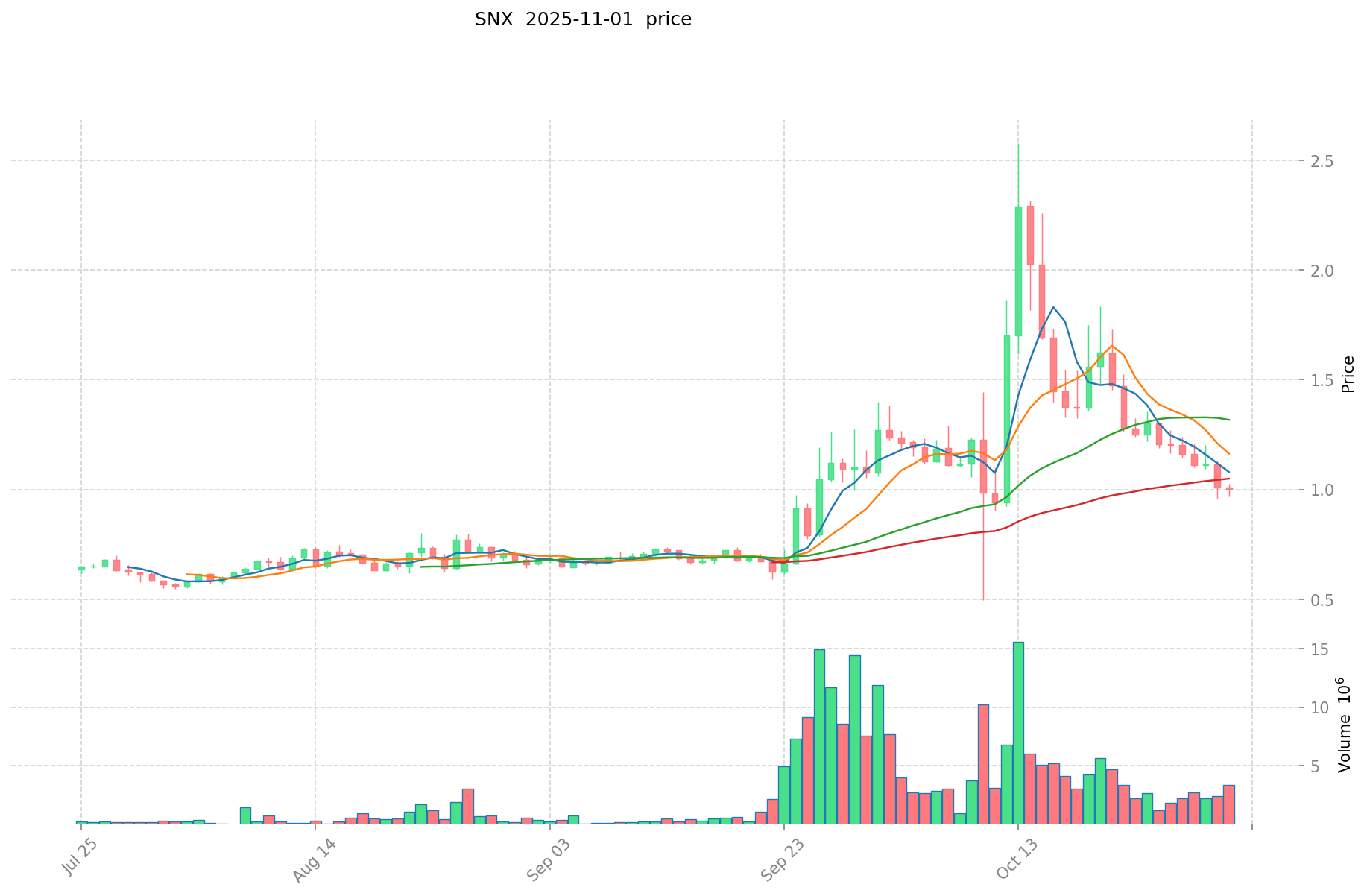
- 2025: SNX experienced significant volatility, dropping from its all-time high of $28.53 to current levels.
- Comparative Analysis: In the recent market cycle, SDM dropped from its high of $0.261739 to a low of $0.001161, while SNX declined from $28.53 to current prices around $1.0044.
Current Market Situation (2025-11-02)
- SDM current price: $0.001415
- SNX current price: $1.0044
- 24-hour trading volume: SDM $15,544.14 vs SNX $1,104,084.60
- Market Sentiment Index (Fear & Greed Index): 33 (Fear)
Click to view real-time prices:
- View SDM current price Market Price
- View SNX current price Market Price
II. Core Factors Affecting SDM vs SNX Investment Value
Supply Mechanisms Comparison (Tokenomics)
- SDM: Limited information available on supply mechanism
- SNX: Limited information available on supply mechanism
- 📌 Historical Pattern: Insufficient data on how supply mechanisms drive price cycle changes.
Institutional Adoption and Market Applications
- Institutional Holdings: Limited information on institutional preferences
- Enterprise Adoption: Insufficient data on cross-border payment, settlement, and portfolio applications
- National Policies: Limited information on regulatory attitudes across different countries
Technical Development and Ecosystem Building
- Technical Upgrades: Insufficient specific data on technical developments
- Ecosystem Comparison: Limited information on DeFi, NFT, payment, and smart contract implementations
Macroeconomic and Market Cycles
- Performance in Inflationary Environments: Limited data on anti-inflation properties
- Macroeconomic Monetary Policy: Insufficient information on how interest rates and the US dollar index affect both assets
- Geopolitical Factors: Limited data on cross-border transaction demands and international situations
III. 2025-2030 Price Prediction: SDM vs SNX
Short-term Prediction (2025)
- SDM: Conservative $0.00089-$0.00141 | Optimistic $0.00141-$0.00177
- SNX: Conservative $0.94-$1.00 | Optimistic $1.00-$1.48
Mid-term Prediction (2027)
- SDM may enter a growth phase, with an estimated price range of $0.00102-$0.00281
- SNX may enter a consolidation phase, with an estimated price range of $1.29-$1.66
- Key drivers: Institutional capital inflow, ETF, ecosystem development
Long-term Prediction (2030)
- SDM: Base scenario $0.00246-$0.00270 | Optimistic scenario $0.00270-$0.00332
- SNX: Base scenario $0.98-$1.92 | Optimistic scenario $1.92-$2.32
Disclaimer: This analysis is based on historical data and projections. Cryptocurrency markets are highly volatile and unpredictable. This information should not be considered as financial advice. Always conduct your own research before making investment decisions.
SDM:
| 年份 | 预测最高价 | 预测平均价格 | 预测最低价 | 涨跌幅 |
|---|---|---|---|---|
| 2025 | 0.001765 | 0.001412 | 0.00088956 | 0 |
| 2026 | 0.002335095 | 0.0015885 | 0.00101664 | 12 |
| 2027 | 0.002805370425 | 0.0019617975 | 0.0010201347 | 38 |
| 2028 | 0.002884136594625 | 0.0023835839625 | 0.00166850877375 | 68 |
| 2029 | 0.00276555329249 | 0.002633860278562 | 0.00234413564792 | 86 |
| 2030 | 0.003320639346197 | 0.002699706785526 | 0.002456733174829 | 90 |
SNX:
| 年份 | 预测最高价 | 预测平均价格 | 预测最低价 | 涨跌幅 |
|---|---|---|---|---|
| 2025 | 1.479556 | 0.9997 | 0.939718 | 0 |
| 2026 | 1.69829036 | 1.239628 | 0.95451356 | 24 |
| 2027 | 1.6599238734 | 1.46895918 | 1.2926840784 | 47 |
| 2028 | 1.892974247307 | 1.5644415267 | 1.063820238156 | 56 |
| 2029 | 2.10902362214427 | 1.7287078870035 | 1.14094720542231 | 73 |
| 2030 | 2.3218275630344 | 1.918865754573885 | 0.978621534832681 | 92 |
IV. Investment Strategy Comparison: SDM vs SNX
Long-term vs Short-term Investment Strategies
- SDM: Suitable for investors interested in AI-driven DePIN projects
- SNX: Suitable for investors focused on decentralized synthetic assets
Risk Management and Asset Allocation
- Conservative investors: SDM: 30% vs SNX: 70%
- Aggressive investors: SDM: 60% vs SNX: 40%
- Hedging tools: Stablecoin allocation, options, cross-currency portfolio
V. Potential Risk Comparison
Market Risk
- SDM: High volatility due to its relatively new status in the market
- SNX: Susceptible to broader DeFi market trends
Technical Risk
- SDM: Scalability, network stability
- SNX: Smart contract vulnerabilities, oracle dependencies
Regulatory Risk
- Global regulatory policies may impact both assets differently, with potential stricter oversight on synthetic assets affecting SNX more directly
VI. Conclusion: Which Is the Better Buy?
📌 Investment Value Summary:
- SDM advantages: Focus on AI-driven DePIN, potential for growth in secure computing power market
- SNX advantages: Established presence in DeFi, diverse synthetic asset offerings
✅ Investment Advice:
- New investors: Consider a balanced approach with a slight preference for SNX due to its more established market presence
- Experienced investors: Explore opportunities in both assets, with a higher allocation to SDM for potential growth
- Institutional investors: Conduct thorough due diligence on both assets, considering SDM for innovation exposure and SNX for DeFi sector representation
⚠️ Risk Warning: The cryptocurrency market is highly volatile. This article does not constitute investment advice. None
VII. FAQ
Q1: What are the main differences between SDM and SNX? A: SDM focuses on providing secure computing power through AI-driven Decentralized Physical Infrastructure Network (DePIN), while SNX specializes in creating decentralized synthetic assets. SDM was launched in 2024, whereas SNX has been around since 2018.
Q2: Which asset has shown better price performance recently? A: Based on the provided data, SNX has shown better price performance and trading volume. As of November 2, 2025, SNX's price is $1.0044 with a 24-hour trading volume of $1,104,084.60, while SDM's price is $0.001415 with a 24-hour trading volume of $15,544.14.
Q3: What are the short-term price predictions for SDM and SNX? A: For 2025, SDM's conservative estimate is $0.00089-$0.00141, with an optimistic range of $0.00141-$0.00177. SNX's conservative estimate is $0.94-$1.00, with an optimistic range of $1.00-$1.48.
Q4: How do the long-term predictions for SDM and SNX compare? A: By 2030, SDM's base scenario is predicted at $0.00246-$0.00270, with an optimistic scenario of $0.00270-$0.00332. For SNX, the base scenario is $0.98-$1.92, with an optimistic scenario of $1.92-$2.32.
Q5: What are the main risks associated with investing in SDM and SNX? A: SDM faces risks related to high volatility due to its new market status, scalability, and network stability. SNX is susceptible to broader DeFi market trends, smart contract vulnerabilities, and oracle dependencies. Both assets may be impacted by evolving global regulatory policies.
Q6: How should different types of investors approach SDM and SNX? A: New investors might consider a balanced approach with a slight preference for SNX due to its established market presence. Experienced investors could explore opportunities in both assets, with a higher allocation to SDM for potential growth. Institutional investors should conduct thorough due diligence on both assets, considering SDM for innovation exposure and SNX for DeFi sector representation.
Q7: What factors should be considered when deciding between SDM and SNX? A: Investors should consider factors such as market cap, trading volume, historical price performance, technological focus (AI-driven DePIN vs. synthetic assets), ecosystem development, institutional adoption, and individual risk tolerance when deciding between SDM and SNX.
Share
Content
Introduction: Investment Comparison of SDM vs SNX
I. Price History Comparison and Current Market Status
II. Core Factors Affecting SDM vs SNX Investment Value
III. 2025-2030 Price Prediction: SDM vs SNX
IV. Investment Strategy Comparison: SDM vs SNX
V. Potential Risk Comparison
VI. Conclusion: Which Is the Better Buy?
VII. FAQ
How to Buy Cryptocurrency


Trending Cryptocurrencies



XL1 vs GRT: A Comprehensive Comparison of Two Leading Blockchain Oracle Solutions

HVLO vs UNI: A Comprehensive Comparison of Two Leading Decentralized Exchange Protocols

Avalanche (AVAX) 2025 Price Analysis and Market Trends

SEI Staking Analysis: 60-70% Supply Locked and Its Price Impact

Latest Analysis and Investment Outlook for Chainlink Price in June 2025
FTT Explained
In-Depth Analysis of the AI Meme Token Market: Real Signals Behind the Cooldown of GOAT, ZEREBRO, and ai16z

What are the major smart contract vulnerabilities and network security risks in cryptocurrency?
Behind the Mass Resignation at Zcash ECC: Governance Disputes Trigger a ZEC Plunge — What’s Next for Privacy Coins?
How do Federal Reserve policy and inflation data impact cryptocurrency prices in 2026?

Polygon Bridge and the Cross-Chain Asset Ecosystem: Price Insights, Market Updates, and a User Guide