SKL vs MANA: Which Cryptocurrency Has the Better Growth Potential in 2023?

2025-10-20 00:19:42
Altcoins
Blockchain
Crypto Insights
Investing In Crypto
Metaverse Crypto
Article Rating : 4.1
0 ratings
The article compares SKALE (SKL) and Decentraland (MANA) cryptocurrencies to evaluate their growth potential in 2023. It analyzes historical price trends, supply mechanisms, institutional adoption, technical ecosystems, and potential risks. Questions addressed include historical performance, supply differences, and institutional interest. Suitable for investors interested in blockchain scalability and the metaverse, the article provides investment strategy insights and long-term price predictions. Readers will find a concise investment value summary and practical advice for both new and experienced investors. For real-time prices and detailed predictions, visit Gate.
SKL vs MANA: Which Cryptocurrency Has the Better Growth Potential in 2023?

Introduction: SKL vs MANA Investment Comparison

In the cryptocurrency market, the comparison between SKALE (SKL) and Decentraland (MANA) has always been a topic that investors can't avoid. The two not only have significant differences in market cap ranking, application scenarios, and price performance, but also represent different cryptocurrency asset positioning.

SKALE (SKL): Since its launch, it has gained market recognition for its aim to bring speed and configurability to blockchains.

Decentraland (MANA): Since its inception, it has been hailed as a blockchain-based virtual world platform, and is one of the cryptocurrencies with the highest global trading volume and market capitalization in its niche.

This article will provide a comprehensive analysis of the investment value comparison between SKALE and Decentraland, focusing on historical price trends, supply mechanisms, institutional adoption, technical ecosystems, and future predictions, and attempt to answer the question that investors are most concerned about:

"Which is the better buy right now?"

I. Price History Comparison and Current Market Status

  • 2021: SKL reached its all-time high of $1.22 on March 12, 2021.
  • 2021: MANA hit its all-time high of $5.85 on November 25, 2021, likely influenced by the metaverse hype.
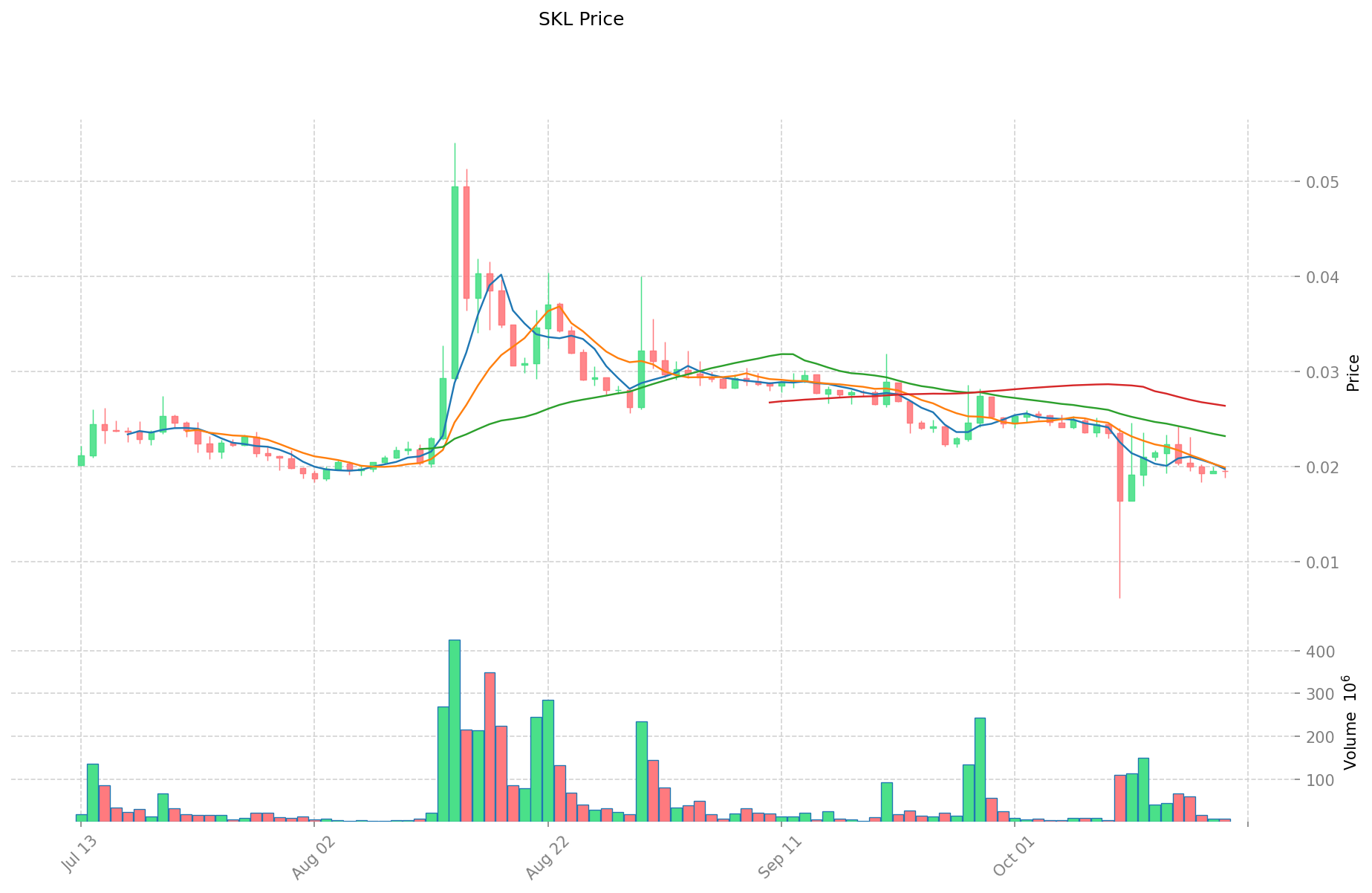
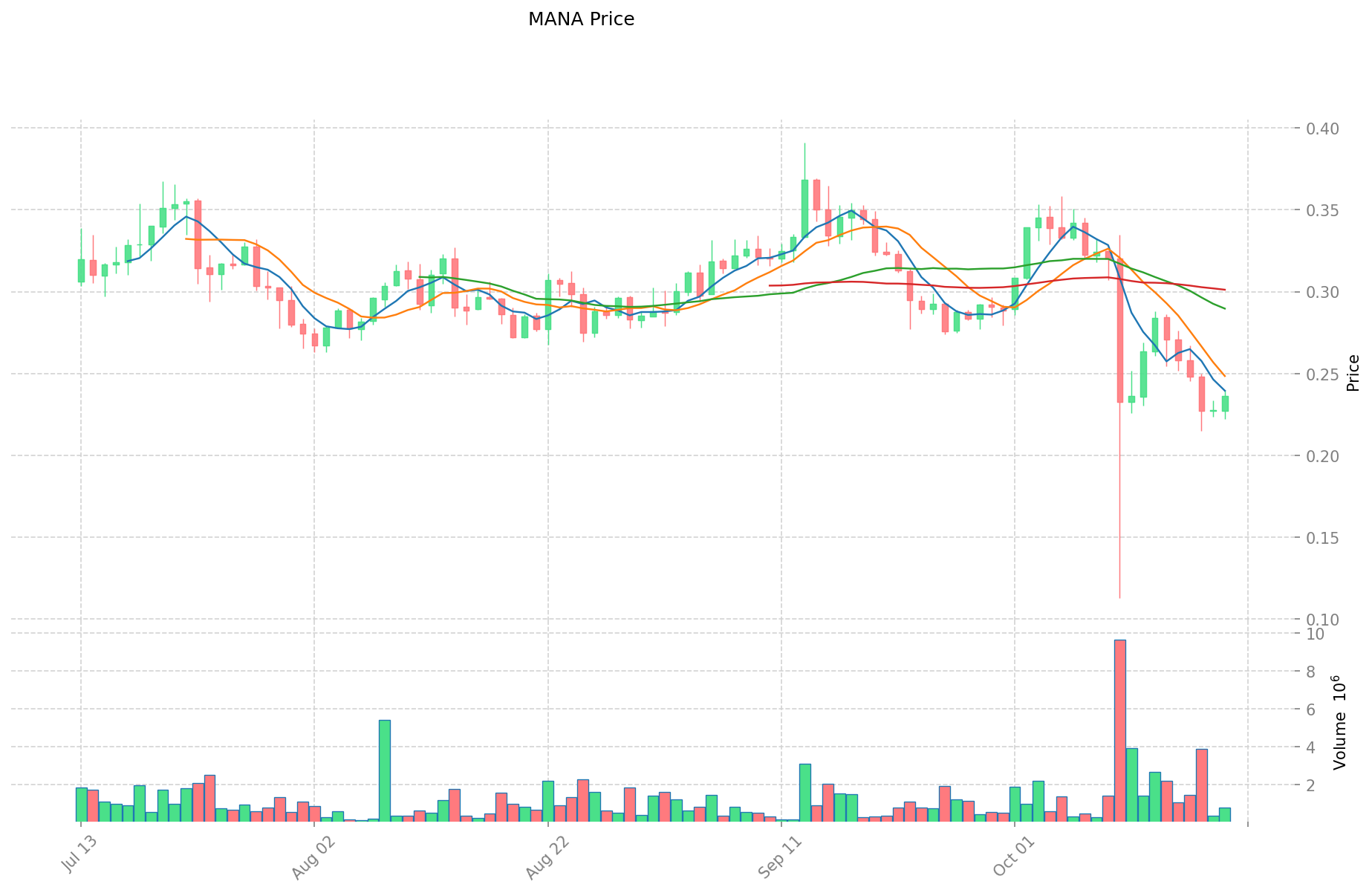
  • Comparative analysis: In the current market cycle, SKL has fallen from its all-time high of $1.22 to a current price of $0.01943, while MANA has dropped from $5.85 to $0.2352.

Current Market Situation (2025-10-20)

  • SKL current price: $0.01943
  • MANA current price: $0.2352
  • 24-hour trading volume: SKL $158,655.34 vs MANA $188,236.55
  • Market Sentiment Index (Fear & Greed Index): 29 (Fear)

Click to view real-time prices:

price_image1 price_image2

II. Core Factors Affecting the Investment Value of SKL vs MANA

Supply Mechanisms Comparison (Tokenomics)

  • MANA: Fixed supply of 2.19 billion tokens with deflationary mechanisms through LAND purchases that burn MANA
  • SKL: Total supply of 10 billion tokens with phased release schedule through 2025

Institutional Adoption and Market Applications

  • Institutional Holdings: MANA has attracted more institutional interest due to metaverse investments from major companies
  • Enterprise Adoption: MANA is utilized within Decentraland's virtual economy for purchases and governance, while SKL focuses on enterprise blockchain solutions
  • Regulatory Attitudes: Both tokens face varied regulatory approaches across jurisdictions, with metaverse tokens like MANA generally receiving less scrutiny than infrastructure tokens

Technical Development and Ecosystem Building

  • MANA Technical Upgrades: Ongoing development of Decentraland platform features including improved rendering and user experience
  • SKL Technical Development: Focus on enhancing Skale Network's scalability solutions and zero-gas-fee transactions
  • Ecosystem Comparison: MANA has stronger NFT and virtual real estate applications, while SKL emphasizes DeFi and dApp scaling solutions

Macroeconomic Factors and Market Cycles

  • Inflation Performance: Neither token has demonstrated strong anti-inflation characteristics
  • Monetary Policy Impact: Both tokens show high correlation to risk assets and are sensitive to Fed policy changes
  • Geopolitical Factors: MANA benefits from increased interest in digital ownership and virtual experiences during global uncertainty

III. 2025-2030 Price Prediction: SKL vs MANA

Short-term Prediction (2025)

  • SKL: Conservative $0.0110 - $0.0194 | Optimistic $0.0194 - $0.0258
  • MANA: Conservative $0.1783 - $0.2346 | Optimistic $0.2346 - $0.2534

Mid-term Prediction (2027)

  • SKL may enter a growth phase, with estimated prices ranging from $0.0200 to $0.0242
  • MANA may enter a bullish market, with estimated prices ranging from $0.2727 to $0.3676
  • Key drivers: Institutional capital inflow, ETFs, ecosystem development

Long-term Prediction (2030)

  • SKL: Base scenario $0.0278 - $0.0323 | Optimistic scenario $0.0323 - $0.0424
  • MANA: Base scenario $0.2338 - $0.4496 | Optimistic scenario $0.4496 - $0.5620

View detailed price predictions for SKL and MANA

Disclaimer: These predictions are based on historical data and market analysis. Cryptocurrency markets are highly volatile and unpredictable. This information should not be considered as financial advice. Always conduct your own research before making investment decisions.

SKL:

年份 预测最高价 预测平均价格 预测最低价 涨跌幅
2025 0.0257754 0.01938 0.0110466 0
2026 0.023932362 0.0225777 0.021448815 15
2027 0.02418523224 0.023255031 0.01999932666 19
2028 0.0313105737384 0.02372013162 0.0132832737072 21
2029 0.03714572611692 0.0275153526792 0.016234058080728 41
2030 0.042353006611458 0.03233053939806 0.027804263882331 65

MANA:

年份 预测最高价 预测平均价格 预测最低价 涨跌幅
2025 0.253368 0.2346 0.178296 0
2026 0.34889712 0.243984 0.18786768 3
2027 0.3675862944 0.29644056 0.2727253152 25
2028 0.478099335168 0.3320134272 0.305452353024 40
2029 0.49416878504448 0.405056381184 0.38885412593664 71
2030 0.5620157288928 0.44961258311424 0.233798543219404 90

IV. Investment Strategy Comparison: SKL vs MANA

Long-term vs Short-term Investment Strategies

  • SKL: Suitable for investors focused on blockchain infrastructure and scalability solutions
  • MANA: Suitable for investors interested in metaverse and virtual economy potential

Risk Management and Asset Allocation

  • Conservative investors: SKL: 30% vs MANA: 70%
  • Aggressive investors: SKL: 60% vs MANA: 40%
  • Hedging tools: Stablecoin allocation, options, cross-currency portfolios

V. Potential Risk Comparison

Market Risks

  • SKL: Highly volatile due to lower market cap and liquidity
  • MANA: Susceptible to metaverse hype cycles and market sentiment shifts

Technical Risks

  • SKL: Scalability challenges, network stability issues
  • MANA: Platform adoption rates, virtual world performance limitations

Regulatory Risks

  • Global regulatory policies may impact MANA less due to its focus on virtual economies, while SKL may face more scrutiny as an infrastructure token

VI. Conclusion: Which Is the Better Buy?

📌 Investment Value Summary:

  • SKL advantages: Focus on blockchain scalability, potential for enterprise adoption
  • MANA advantages: Established presence in metaverse sector, stronger institutional interest

✅ Investment Advice:

  • New investors: Consider a balanced approach with a slight preference for MANA due to its more established market position
  • Experienced investors: Explore a strategic mix of both tokens, with SKL offering potential for higher growth and MANA providing metaverse exposure
  • Institutional investors: Evaluate SKL for long-term blockchain infrastructure play and MANA for metaverse sector representation

⚠️ Risk Warning: The cryptocurrency market is highly volatile. This article does not constitute investment advice. None

VII. FAQ

Q1: What are the main differences between SKL and MANA? A: SKL focuses on blockchain scalability solutions, while MANA is centered on the metaverse and virtual economy. SKL aims to improve blockchain infrastructure, whereas MANA is used within Decentraland's virtual world for purchases and governance.

Q2: Which token has performed better historically? A: MANA has shown stronger historical performance, reaching an all-time high of $5.85 in November 2021, compared to SKL's all-time high of $1.22 in March 2021. However, both have experienced significant declines since their peaks.

Q3: How do the supply mechanisms of SKL and MANA differ? A: MANA has a fixed supply of 2.19 billion tokens with deflationary mechanisms through LAND purchases that burn MANA. SKL has a total supply of 10 billion tokens with a phased release schedule through 2025.

Q4: Which token has attracted more institutional interest? A: MANA has generally attracted more institutional interest due to investments in the metaverse sector from major companies. SKL, focusing on enterprise blockchain solutions, has had less prominent institutional adoption.

Q5: What are the key risks associated with investing in SKL and MANA? A: SKL faces risks related to market volatility, scalability challenges, and potential regulatory scrutiny. MANA's risks include susceptibility to metaverse hype cycles, platform adoption rates, and virtual world performance limitations.

Q6: How do the long-term price predictions for SKL and MANA compare? A: By 2030, SKL is predicted to reach between $0.0278 and $0.0424 in optimistic scenarios, while MANA is expected to range from $0.2338 to $0.5620. These predictions suggest potentially higher percentage growth for MANA.

Q7: What factors should investors consider when choosing between SKL and MANA? A: Investors should consider their risk tolerance, interest in specific blockchain sectors (infrastructure vs. metaverse), market cap preferences, and overall portfolio strategy. SKL may offer higher growth potential but with more volatility, while MANA provides exposure to the established metaverse sector.

* The information is not intended to be and does not constitute financial advice or any other recommendation of any sort offered or endorsed by Gate.
Related Articles
FORT vs MANA: Comparing Two Leading Blockchain Solutions for the Future of Digital Asset Management

FORT vs MANA: Comparing Two Leading Blockchain Solutions for the Future of Digital Asset Management

This article "FORT vs MANA: Comparing Two Leading Blockchain Solutions for the Future of Digital Asset Management" offers a detailed investment comparison between Forta (FORT) and Decentraland (MANA). It examines historical price trends, market status, technical ecosystems, and investment strategies, aiming to answer which is currently a better buy. Key insights include price prediction models from 2025 to 2030, risk assessments, and allocation strategies for both conservative and aggressive investors. Suitable for investors seeking comprehensive analyses of blockchain security versus metaverse innovations. Explore real-time prices and insights on Gate for informed decision-making.
2025-10-03 12:04:09
CTC vs SAND: A Comparative Analysis of Two Cutting-Edge Speech Recognition Technologies

CTC vs SAND: A Comparative Analysis of Two Cutting-Edge Speech Recognition Technologies

The article "CTC vs SAND: A Comparative Analysis of Two Cutting-Edge Speech Recognition Technologies" explores the investment dynamics between Creditcoin (CTC) and The Sandbox (SAND) in the cryptocurrency market. It provides a comprehensive overview of historical price trends, supply mechanisms, institutional adoption, and technical development. Catering to investors, the article addresses critical questions regarding which asset offers better value at present. Structured around investment comparisons, macroeconomic factors, and risk assessments, it advises both new and experienced investors on strategic asset allocation, maximizing information accessibility and SEO visibility through concise language.
2025-10-18 00:33:04
FTT vs MANA: Comparing Two Popular Cryptocurrencies in the Metaverse Ecosystem

FTT vs MANA: Comparing Two Popular Cryptocurrencies in the Metaverse Ecosystem

This article provides an in-depth comparison of two popular cryptocurrencies, FTT and MANA, within the metaverse ecosystem, addressing their investment values, historical price trends, and future prospects. It explores core factors such as supply mechanisms, institutional adoption, market cycles, and technical development. Focused on answering key investor questions like "Which is the better buy right now?", it identifies the risks and advantages each token poses to both conservative and aggressive investors, highlighting MANA as a potential metaverse exposure for seasoned portfolios. Suitable for investors keen on understanding market dynamics and asset performance, the article outlines strategic recommendations and offers insights into the regulatory and technical risks associated with each cryptocurrency.
2025-10-18 00:17:25
THETA vs MANA: Battle of the Metaverse Tokens - Which Virtual Reality Coin Will Dominate?

THETA vs MANA: Battle of the Metaverse Tokens - Which Virtual Reality Coin Will Dominate?

The article "THETA vs MANA: Battle of the Metaverse Tokens - Which Virtual Reality Coin Will Dominate?" provides a comprehensive investment comparison between THETA and MANA, highlighting differences in market cap, application scenarios, and price performance. It resolves investor queries regarding which is the better investment, examining aspects like price trends, supply mechanisms, institutional adoption, and technological ecosystems. Suitable for both novice and experienced investors, the article offers strategic insights into long-term and short-term investment approaches, risk management, and the potential impact of macroeconomic factors. For detailed real-time updates, refer to THETA and MANA prices on Gate.
2025-10-17 00:09:22
TRVL vs MANA: Comparing Two Leading Metaverse Tokens in the Digital Real Estate Market

TRVL vs MANA: Comparing Two Leading Metaverse Tokens in the Digital Real Estate Market

This article provides a detailed comparison between TRVL and MANA tokens, emphasizing their investment value in the digital real estate market. It explores differences in historical price trends, market status, and investment strategies, highlighting key questions for potential investors: "Which is the better buy?" The article is tailored for both new and seasoned investors and discusses price predictions, market risks, and investment strategies. With insights into institutional adoption, ecosystem development, and regulatory challenges, it offers a comprehensive guide for decision-making in the volatile crypto market. Utilize Gate for real-time price checks and forecasts.
2025-10-13 00:40:19
ACX vs MANA: Battle of the Metaverse Titans - Which Virtual World Will Reign Supreme?
ACX vs MANA: Battle of the Metaverse Titans - Which Virtual World Will Reign Supreme?

Explore the investment landscape of Across Protocol (ACX) vs Decentraland (MANA) in this comprehensive analysis, focusing on historical price trends, market status, technological ecosystems, and investment strategies. The article targets cryptocurrency investors interested in the metaverse and cross-chain solutions, providing expert insights on supply mechanisms, institutional adoption, and regulatory considerations. It answers critical questions on performance and long-term predictions, guiding new, experienced, and institutional investors in their decision-making process. Optimize your portfolio by understanding ACX and MANA's risks, advantages, and strategic alignment in today's digital asset market.
2025-10-24 00:19:51
Recommended for You
How Federal Reserve Interest Rate Cuts Impact Crypto Markets in 2026
How Federal Reserve Interest Rate Cuts Impact Crypto Markets in 2026

This article examines how Federal Reserve interest rate cuts drive cryptocurrency market movements in 2026, revealing mechanisms that extend beyond traditional monetary policy. The core relationship involves opportunity cost: declining Fed rates reduce bond yields, making digital assets more attractive alternatives for yield-seeking investors. However, 2026 presents complexity where fiscal policy complications offset monetary stimulus—Treasury borrowing can push long-term yields higher despite rate cuts, limiting crypto gains. The article demonstrates why recent rate cuts produced muted responses, analyzing the asymmetrical relationship where rate hikes clearly harm crypto but rate cuts don't automatically generate rallies without accompanying economic stability. Strategic recommendations for retail investors trading on Gate emphasize monitoring real yields, maintaining disciplined position sizing during policy uncertainty, and synthesizing Fed policy with fiscal developments and market sentiment rather than
2026-01-08 02:40:26
How US Inflation Impacts Bitcoin: Understanding the Connection Between Macroeconomics and Crypto

How US Inflation Impacts Bitcoin: Understanding the Connection Between Macroeconomics and Crypto

This article explores how US inflation dynamics fundamentally shape Bitcoin valuations and investment demand through multiple macroeconomic transmission channels. It examines Bitcoin's deflationary design with its 21 million coin cap as a counterpoint to government money printing, analyzing how credibility erosion in fiat systems drives cryptocurrency adoption. The piece presents empirical evidence showing that inflation expectations correlate strongly with Bitcoin purchases, establishing cryptocurrency as a demonstrable inflation hedge. The analysis decodes the Fed policy-Bitcoin relationship, explaining how monetary easing creates bullish pressure while rate tightening generates temporary headwinds. Finally, it provides practical portfolio strategies for 2026, recommending 1-5% Bitcoin allocations through Gate's institutional infrastructure as macro uncertainty persists. Designed for investors seeking understanding of crypto-macroeconomics linkages and portfolio protection mechanisms.
2026-01-08 02:37:37
Paxos Highlights Tokenized USD as Key to Digital Asset Adoption
Paxos Highlights Tokenized USD as Key to Digital Asset Adoption

This article explores how Paxos tokenized stablecoins are reshaping digital asset adoption in Web3. Led by insights from Paxos's product leadership, the piece examines the strategic importance of tokenized U.S. dollars as critical infrastructure bridging traditional finance and blockchain ecosystems. It showcases Paxos's innovation track record, including USDP and PAXG, while analyzing accelerating institutional adoption of tokenized financial instruments like money market funds and securities. The article emphasizes pragmatic tokenization principles—prioritizing genuine value creation through improved settlement speed, enhanced liquidity, and cost reduction rather than pursuing tokenization for its own sake. Readers will discover how tokenized assets enable 24/7 trading, instant settlement, and institutional-grade security, along with practical applications across DeFi, cross-border payments, and financial infrastructure modernization.
2026-01-08 02:36:43
What Is the BRC App (BRCT)?

What Is the BRC App (BRCT)?

Discover BRC App (BRCT), the all-in-one blockchain ecosystem on Bitcoin. See how .btc domains function, access Launchpad capabilities, trade BRC-20 tokens, and earn BRCT staking rewards on a reputable platform.
2026-01-08 02:35:20
Bitcoin Halving: What You Need to Know About Price Impact and History
Bitcoin Halving: What You Need to Know About Price Impact and History

This comprehensive guide explores Bitcoin halving, the programmatic event occurring approximately every four years that reduces mining rewards by 50% to control supply scarcity. From the first halving in 2012 through the fourth in April 2024, Bitcoin's supply mechanism has shaped market cycles and mining economics while approaching its 21 million coin cap. The article examines how halving events influence price dynamics and investor behavior, revealing that while historical halvings preceded bull markets, the 2024 halving demonstrated more complex market responses reflecting Bitcoin's matured asset status. Key insights analyze mining consolidation, institutional adoption patterns, and real market data showing Bitcoin's increasing price independence from traditional finance. Understanding these mechanisms helps investors and traders navigate upcoming cycles, particularly the next scheduled halving around 2028, while recognizing that supply reduction alone cannot guarantee price appreciation in evolving market
2026-01-08 02:27:17
Ripple's $40B Valuation and No IPO Plans: What It Means for XRP and Growth

Ripple's $40B Valuation and No IPO Plans: What It Means for XRP and Growth

Ripple's November 2025 $500 million funding round at $40 billion valuation represents a watershed moment in institutional blockchain infrastructure development, attracting both Wall Street heavyweights and crypto-native investors. By rejecting IPO plans despite significant valuation, Ripple maintains operational flexibility and strategic autonomy while accessing abundant private capital—a power move that enables long-term infrastructure development without public market pressures. This private strategy directly strengthens XRP's market position by extending planning horizons beyond quarterly cycles, allowing investment in custody solutions, stablecoins, and enterprise products that expand institutional adoption. The institutional capital influx—including participation from Fortress Investment Group, Citadel Securities, and Gate-traded platform ecosystem—legitimizes digital assets within professional investment frameworks while accelerating enterprise XRP adoption. For XRP holders, this convergence translates
2026-01-08 02:20:28