This comprehensive guide compares VADER and FLOW, two distinct cryptocurrency assets in the blockchain landscape. VADER, an AI-driven autonomous platform launched in 2024, operates entirely on-chain with minimal human oversight. FLOW, established since 2020, serves as infrastructure for gaming, applications, and digital assets with mainstream adoption focus. The article analyzes historical price trends, current market status, tokenomics, institutional adoption, technology ecosystems, and provides price forecasts through 2031. Key metrics show VADER at $0.001875 with limited trading volume, while FLOW trades at $0.05872 with superior liquidity. Investment recommendations differentiate by investor profile: conservative investors should favor FLOW's established foundation; aggressive investors may diversify with VADER exposure. Risk assessments cover market volatility, technical vulnerabilities, and regulatory considerations for both assets on Gate exchange platform.
Introduction: Investment Comparison Between VADER and FLOW
In the cryptocurrency market, the comparison between VADER and FLOW has become a topic of interest for investors. The two assets exhibit notable differences in market cap ranking, application scenarios, and price performance, representing distinct positioning within the crypto asset landscape.
VaderAI by Virtuals (VADER): Launched in 2024, this advanced AI-driven platform has gained recognition for its autonomous operation with minimal human oversight. The system operates entirely on-chain, generating capital, interacting with partners, and settling expenses while managing a specialized launchpad for AI-focused projects.
Flow (FLOW): Since its launch in 2020, Flow has been positioned as a platform for next-generation games, applications, and digital assets. Designed specifically for mainstream adoption, it integrates usability improvements at the protocol layer and serves as the foundation for applications built by leading developers and brands.
This article will provide a comprehensive analysis of the investment value comparison between VADER and FLOW, examining historical price trends, supply mechanisms, institutional adoption, technical ecosystems, and future projections. We aim to address the question that concerns investors most:
"Which is the better buy right now?"
I. Historical Price Comparison and Current Market Status
Historical Price Trends of VADER (Coin A) and FLOW (Coin B)
- 2025: VADER experienced significant volatility following its launch in November 2024, reaching an all-time high of $0.12999 in January 2025 before entering a sharp correction phase.
- 2021: FLOW was impacted by the broader cryptocurrency bull market and NFT boom, with its price reaching a peak of $42.4 in April 2021, driven by the success of projects like NBA Top Shot.
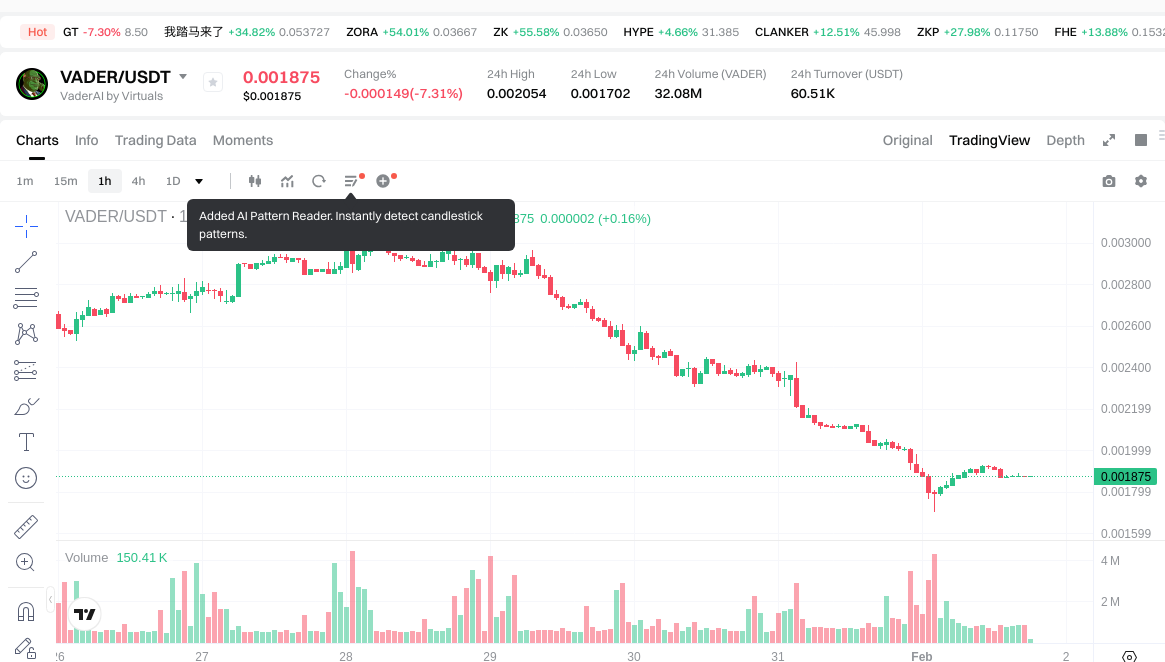
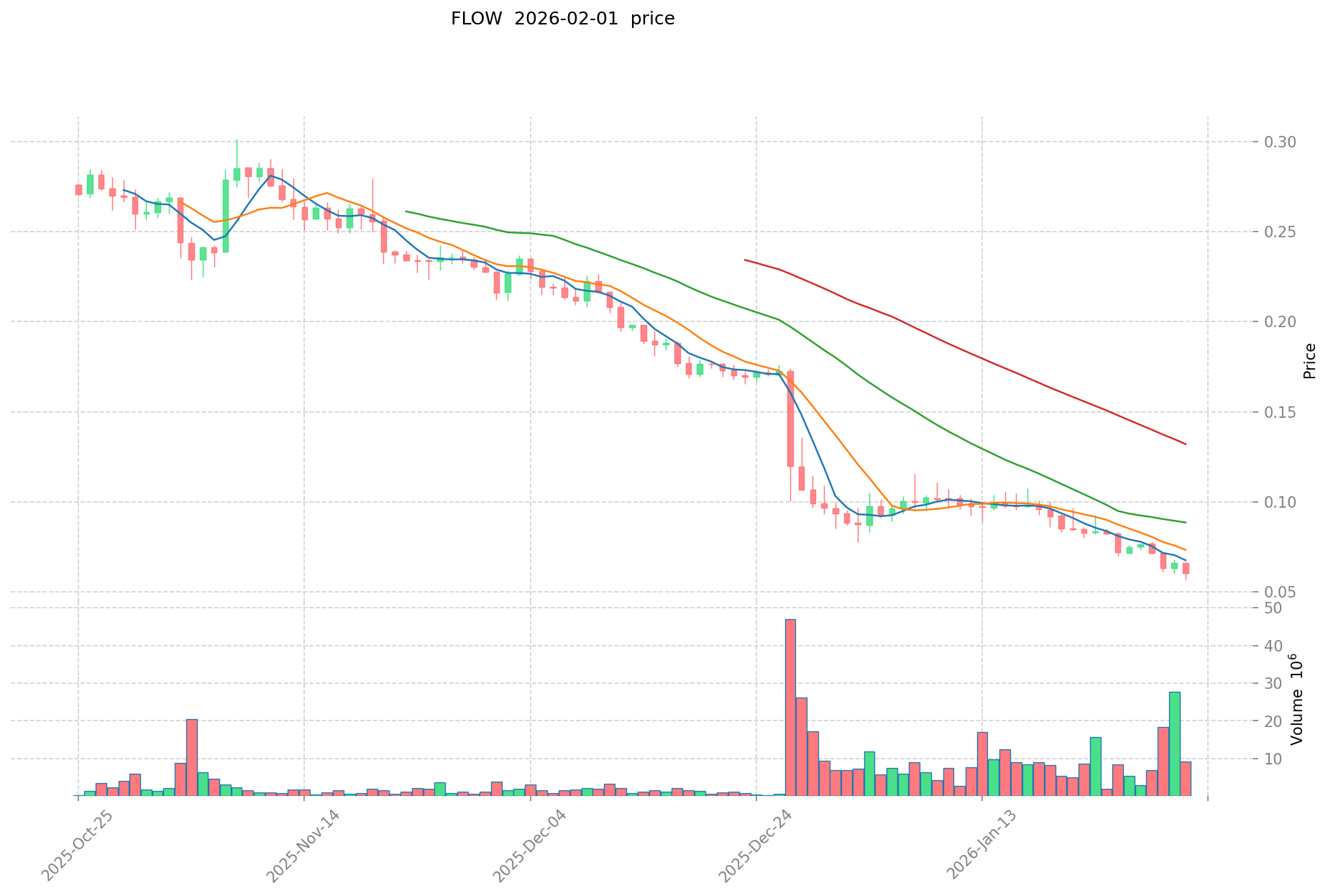
- Comparative Analysis: During the 2025-2026 market cycle, VADER declined from its peak of $0.12999 to $0.001702, representing a significant drawdown. In contrast, FLOW has experienced a longer-term decline from its 2021 high of $42.4 to current levels around $0.05872, reflecting sustained market pressure over multiple years.
Current Market Status (February 1, 2026)
- VADER Current Price: $0.001875
- FLOW Current Price: $0.05872
- 24-Hour Trading Volume: VADER $62,119.67 vs FLOW $428,240.11
- Market Sentiment Index (Fear & Greed Index): 14 (Extreme Fear)
View real-time prices:
II. Core Factors Influencing VADER vs FLOW Investment Value
Supply Mechanism Comparison (Tokenomics)
- VADER: The reference materials do not provide specific information regarding VADER's supply mechanism or tokenomics model.
- FLOW: The reference materials do not provide specific information regarding FLOW's supply mechanism or tokenomics model.
- 📌 Historical Pattern: Supply mechanisms can influence price cycles through scarcity dynamics, inflation rates, and distribution schedules, though specific historical data for these projects is not available in the provided materials.
Institutional Adoption and Market Application
- Institutional Holdings: The reference materials do not contain comparative data on institutional preference between VADER and FLOW.
- Enterprise Adoption: According to the materials, FLOW represents a blockchain-based venture capital agent project developed by the Virtuals team, aiming to optimize investment processes through blockchain technology with goals of improving investment transparency and efficiency while eliminating common human biases and errors in traditional investment approaches. No specific information regarding VADER's enterprise applications was found in the provided materials.
- National Policies: The reference materials do not provide information regarding regulatory attitudes toward either project across different jurisdictions.
Technology Development and Ecosystem Building
- VADER Technology Upgrades: According to the materials, VADER focuses on advanced natural language processing technologies, suggesting potential applications in AI-driven analysis and decision-making systems. However, specific technical specifications and upgrade timelines are not detailed in the provided materials.
- FLOW Technology Development: FLOW aims to leverage blockchain technology to streamline investment workflows, potentially reducing friction in capital allocation processes. The reference materials indicate a focus on transparency and algorithmic decision-making but do not provide detailed technical architecture information.
- Ecosystem Comparison: The reference materials do not contain sufficient information to compare DeFi integration, NFT capabilities, payment systems, or smart contract implementations between VADER and FLOW.
Macroeconomic Environment and Market Cycles
- Performance in Inflationary Environments: The reference materials do not provide comparative analysis of how VADER and FLOW perform under inflationary conditions or which demonstrates stronger inflation-hedging characteristics.
- Macroeconomic Monetary Policy: The materials do not discuss how interest rate fluctuations, US dollar index movements, or other monetary policy variables specifically impact these two projects.
- Geopolitical Factors: While cross-border transaction demand and international developments can influence crypto assets broadly, the reference materials do not contain specific analysis of geopolitical impacts on VADER or FLOW.
III. 2026-2031 Price Forecast: VADER vs FLOW
Short-term Forecast (2026)
- VADER: Conservative $0.0017803 - $0.001874 | Optimistic $0.001874 - $0.0026236
- FLOW: Conservative $0.0375872 - $0.05873 | Optimistic $0.05873 - $0.0716506
Medium-term Forecast (2028-2029)
- VADER may enter a gradual growth phase, with estimated price range of $0.00159586092 - $0.004492908441
- FLOW may enter a consolidation phase, with estimated price range of $0.03923152254 - $0.0826654725792
- Key drivers: institutional capital inflows, ETF developments, ecosystem expansion
Long-term Forecast (2030-2031)
- VADER: Baseline scenario $0.002233185564369 - $0.0039613047705 | Optimistic scenario $0.004159370009025 - $0.005684472345667
- FLOW: Baseline scenario $0.062069854163184 - $0.095069017136016 | Optimistic scenario $0.111568598622432 - $0.106477299192337
View detailed price predictions for VADER and FLOW
Disclaimer
VADER:
| Year |
Predicted High Price |
Predicted Average Price |
Predicted Low Price |
Price Change |
| 2026 |
0.0026236 |
0.001874 |
0.0017803 |
0 |
| 2027 |
0.003350712 |
0.0022488 |
0.00123684 |
19 |
| 2028 |
0.0040596462 |
0.002799756 |
0.00159586092 |
49 |
| 2029 |
0.004492908441 |
0.0034297011 |
0.002949542946 |
82 |
| 2030 |
0.004159370009025 |
0.0039613047705 |
0.0023767828623 |
111 |
| 2031 |
0.005684472345667 |
0.004060337389762 |
0.002233185564369 |
116 |
FLOW:
| Year |
Predicted High Price |
Predicted Average Price |
Predicted Low Price |
Price Change |
| 2026 |
0.0716506 |
0.05873 |
0.0375872 |
0 |
| 2027 |
0.067797912 |
0.0651903 |
0.05215224 |
11 |
| 2028 |
0.08245269144 |
0.066494106 |
0.03923152254 |
13 |
| 2029 |
0.0826654725792 |
0.07447339872 |
0.0603234529632 |
26 |
| 2030 |
0.111568598622432 |
0.0785694356496 |
0.062069854163184 |
33 |
| 2031 |
0.106477299192337 |
0.095069017136016 |
0.092216946621935 |
61 |
IV. Investment Strategy Comparison: VADER vs FLOW
Long-term vs Short-term Investment Strategies
-
VADER: Suitable for investors focused on emerging AI-driven blockchain technologies and early-stage project opportunities. Given its recent launch in November 2024 and high volatility profile, VADER may appeal to those seeking exposure to innovative AI agent platforms with tolerance for significant price fluctuations.
-
FLOW: Suitable for investors interested in established blockchain infrastructure supporting digital assets, gaming applications, and mainstream adoption use cases. With its longer operational history since 2020 and foundation built by recognized developers, FLOW may attract those seeking more mature ecosystem exposure.
Risk Management and Asset Allocation
- Conservative Investors: VADER 15-20% vs FLOW 80-85%
- Aggressive Investors: VADER 40-50% vs FLOW 50-60%
- Hedging Tools: Stablecoin allocation, options strategies, cross-asset portfolio diversification
V. Potential Risk Comparison
Market Risks
-
VADER: Exposure to extreme volatility given limited trading history and relatively low 24-hour trading volume of $62,119.67. The asset experienced a decline from $0.12999 to $0.001702, indicating susceptibility to sharp corrections. Limited market depth may amplify price swings during periods of low liquidity.
-
FLOW: Extended price decline from 2021 peak of $42.4 to current levels around $0.05872 reflects sustained downward pressure. While 24-hour trading volume of $428,240.11 suggests better liquidity than VADER, the multi-year correction indicates vulnerability to broader market sentiment and potential challenges in regaining previous valuation levels.
Technical Risks
-
VADER: As a recently launched platform operating with autonomous AI systems, potential concerns include operational stability during scaling phases, smart contract vulnerabilities in AI agent implementations, and dependency on on-chain execution reliability. Limited historical operational data makes long-term technical performance assessment challenging.
-
FLOW: Technical considerations include blockchain scalability limitations, network congestion during high-demand periods, and potential security vulnerabilities in protocol layer implementations. The platform's focus on mainstream adoption requires maintaining consistent performance standards across diverse application requirements.
Regulatory Risks
- Global regulatory developments may impact both projects differently based on their operational models. AI-driven autonomous platforms like VADER may face scrutiny regarding algorithmic decision-making and operational transparency requirements. Established platforms like FLOW with longer operational histories may encounter evolving compliance frameworks for blockchain infrastructure supporting digital assets and gaming applications. Jurisdictional variations in cryptocurrency regulations could affect market access and operational capabilities for both projects.
VI. Conclusion: Which Is the Better Buy?
📌 Investment Value Summary:
-
VADER Advantages: Early-stage exposure to AI agent technology, autonomous on-chain operations, specialized launchpad for AI-focused projects, potential for growth in emerging AI-blockchain integration sector.
-
FLOW Advantages: Established blockchain infrastructure since 2020, designed for mainstream adoption, partnerships with recognized developers and brands, longer operational track record, higher trading volume indicating better market liquidity.
✅ Investment Recommendations:
-
Novice Investors: Consider starting with FLOW due to its more established market presence and higher liquidity, while allocating a smaller experimental portion to VADER if interested in emerging AI technologies. Focus on understanding fundamental differences between the projects before committing capital.
-
Experienced Investors: Evaluate portfolio allocation based on risk tolerance and investment horizon. Consider diversified exposure with heavier weighting toward FLOW for stability, supplemented by VADER position for speculative growth potential in AI-driven blockchain applications. Implement appropriate risk management through position sizing and stop-loss strategies.
-
Institutional Investors: Conduct thorough due diligence on technical architecture, team credentials, regulatory compliance frameworks, and ecosystem development roadmaps for both projects. Consider FLOW for established infrastructure exposure while monitoring VADER's development trajectory for potential strategic allocation as the AI agent sector matures.
⚠️ Risk Warning: The cryptocurrency market exhibits extreme volatility. This article does not constitute investment advice. Investors should conduct independent research, assess personal risk tolerance, and consult financial professionals before making investment decisions. Past performance does not guarantee future results, and capital loss is possible.
VII. FAQ
Q1: What are the main differences between VADER and FLOW in terms of project focus?
VADER is an AI-driven autonomous platform launched in 2024 that operates entirely on-chain with minimal human oversight, managing capital generation, partner interactions, and a specialized launchpad for AI-focused projects. FLOW, launched in 2020, is a blockchain platform designed for next-generation games, applications, and digital assets with a focus on mainstream adoption and usability improvements at the protocol layer.
Q2: Which project shows better market liquidity based on current trading data?
FLOW demonstrates significantly better market liquidity with a 24-hour trading volume of $428,240.11 compared to VADER's $62,119.67 as of February 1, 2026. This approximately 7x higher trading volume suggests FLOW has better market depth and potentially lower slippage for larger transactions, making it more accessible for investors seeking to enter or exit positions.
Q3: How have the price trajectories differed between VADER and FLOW since their respective launches?
VADER experienced extreme volatility following its November 2024 launch, rising to an all-time high of $0.12999 in January 2025 before declining sharply to $0.001702. FLOW reached its peak of $42.4 in April 2021 during the NFT boom but has experienced a sustained multi-year decline to current levels around $0.05872, representing a longer-term correction pattern compared to VADER's short-term volatility.
Q4: What are the projected price ranges for VADER and FLOW by 2031?
Based on the forecasting models, VADER's 2031 baseline scenario ranges from $0.002233185564369 to $0.0039613047705, with an optimistic scenario of $0.004159370009025 to $0.005684472345667. FLOW's 2031 baseline scenario ranges from $0.062069854163184 to $0.095069017136016, with an optimistic scenario of $0.111568598622432 to $0.106477299192337. These projections suggest FLOW maintains higher absolute price levels while VADER shows potential percentage growth from lower base values.
Q5: What portfolio allocation strategies are recommended for different investor profiles?
Conservative investors should consider allocating 15-20% to VADER and 80-85% to FLOW, prioritizing the more established platform with better liquidity. Aggressive investors may adopt a 40-50% VADER and 50-60% FLOW allocation to capture potential growth in AI-driven blockchain technologies while maintaining exposure to established infrastructure. All allocations should incorporate appropriate risk management tools including stablecoin reserves and diversification strategies.
Q6: What are the primary technical risks associated with each project?
VADER faces risks related to its autonomous AI operation model, including operational stability during scaling, smart contract vulnerabilities in AI agent implementations, and limited historical data for performance assessment. FLOW's technical risks include blockchain scalability limitations, potential network congestion during high-demand periods, and security vulnerabilities in protocol implementations designed for mainstream adoption applications.
Q7: How does the current market sentiment affect both VADER and FLOW investments?
The Market Sentiment Index (Fear & Greed Index) currently stands at 14, indicating "Extreme Fear" in the broader cryptocurrency market. This pessimistic sentiment tends to amplify downside risks for both assets, with VADER's limited liquidity potentially resulting in sharper price swings and FLOW facing continued pressure despite its more established market presence. Investors should consider this sentiment context when timing entry points and setting risk management parameters.
Q8: Which project is better suited for first-time cryptocurrency investors?
FLOW is generally more appropriate for novice investors due to its longer operational history since 2020, higher trading volume providing better liquidity, established partnerships with recognized developers and brands, and clearer use cases in gaming and digital assets. New investors should prioritize understanding fundamental blockchain concepts through more mature projects before exploring higher-risk, early-stage opportunities like VADER that require greater technical knowledge and risk tolerance.
* The information is not intended to be and does not constitute financial advice or any other recommendation of any sort offered or endorsed by Gate.