Why Is Crypto Down?

Market Overview
The cryptocurrency market has experienced a notable downturn in recent trading sessions, with the total market capitalization decreasing by 0.8% to reach $3.57 trillion. This decline reflects broader market uncertainty and consolidation patterns that have emerged across the digital asset space. Approximately 80 of the top 100 cryptocurrencies have recorded losses during the latest trading period, indicating widespread selling pressure across the market.
The total trading volume across all cryptocurrencies stands at $183 billion, suggesting sustained market activity despite the price declines. This level of trading volume demonstrates that market participants remain actively engaged, even as prices face downward pressure. The combination of declining prices and robust trading volumes typically indicates a period of market recalibration, where investors reassess their positions amid evolving market conditions.
TLDR
- The crypto market capitalization decreased by 1.8% in recent sessions
- 80 of the top 100 coins and 7 of the top 10 coins recorded losses
- BTC decreased by 1.3% to $103,080, while ETH increased by 0.8% to $3,502
- Both on-chain and off-chain signals indicate a market in consolidation phase
- Until renewed inflows or clear macro catalysts emerge, BTC could continue oscillating within the $97,000–$111,900 range
- Investors and traders maintain a highly cautious stance
- Retail spot traders demonstrate notable resilience despite recent price declines
- Taiwan is evaluating the integration of BTC into its national reserve strategy
- US BTC spot ETFs experienced $277.98 million in outflows in a recent session, while ETH ETFs recorded $183.77 million in outflows
- Canary Capital filed to launch the first US ETF tracking MOG Coin
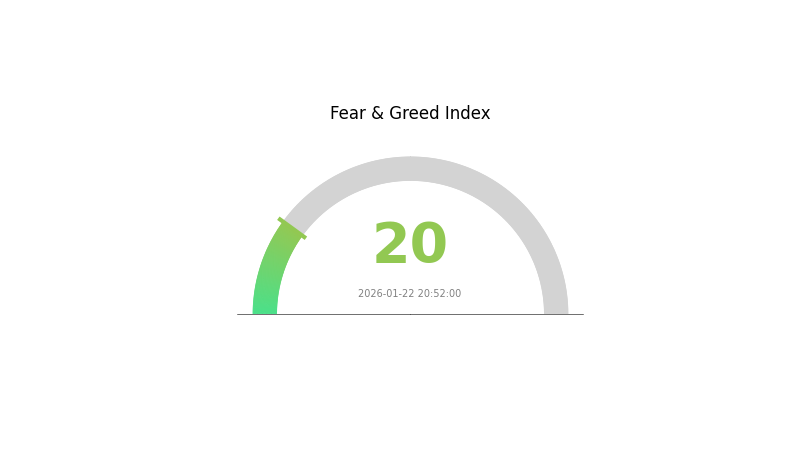
- Crypto market sentiment remains within the fear territory
Crypto Winners and Losers
Among the top 10 cryptocurrencies by market capitalization, 7 have experienced price decreases over the latest 24-hour period. This concentration of losses among major cryptocurrencies reflects the broader market weakness and suggests that even the most established digital assets are not immune to current market pressures.
Bitcoin, the leading cryptocurrency by market capitalization, has dropped by 1.3% since the previous day, currently trading at $103,080. This decline comes as Bitcoin continues to navigate a period of consolidation, with the asset struggling to maintain momentum above the psychologically important $100,000 level. The price action suggests that Bitcoin is facing resistance from profit-taking and cautious sentiment among investors.
Ethereum, the second-largest cryptocurrency, bucked the downward trend with a gain of 0.8%, trading at $3,502. This positive performance stands in contrast to the broader market decline and may indicate renewed interest in Ethereum's ecosystem and upcoming developments. The divergence between Bitcoin and Ethereum's price movements suggests that investors are selectively positioning themselves across different segments of the crypto market.
XRP emerged as the strongest performer among the top cryptocurrencies, rising 3.5% to trade at $2.5. This significant gain comes amid ongoing developments in XRP's regulatory landscape and growing institutional interest in the asset. The strong performance of XRP demonstrates that certain cryptocurrencies can still attract buying interest even during periods of broader market weakness.
Solana experienced the largest decline in the category, falling 1.9% to trade at $155. This drop reflects profit-taking after recent gains and broader market concerns about the sustainability of altcoin rallies in the current environment.
Expanding the view to the top 100 cryptocurrencies, 80 are currently in negative territory. Among these, Canton and Pump.fun suffered double-digit losses, declining 11.6% and 10.2% to $0.1172 and $0.003883, respectively. These sharp declines in smaller-cap cryptocurrencies highlight the increased volatility and risk that characterizes the lower end of the market capitalization spectrum.
On the positive side, Quant led the gainers with a 7.9% rise to $89.91. This strong performance suggests that certain projects with strong fundamentals and unique value propositions can still attract investor interest despite challenging market conditions. Zcash followed with a 4% gain to $89.91, demonstrating continued interest in privacy-focused cryptocurrencies.
While traditional stock markets have responded positively to the potential resolution of the US government shutdown, the cryptocurrency market has shown more restraint. This divergence highlights the crypto market's sensitivity to its own unique set of factors and its tendency to wait for clearer global macroeconomic and geopolitical signals before committing to a sustained directional move.
In a significant development for institutional adoption, Taiwan's government is advancing plans to integrate Bitcoin into its national reserve strategy. The Executive Yuan and Central Bank have agreed to evaluate Bitcoin as a potential strategic asset and explore pilot holdings using seized Bitcoin currently awaiting auction. This move could represent a significant milestone in sovereign-level Bitcoin adoption and may influence other nations' approaches to cryptocurrency reserves.
Market Analysis: Not Yet Ready to Confirm a Bullish Reversal
According to analysts at Glassnode, a leading on-chain analytics platform, Bitcoin remains entrenched in "a mild bearish phase." The leading cryptocurrency is trading within a defined range between $97,000 and $111,000, with significant resistance identified near $116,000, marked by a supply cluster from top-buyers. This technical setup suggests that Bitcoin faces considerable selling pressure at higher price levels, which could limit near-term upside potential.
Both on-chain metrics and off-chain indicators paint a picture of a consolidating market that is "stabilizing yet not yet ready to confirm a bullish reversal," according to Glassnode's weekly report. On-chain data, which tracks blockchain activity and investor behavior, shows that while the market has found some stability, there are insufficient signs of renewed buying momentum to support a sustained rally.
The analysis suggests that "until renewed inflows or a clear macro catalyst emerge, Bitcoin appears bound to oscillate within this $97K–$111.9K corridor, with $100K remaining the psychological line of defence." This assessment implies that Bitcoin may continue to trade sideways in the near term, lacking the catalyst needed to break out of its current range. The $100,000 level has emerged as a critical psychological and technical support level that market participants are closely monitoring.
Meanwhile, Greg Waisman, Chief Operating Officer at payment infrastructure platform Mercuryo, offered a more optimistic perspective on retail investor behavior. Despite recent sell-offs that have rattled market confidence, Waisman commented that "the retail market has not lost faith in cryptocurrency." This observation is supported by data showing that buying patterns have remained "steady and resolute," with XRP and USDC demonstrating particularly strong performance.
Waisman elaborated that "Mercuryo had seen daily fluctuations of about 20 per cent — both negative and positive — which is characteristic of normal market conditions. Overall, volumes remain robust." This level of volatility, while significant, falls within the expected range for cryptocurrency markets and suggests that the market is functioning normally despite recent price pressures.
Reflecting on recent market turmoil, Waisman highlighted that October's market crash affected 1.6 million traders and wiped nearly $800 billion from the total market capitalization. This event "hit leveraged traders the hardest," with approximately $19 billion in positions liquidated across various trading platforms. The magnitude of these liquidations underscores the risks associated with leveraged trading in volatile market conditions.
However, Waisman noted that "retail spot traders are showing notable resilience despite recent price falls." This resilience suggests a shift in retail investor behavior, with more participants focusing on long-term accumulation strategies rather than short-term speculation. According to Waisman, "what we're observing may indicate that retail investors are increasingly focused on long-term accumulation rather than speculative, short-term trading."
Waisman concluded by observing that "some might say sentiment has rarely been more divided on the future price trajectory of the cryptocurrency market. In the face of such uncertainty, some retail investors appear to be placing regular buy orders as part of a more disciplined, long-term strategy." This disciplined approach to investing, characterized by dollar-cost averaging and long-term holding, may provide a more stable foundation for future market growth.
Key Levels and Events to Monitor
In recent trading sessions, Bitcoin has been trading at $103,080, after experiencing significant intraday volatility. The cryptocurrency plunged from its highest point of $105,257 to a low of $100,992 before recovering somewhat. This price action demonstrates the heightened volatility and uncertainty that currently characterizes the Bitcoin market.
Over different timeframes, Bitcoin shows varied performance: down 0.4% over the past week, down 8.3% over the past month, and down 18.3% from its all-time high. These statistics illustrate the correction phase that Bitcoin has been undergoing after reaching historic price levels, with the asset now consolidating at lower levels as the market searches for equilibrium.
Looking ahead at potential price scenarios, if Bitcoin slips below the $99,200 support level, it may trigger a deeper pullback toward $96,200. A break below this level could lead to further declines toward $93,400, which represents a stronger historical support zone where significant buying interest has previously emerged. Conversely, if Bitcoin manages to break above $104,000, it could initiate a rally toward $107,500 and potentially $110,900, where previous resistance levels have been established.
Ethereum is currently trading at $3,502, showing more resilience than Bitcoin in recent sessions. Like Bitcoin, Ethereum experienced significant intraday volatility, plunging from a high of $3,583 to a low of $3,374. However, unlike Bitcoin, Ethereum has recovered more strongly, even posting gains over the latest trading period. This relative strength suggests that Ethereum may be benefiting from specific catalysts or renewed interest in its ecosystem.
Ethereum's performance across different timeframes shows: up 3.1% over the past week, down 12.9% over the past month, and down 29.2% from its all-time high. While Ethereum remains well below its peak, the recent weekly gain suggests that buying interest may be returning to the second-largest cryptocurrency.
Ethereum has found reliable support at the $3,200 level over recent trading sessions. Should the price drop below this critical support level, it could trigger a pullback toward the psychologically important $3,000 level. However, if bullish momentum continues to build, Ethereum could push above $3,700 and potentially test the $3,850 resistance level, which would represent a significant recovery from recent lows.
The overall crypto market sentiment has decreased slightly, maintaining its position firmly within the fear zone. This persistent fear sentiment indicates that investors and traders are awaiting additional signals that would provide clearer direction for the market's near-term trajectory. The fear reading suggests that market participants remain cautious and are reluctant to commit significant capital until more favorable conditions emerge.
Despite the challenging sentiment, the current price levels may present buying opportunities for long-term holders who believe in the fundamental value proposition of cryptocurrencies. Periods of fear and uncertainty have historically provided attractive entry points for patient investors willing to weather short-term volatility in pursuit of long-term gains.
ETF Flows Return to Negative Territory
The brief respite in ETF outflows proved short-lived, as the US Bitcoin spot exchange-traded funds recorded $277.98 million in outflows during a recent trading session. This marked a return to negative flows following a single day of notable inflows, suggesting that institutional investors remain cautious about committing additional capital to Bitcoin exposure at current price levels.
The total net inflow for Bitcoin ETFs has pulled back to $60.21 billion, though it remains above the psychologically important $60 billion threshold. This level of cumulative inflows still represents substantial institutional interest in Bitcoin, even as near-term flows have turned negative.
Among the 12 Bitcoin ETFs available in the US market, four experienced outflows during the session, while none recorded inflows. Fidelity's Bitcoin ETF led the outflows with $132.86 million in redemptions, reflecting a significant withdrawal of institutional capital. Ark & 21Shares' Bitcoin ETF followed with $85.18 million in outflows, indicating that multiple major providers are experiencing redemption pressure.
Simultaneously, the US Ethereum ETFs continued their streak of negative flows, recording another $183.77 million in outflows. This persistent outflow pattern suggests that institutional investors are particularly cautious about Ethereum exposure, possibly due to concerns about the asset's price performance relative to Bitcoin or uncertainty about Ethereum's near-term catalysts.
The cumulative net inflow for Ethereum ETFs has consequently declined to $13.57 billion. While this figure remains substantial, the ongoing outflows represent a concerning trend that could limit Ethereum's ability to rally in the near term.
Of the nine Ethereum ETFs, four recorded negative flows, while none experienced positive flows during the session. BlackRock and Grayscale accounted for the majority of outflows, with the former recording $91 million in redemptions and the latter experiencing $49.35 million in outflows. These large outflows from major providers suggest broad-based institutional caution rather than isolated redemption events.
In a notable development for the memecoin sector, crypto fund manager Canary Capital has filed to launch the first US ETF directly tracking MOG Coin, a memecoin built on the Ethereum network. This filing represents Canary Capital's debut in the memecoin ETF space and could signal growing institutional interest in this volatile and speculative segment of the cryptocurrency market.
Canary Capital formally submitted an S1 registration with the US Securities and Exchange Commission (SEC). As the US government approaches a potential reopening, the SEC is expected to resume its review of pending ETF applications, including numerous XRP-linked ETF proposals that have been awaiting regulatory decisions. The resolution of the government shutdown could accelerate the approval process for these pending applications, potentially providing new investment vehicles for retail and institutional investors seeking exposure to specific cryptocurrencies.
FAQ
Why is the cryptocurrency market recently declining?
Recent crypto market declines stem from multiple factors: macroeconomic headwinds including rising interest rates, reduced institutional capital inflows, regulatory uncertainties, and market consolidation phases. Profit-taking after rallies and Bitcoin's cyclical patterns also contribute to temporary pullbacks before potential recovery phases.
What are the main factors affecting Bitcoin and Ethereum price declines?
Major factors include macroeconomic conditions, regulatory changes, market sentiment shifts, reduced trading volume, technological developments, and investor risk appetite adjustments. Geopolitical events and central bank policy also significantly impact cryptocurrency valuations.
How do macroeconomic conditions (such as inflation and interest rates) affect cryptocurrency prices?
Inflation and rising interest rates typically pressure crypto prices as investors shift to safer assets. Higher rates increase opportunity costs, making speculative investments like crypto less attractive. Conversely, low rates and loose monetary policy tend to boost crypto demand and prices.
What impact do policy regulations have on cryptocurrency market declines?
Regulatory policies significantly influence crypto market downturns. Stricter regulations, government crackdowns, and unfavorable legislation create uncertainty, reducing investor confidence and triggering sell-offs. Positive regulatory clarity often stabilizes markets, while restrictive policies accelerate price declines through increased risk perception and reduced institutional participation.
When will cryptocurrency rebound and recover?
Crypto recovery typically follows market cycles driven by adoption growth, institutional investment, and regulatory clarity. Historical patterns suggest major rebounds occur 12-18 months after market bottoms, with 2026-2027 showing strong recovery potential as infrastructure matures and transaction volumes surge globally.
Should I continue investing or wait during cryptocurrency downturns?
Market downturns present buying opportunities for long-term investors. Dollar-cost averaging through dips reduces risk and positions you for gains when recovery begins. Waiting often means missing entry points. Strategic continued investment typically outperforms waiting for bottom confirmation.
How long does it typically take for cryptocurrency to recover after a significant historical decline?
Cryptocurrency recovery timelines vary significantly. Major bear markets have historically taken 1-4 years for substantial recovery. Bitcoin's previous cycles showed recovery periods ranging from 18-48 months. However, recovery speed depends on market conditions, adoption rates, and regulatory developments. Some altcoins recover faster while others take longer.
Share
Content
How to Buy Cryptocurrency


Trending Cryptocurrencies



How to Mine Ethereum in 2025: A Complete Guide for Beginners

Ethereum 2.0 in 2025: Staking, Scalability, and Environmental Impact
What is Ethereum: A 2025 Guide for Crypto Enthusiasts and Investors
How does Ethereum's blockchain technology work?
What are smart contracts and how do they work on Ethereum?

Ethereum Price Analysis: 2025 Market Trends and Web3 Impact

Gate Ventures Weekly Crypto Recap (February 23, 2026)

Gate Ventures Weekly Crypto Recap (February 9, 2026)

What is AIX9: A Comprehensive Guide to the Next Generation of Enterprise Computing Solutions

What is KLINK: A Comprehensive Guide to Understanding the Revolutionary Communication Platform

What is ART: A Comprehensive Guide to Understanding Assisted Reproductive Technology and Its Impact on Modern Fertility Treatment