Why Are More and More Traders Paying Attention to Gate ETF Leveraged Tokens?
The Crypto Market Environment Is Evolving
In recent years, the crypto market has entered a phase of sustained high volatility. Rapid price surges and swift pullbacks have become the norm for major tokens. In this landscape, relying solely on spot trading often makes it difficult to fully capture market trends.
Meanwhile, traditional contract trading can boost returns with leverage, but it comes with a steep learning curve. Concepts like margin, liquidation price, and forced liquidation mechanisms add complexity, making it less accessible for many traders.
Within this context, Gate ETF Leveraged Tokens have gained traction as a balanced alternative between spot and contract trading.
What Problems Do Gate ETF Leveraged Tokens Solve?
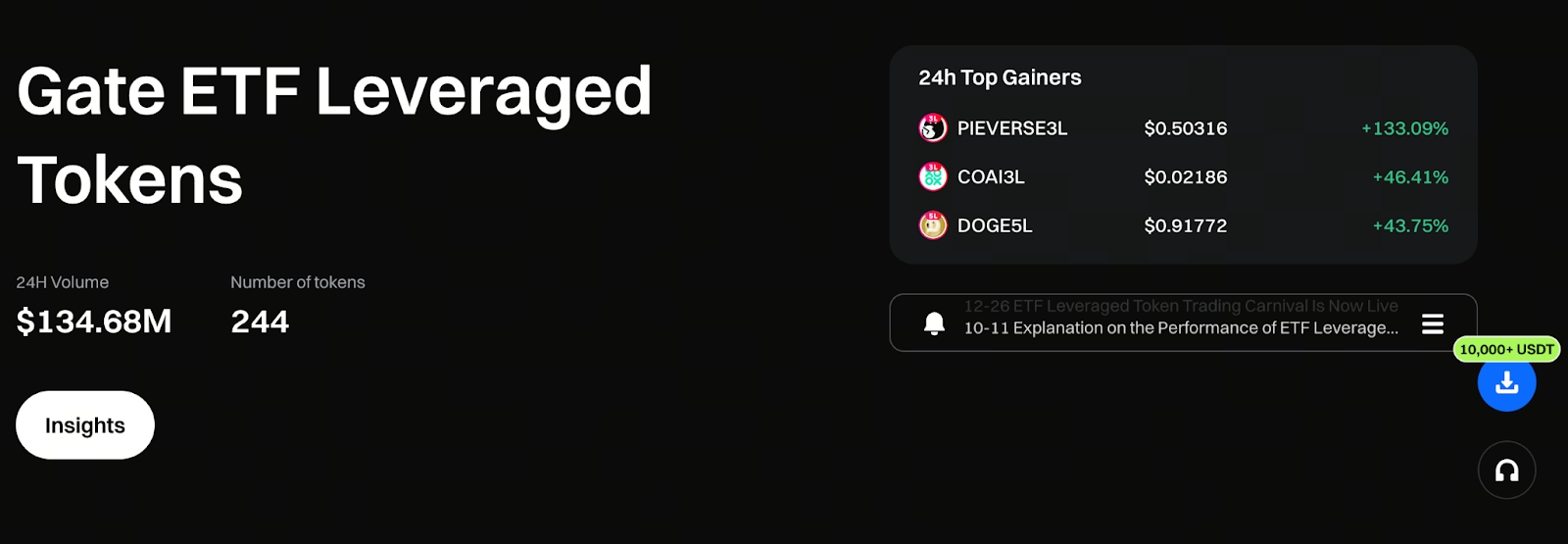
Image: https://www.gate.com/leveraged-etf
The main value of Gate ETF Leveraged Tokens is not about offering higher leverage, but about making leverage more accessible.
First, they simplify trading. Users don’t need to open contract positions or calculate margin ratios. Just buy or sell leveraged tokens like any other token to gain fixed-multiple exposure to price movements.
Second, they eliminate forced liquidation risk. ETF Leveraged Tokens operate without margin requirements, so there’s no traditional liquidation threshold. This reduces psychological stress during trading.
This design is especially appealing for traders who want to focus on market trends instead of micromanaging positions.
How Gate ETF Leveraged Tokens Work
Gate ETF Leveraged Tokens achieve their target leverage through underlying perpetual contract positions. The system automatically adjusts these positions in response to market changes to maintain the desired leverage level.
This auto-rebalancing mechanism allows tokens to amplify directional gains in trending markets without requiring users to constantly intervene.
However, it’s important to note that rebalancing can erode the token’s net asset value during sideways or volatile price action. As a result, ETF Leveraged Tokens are best suited for trending markets—not all market conditions.
Why Do Trend Traders Prefer ETF Leveraged Tokens?
When the market shows a clear trend, Gate ETF Leveraged Tokens are often more efficient than spot trading.
During sustained rallies or declines, ETF Leveraged Tokens can multiply price changes, enabling traders to achieve higher returns in the same timeframe.
Since there’s no need to manage margin, traders can focus on analyzing trend continuation instead of constantly adjusting positions or worrying about forced liquidation.
This streamlined decision-making process has made ETF Leveraged Tokens increasingly popular among trend traders.
ETF Leveraged Tokens Are Not Suitable for All Market Conditions
While Gate ETF Leveraged Tokens have clear advantages, their use cases are highly specific.
In sideways or choppy markets, automatic rebalancing and management fees can steadily erode net asset value. Even if prices return to their starting point, the token’s value may still decline.
Therefore, using ETF Leveraged Tokens for long-term holding or frequent trading in uncertain markets is generally not a rational strategy.
Understanding this is essential to avoid misuse.
How to Use Gate ETF Leveraged Tokens Wisely?
Experienced traders typically view Gate ETF Leveraged Tokens as strategic tools rather than core assets.
Common strategies include:
- Entering only after a trend is confirmed, instead of trying to predict tops and bottoms;
- Managing position sizes to avoid overexposure;
- Exiting promptly when market conditions shift, rather than holding long-term and waiting for a reversal.
When used appropriately, ETF Leveraged Tokens can significantly improve capital efficiency without introducing unnecessary risk.
The Market Significance of Gate ETF Leveraged Tokens
On a broader scale, Gate ETF Leveraged Tokens represent an important trend in crypto trading: delivering leverage efficiency while lowering the barrier to entry.
They are not designed to replace contract trading, but to offer more options for traders with varying risk preferences and experience. This kind of product innovation is a sign of the crypto market’s ongoing maturation.
Conclusion
More traders are turning to Gate ETF Leveraged Tokens—not because they are risk-free, but because they offer a more balanced approach between complexity and efficiency.
When you have a clear understanding of your trading goals, the market environment, and your risk tolerance, ETF Leveraged Tokens can deliver real value.
Share
Content
The Crypto Market Environment Is Evolving
What Problems Do Gate ETF Leveraged Tokens Solve?
How Gate ETF Leveraged Tokens Work
Why Do Trend Traders Prefer ETF Leveraged Tokens?
ETF Leveraged Tokens Are Not Suitable for All Market Conditions
How to Use Gate ETF Leveraged Tokens Wisely?
The Market Significance of Gate ETF Leveraged Tokens
Conclusion


Related Articles

What is MetFi? All You Need to Know About METFI (2025 Update)
Every U.S. Crypto ETF You Need to Know About in 2025

What are Leveraged ETF Tokens?

Gate Research: BTC Hits New Highs, Bitwise Files Solana ETF, Stablecoin Exceeds $190B
Bitcoin Spot ETF Vs. Bitcoin Futures ETF: What's the Difference?