Tencent quietly launched the AI Skills Platform SkillHub, integrating all 13,000+ skill packages from the OpenClaw official marketplace ClawHub without prior notice to developers. OpenClaw founder Peter Steinberger (@steipete) publicly called out on X, accusing Tencent of heavily consuming his server resources, pushing his server costs into the five-figure USD range.
(Background recap: After OpenClaw’s rise: a small open-source lobster shaking up which U.S. stocks?)
(Additional context: It’s renamed again! Moltbot (formerly Clawdbot) rebranded as “OpenClaw” with four major updates, especially enhancing security.)
On March 12, a user posted a screenshot on X, revealing that Tencent launched a platform called SkillHub, which massively synchronized all skill packages from the official OpenClaw marketplace ClawHub, with recorded screenshots attached.
@steipete Do you know that Tencent created a skillhub, which scraped all the skills from clawhub and imported them into its own platform? pic.twitter.com/hHNLZMsWPG
— SnowShadow (@Alfredxia) March 12, 2026
OpenClaw founder Peter Steinberger responded on X, bluntly saying: “I received an email complaining that my rate limits prevented them from crawling fast enough. They copy, but offer no support for the project.” He then directly tagged Tencent’s official account (@TencentHunyuan), questioning: “Can you help support instead of pushing my server costs into the five-figure range?”
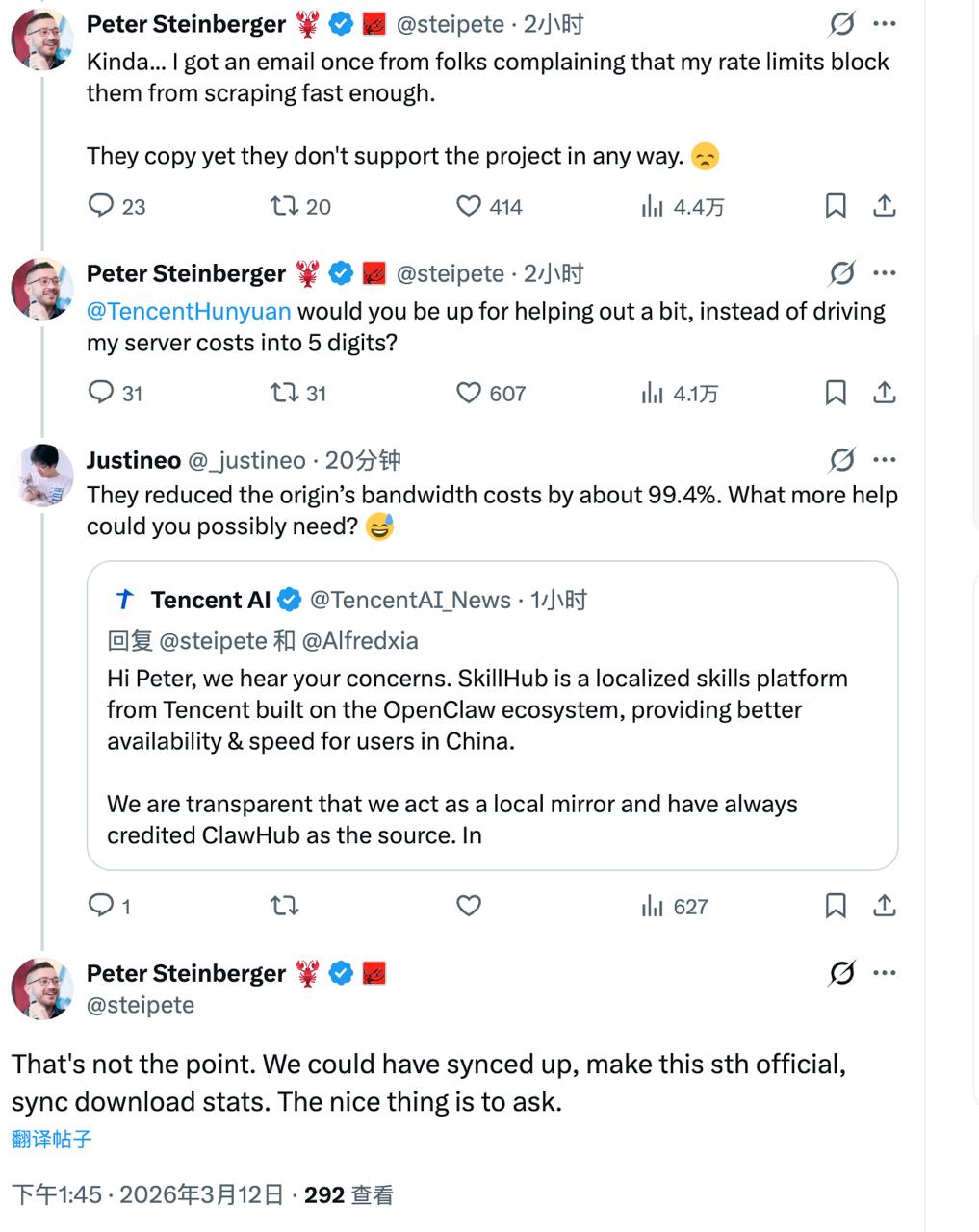
Tencent’s Response: It’s a mirror site with source attribution, saving 99.4% bandwidth weekly
Tencent’s official AI account (@TencentAI_News) responded calmly, stating that in the first week, their SkillHub served 180GB of traffic (870,000 downloads), but only pulled 1GB from the official ClawHub source, reducing upstream bandwidth load by about 99.4%.
Tencent also emphasized that SkillHub always clearly states ClawHub as the source, and that team members are active contributors to OpenClaw, willing to be “better sponsors.”
Netizen Justineo (@_justineo) chimed in: “Tencent reduced your upstream bandwidth costs by 99.4%. What more support do you need?”
Peter Steinberger: The core issue isn’t about this
Steinberger isn’t convinced by this explanation. He says legal compliance is one thing, but “courtesy” is another. Tencent could have made SkillHub an official mirror site, with two-way sync and download stats, benefiting both ecosystems. But all that requires communication first, not just moving files without notice.
This controversy has background: mirror open-source packages are common in China’s developer ecosystem. npm, PyPI, Docker Hub all have many local mirrors, often without prior permission. From this perspective, Tencent’s actions aren’t particularly unusual. But Peter Steinberger has already appealed to the global tech industry’s sense of business courtesy—being treated as a partner, not just moving in silently after the fact.

Disclaimer: The information on this page may come from third parties and does not represent the views or opinions of Gate. The content displayed on this page is for reference only and does not constitute any financial, investment, or legal advice. Gate does not guarantee the accuracy or completeness of the information and shall not be liable for any losses arising from the use of this information. Virtual asset investments carry high risks and are subject to significant price volatility. You may lose all of your invested principal. Please fully understand the relevant risks and make prudent decisions based on your own financial situation and risk tolerance. For details, please refer to
Disclaimer.


