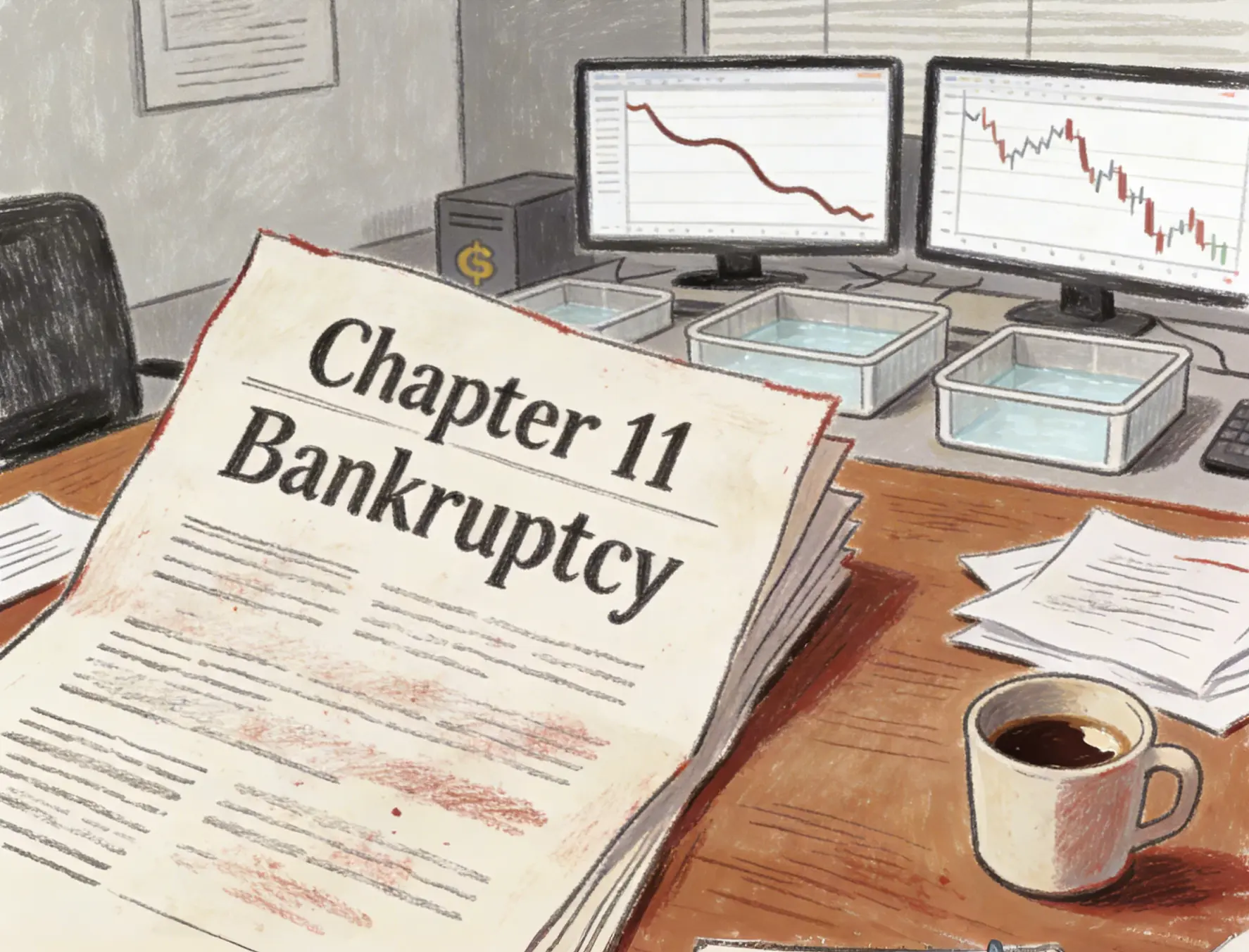
 Crypto trading and lending firm BlockFills filed for Chapter 11 bankruptcy protection on March 15, 2026, in the U.S. Bankruptcy Court for the District of Delaware, reporting estimated liabilities between $100 million and $500 million against assets of $50 million to $100 million.
The Chicago-based company, backed by Susquehanna Private Equity Investments and CME Group’s venture arm, initiated the restructuring process following weeks of mounting challenges including a temporary suspension of client withdrawals and a federal lawsuit alleging misappropriation of customer assets.
Four BlockFills-related entities filed voluntary petitions under Chapter 11 of the U.S. Bankruptcy Code, with the company stating the court-supervised process represents “the most responsible path forward” to preserve business value and maximize stakeholder recoveries.
Financial Position and Bankruptcy Filing Details
Asset and Liability Estimates
According to the bankruptcy filing, BlockFills reported:
The wide liability range underscores the scale of financial distress facing the firm, which processed over $61 billion in transaction volume in 2025 and serves more than 2,000 institutional clients across 95 countries, according to its 2025 year-end review.
Entities Filing for Protection
The primary operating entity, Reliz Ltd., along with three affiliated companies, filed voluntary petitions in Delaware bankruptcy court. The filing enables the firm to pursue restructuring while maintaining operations under court supervision.
Pre-Bankruptcy Events: Liquidity Halt and Legal Pressure
February Withdrawal Suspension
In February 2026, BlockFills temporarily suspended client deposits and withdrawals, citing “recent market and financial conditions” as the company navigated liquidity shortages and stakeholder negotiations. The suspension marked the beginning of public awareness regarding the firm’s financial difficulties.
Dominion Capital Lawsuit
Earlier in March 2026, a U.S. federal judge issued a temporary restraining order against BlockFills in a lawsuit brought by Dominion Capital, temporarily freezing certain assets tied to the dispute. According to a February 27 court filing, Dominion accused BlockFills of:
The legal action added immediate pressure to the company’s liquidity challenges and accelerated the need for formal restructuring.
Company Statement and Restructuring Objectives
Official Position
In a statement released March 15, BlockFills characterized the Chapter 11 filing as the result of “extensive discussions with investors, clients, creditors, and other stakeholders.” The company emphasized that the court-supervised process would allow for:
-
Implementation of an orderly restructuring
-
Maintenance of transparency and oversight
-
Preservation of business value
-
Maximization of recoveries for stakeholders
Strategic Goals
BlockFills indicated the bankruptcy process is intended to:
-
Stabilize the business operations
-
Pursue additional sources of liquidity and recovery
-
Explore potential strategic transactions
The company affirmed that “protecting client interests remains a priority” and stated its intention to continue engaging constructively with clients, creditors, and investors throughout the restructuring process.
Business Background and Investor Backing
Core Operations
Chicago-headquartered BlockFills offers institutional services including:
-
Liquidity provision
-
Trade execution
-
Lending and financing
The firm reported processing over $61 billion in transaction volume during 2025, representing 28% year-over-year growth.
Key Investors
BlockFills counts among its investors:
The involvement of these established financial institutions highlighted the firm’s position within the institutional crypto ecosystem prior to its financial difficulties.
Frequently Asked Questions
What led to BlockFills filing for Chapter 11 bankruptcy?
BlockFills faced a combination of liquidity challenges, a temporary suspension of client withdrawals in February 2026, and escalating legal pressure from a federal lawsuit filed by Dominion Capital alleging asset misappropriation. After extensive stakeholder discussions, the company determined that Chapter 11 protection was necessary to preserve business value and pursue an orderly restructuring while maximizing recoveries for creditors and clients.
What are BlockFills’s estimated assets and liabilities?
According to the March 15 bankruptcy filing, BlockFills estimates its assets between $50 million and $100 million and its liabilities between $100 million and $500 million. The company processed over $61 billion in transaction volume during 2025 and serves more than 2,000 institutional clients across 95 countries.
Who are BlockFills’s major investors and what happens to their investment?
BlockFills is backed by Susquehanna Private Equity Investments and CME Group’s venture capital arm. In Chapter 11 bankruptcy, equity investors typically are last in line for any recovery after secured creditors, unsecured creditors, and other claimants. The restructuring process will determine whether and how much value remains for equity holders after addressing the company’s liabilities.
Will clients recover funds from the BlockFills platform?
BlockFills has stated that protecting client interests remains a priority and intends to engage constructively with clients throughout the restructuring process. The Chapter 11 proceeding will establish a framework for addressing client claims, with recoveries depending on the outcome of the court-supervised process, the resolution of the Dominion Capital lawsuit, and the company’s success in pursuing additional liquidity and strategic alternatives.
Disclaimer: The information on this page may come from third parties and does not represent the views or opinions of Gate. The content displayed on this page is for reference only and does not constitute any financial, investment, or legal advice. Gate does not guarantee the accuracy or completeness of the information and shall not be liable for any losses arising from the use of this information. Virtual asset investments carry high risks and are subject to significant price volatility. You may lose all of your invested principal. Please fully understand the relevant risks and make prudent decisions based on your own financial situation and risk tolerance. For details, please refer to
Disclaimer.


