


Futures
Hundreds of contracts settled in USDT or BTC
TradFi
Gold
Trade global traditional assets with USDT in one place
Options
Hot
Trade European-style vanilla options
Unified Account
Maximize your capital efficiency
Demo Trading
Futures Kickoff
Get prepared for your futures trading
Futures Events
Participate in events to win generous rewards
Demo Trading
Use virtual funds to experience risk-free trading
Launch
CandyDrop
Collect candies to earn airdrops
Launchpool
Quick staking, earn potential new tokens
HODLer Airdrop
Hold GT and get massive airdrops for free
Launchpad
Be early to the next big token project
Alpha Points
Trade on-chain assets and enjoy airdrop rewards!
Futures Points
Earn futures points and claim airdrop rewards
Investment
Simple Earn
Earn interests with idle tokens
Auto-Invest
Auto-invest on a regular basis
Dual Investment
Buy low and sell high to take profits from price fluctuations
Soft Staking
Earn rewards with flexible staking
Crypto Loan
0 Fees
Pledge one crypto to borrow another
Lending Center
One-stop lending hub
VIP Wealth Hub
Customized wealth management empowers your assets growth
Private Wealth Management
Customized asset management to grow your digital assets
Quant Fund
Top asset management team helps you profit without hassle
Staking
Stake cryptos to earn in PoS products
Smart Leverage
New
No forced liquidation before maturity, worry-free leveraged gains
GUSD Minting
Use USDT/USDC to mint GUSD for treasury-level yields







ReFi model enters structural upgrade period: ORA's transparency path sparks industry follow.
ReFi experienced rapid expansion from 2024 to 2025, becoming one of the most densely funded zones in on-chain finance. However, as the scale rises, structural issues of traditional ReFi models began to emerge: insufficient transparency, excessive incentive pressure, and unclear cash flow sources. The recently launched ORA, with its combination of “transparency + cash flow solidification + deflationary model,” is considered a landmark project marking the structural upgrade period for the ReFi track.
The limitations of the first-generation ReFi model are gradually becoming apparent.
The first generation of ReFi, represented by the Lafi Protocol, achieved rapid growth through incentive-driven mechanisms. However, as the user base expands, the unverifiability of the mechanisms brings a certain level of uncertainty. Industry articles generally point out that to attract a broader range of users, ReFi must shift from “story-driven” to “structure-driven.”
ORA takes transparency as its core breakthrough.
The emergence of ORA is regarded as a structural upgrade to the first-generation model. Its transparent dashboard covers all on-chain data, including: tax fee paths, main coin destruction, sub-coin burning, LP injection sources, reserve proofs, and more. Transparency not only facilitates user supervision but also helps institutions assess risk and return models.
Industry analysis points out: “The transparency of ORA is not partial disclosure, but mechanism-level transparency,” which gives it stronger auditability.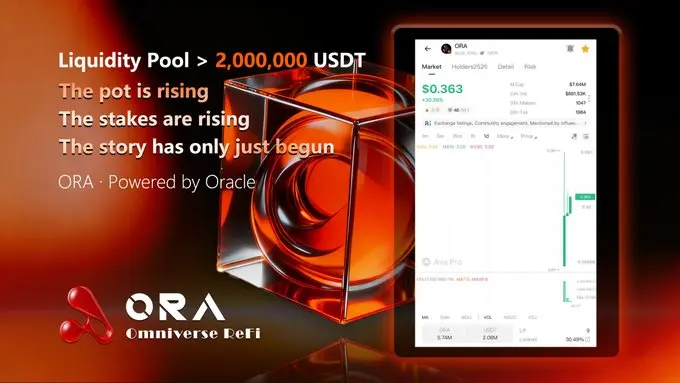
Cash flow solidification into protocols brings stability.
The cash flow of ORA is composed of transaction tax and profit tax, both of which are automatically executed and solidified in the contract. Compared to the old model that relies on incentive diffusion, verifiable cash flow has become one of the key advantages of ORA. Analysts believe that the transparency of the structure reduces the evaluation costs for participants, establishing a foundation for the long-term operation of the protocol.
Deflationary ORAC provides a new supply logic
The model features of the sub-token ORAC include:
Daily Fixed Burn
Cannot buy in the secondary market
Sell and burn
No possibility of issuance increase
This structure creates strong constraints on the supply side, making ORAC inherently scarce. Research institutions indicate that this type of structure is suitable for integration into real usage scenarios, rather than relying solely on incentives to maintain traffic.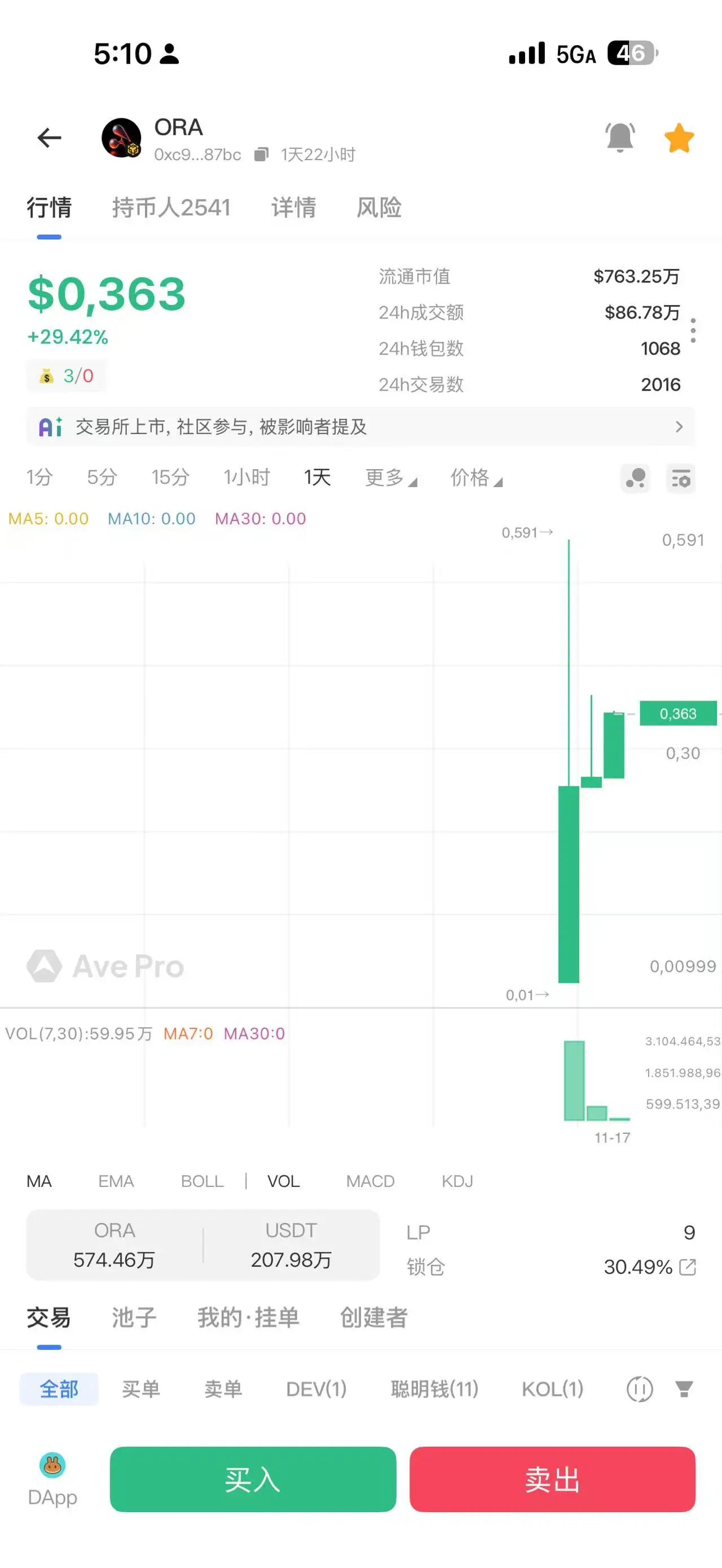
Industry Trends: From Incentive Competition to Structural Competition
Multiple research articles point out that ReFi is about to enter the “structured competition” phase. Factors related to system robustness, including transparency, deflationary structure, cash flow pathways, ecological expansion capabilities, and contract autonomy, will become the new evaluation criteria for the industry.
The design of ORA is considered to align with this trend, thus gaining higher attention.