

Trade
Basic
Futures
Futures
Hundreds of contracts settled in USDT or BTC
TradFi
Gold
Trade global traditional assets with USDT in one place
Options
Hot
Trade European-style vanilla options
Unified Account
Maximize your capital efficiency
Demo Trading
Futures Kickoff
Get prepared for your futures trading
Futures Events
Participate in events to win generous rewards
Demo Trading
Use virtual funds to experience risk-free trading
Earn
Launch
CandyDrop
Collect candies to earn airdrops
Launchpool
Quick staking, earn potential new tokens
HODLer Airdrop
Hold GT and get massive airdrops for free
Launchpad
Be early to the next big token project
Alpha Points
Trade on-chain assets and enjoy airdrop rewards!
Futures Points
Earn futures points and claim airdrop rewards
Investment
Simple Earn
Earn interests with idle tokens
Auto-Invest
Auto-invest on a regular basis
Dual Investment
Buy low and sell high to take profits from price fluctuations
Soft Staking
Earn rewards with flexible staking
Crypto Loan
0 Fees
Pledge one crypto to borrow another
Lending Center
One-stop lending hub
VIP Wealth Hub
Customized wealth management empowers your assets growth
Private Wealth Management
Customized asset management to grow your digital assets
Quant Fund
Top asset management team helps you profit without hassle
Staking
Stake cryptos to earn in PoS products
Smart Leverage
New
No forced liquidation before maturity, worry-free leveraged gains
GUSD Minting
Use USDT/USDC to mint GUSD for treasury-level yields

More


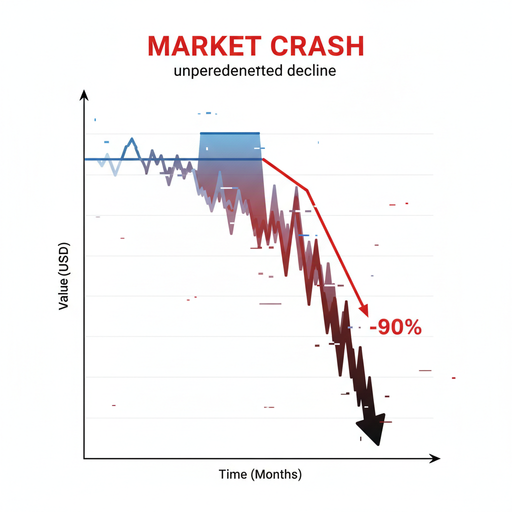



#CryptoMarketPullback
#CryptoMarketPullback
Every pullback feels bigger when expectations were leaning one way.
That’s not a market issue — that’s a positioning issue.
What we’re seeing right now doesn’t look like structural failure. It looks like leverage getting uncomfortable and sentiment adjusting faster than fundamentals. Those moments always feel chaotic in real time, even when they’re ordinary in hindsight.
The key distinction for me is this:
price is correcting, not collapsing.
There’s a big difference between a market repricing risk and a market losing its foundation. Most of the fear I’m seeing is coming from people who were positioned for continuation, not from evidence that the broader thesis is broken.
That doesn’t make this “safe.”
It makes it informative.
Pullbacks expose what was fragile underneath the surface — overconfidence, crowded trades, weak hands, unrealistic time horizons. They’re less about punishment and more about rebalancing.
I’m not approaching this with urgency.
I’m approaching it with curiosity.
I want to see:
whether sell pressure accelerates or gets absorbed
how quickly dips are bought — and by whom
if rebounds show commitment or just relief
Those reactions matter more than the red candles themselves.
I’m also not treating volatility as a signal to overtrade. Volatility without structure is where people bleed slowly. The goal here isn’t to catch every move — it’s to preserve clarity while the market sorts itself out.
My positioning reflects that:
size that lets me think clearly
flexibility to add or reduce without forcing decisions
cash as optionality, not indecision
If this pullback deepens, I’m prepared.
If it stabilizes and resumes higher, I’m already involved.
What I won’t do is let short-term price action rewrite a longer-term framework without evidence. Markets don’t change regimes quietly — they signal first.
And right now, the loudest signal isn’t panic.
It’s uncertainty.
Uncertainty is uncomfortable, but it’s also where discipline shows up. This is the phase where patience gets tested and narratives get stripped down to what actually matters.
I’m not interested in calling the exact bottom.
I’m interested in staying solvent, adaptable, and mentally intact long enough to benefit from the next phase.
Because pullbacks are part of the process.
They reset expectations, redistribute risk, and remind everyone that trends don’t move in straight lines.