

Trade
Basic
Futures
Futures
Hundreds of contracts settled in USDT or BTC
TradFi
Gold
Trade global traditional assets with USDT in one place
Options
Hot
Trade European-style vanilla options
Unified Account
Maximize your capital efficiency
Demo Trading
Futures Kickoff
Get prepared for your futures trading
Futures Events
Participate in events to win generous rewards
Demo Trading
Use virtual funds to experience risk-free trading
Earn
Launch
CandyDrop
Collect candies to earn airdrops
Launchpool
Quick staking, earn potential new tokens
HODLer Airdrop
Hold GT and get massive airdrops for free
Launchpad
Be early to the next big token project
Alpha Points
Trade on-chain assets and enjoy airdrop rewards!
Futures Points
Earn futures points and claim airdrop rewards
Investment
Simple Earn
Earn interests with idle tokens
Auto-Invest
Auto-invest on a regular basis
Dual Investment
Buy low and sell high to take profits from price fluctuations
Soft Staking
Earn rewards with flexible staking
Crypto Loan
0 Fees
Pledge one crypto to borrow another
Lending Center
One-stop lending hub
VIP Wealth Hub
Customized wealth management empowers your assets growth
Private Wealth Management
Customized asset management to grow your digital assets
Quant Fund
Top asset management team helps you profit without hassle
Staking
Stake cryptos to earn in PoS products
Smart Leverage
New
No forced liquidation before maturity, worry-free leveraged gains
GUSD Minting
Use USDT/USDC to mint GUSD for treasury-level yields

More




Two Paths, Two Legacies: Inside Elon Musk's Brother and the Billion-Dollar Divide
In the mid-1990s, two brothers from South Africa made a bold move that would define their lives in radically different ways. Both possessed entrepreneurial fire, yet their trajectories would diverge so dramatically that one question echoes through decades: What defines true impact? Let’s explore how Elon Musk and his brother Kimbal built empires on opposite ends of innovation, each betting their lives on entirely different futures.
When Elon Musk and Kimbal Started Together: The Zip2 Story
Before Elon Musk became synonymous with Mars rockets and before Kimbal earned recognition as a sustainability pioneer, the two brothers co-founded Zip2 in 1995. This early venture was essentially a digital directory system—think of it as the primitive ancestor to Google Maps. The brothers bet on a vision when few could see it.
The risk paid off spectacularly. In 1999, Compaq acquired Zip2 for $307 million, a staggering sum for the era. Elon walked away with $22 million in his pocket, while Kimbal received $15 million. For most people, this windfall would represent a lifetime achievement. For these brothers, it was merely the opening act.
What happened next, however, tells a completely different story about choice, priorities, and what each believed the world truly needed.
The Billionaire’s Race: How Elon Musk Reshaped Tech and Finance
Armed with his $22 million war chest, Elon Musk didn’t rest. Instead, he became a serial disruptor, systematically reshaping entire industries. His journey reads like a masterclass in risk-taking and vision execution.
PayPal came first (1999-2002), where Musk helped pioneer digital payments. When eBay acquired the company for $1.5 billion, Musk’s stake netted him $180 million. But the real signal of his ambition came next: SpaceX in 2002, an audacious bet that private companies could launch rockets and eventually colonize Mars.
Meanwhile, Tesla joined his portfolio in 2004, transforming the automotive industry by forcing legacy manufacturers to confront electric vehicles. Neuralink promised to merge artificial intelligence with human neurology. The Boring Company proposed solving traffic through underground tunnels. And in 2022, he acquired Twitter for $44 billion, rebranding it as X with grand ambitions to reshape social platforms and digital payments.
The pattern is unmistakable: Elon Musk doesn’t just enter markets—he forces them to evolve or die. His wealth has compounded because each success feeds the next venture. His net worth today makes him one of the world’s richest individuals, not because he’s hoarded capital, but because he’s consistently placed billion-dollar bets on futures that seemed impossible.
Kimbal’s Revolution: Fixing Food While Elon Reaches for Mars
While Elon was launching rockets, Kimbal Musk chose a different battlefield entirely. If Elon’s mission is to escape Earth, Kimbal’s mission is to heal it—specifically through food systems and agricultural sustainability.
Kimbal’s path included founding The Kitchen Restaurant Group, a farm-to-table concept that demonstrated how fresh, local food could be both delicious and sustainable. But his real impact came through Big Green, an organization that built “learning gardens” directly into schools. These weren’t mere decorative gardens; they became classrooms where students learned about nutrition, agriculture, and food sourcing firsthand.
Square Roots expanded this vision further, using AI-powered shipping containers to enable urban farming. In cities where fresh produce is scarce or prohibitively expensive, these vertical farms grow vegetables and herbs locally. Kimbal wasn’t chasing billion-dollar acquisition targets—he was solving a fundamental human problem: food security and nutritional access.
His ventures haven’t generated the same headline-grabbing valuations as SpaceX or Tesla, but they’ve touched millions of lives in tangible, daily ways. While Elon’s companies transform how humanity moves through space and energy, Kimbal’s work transforms how humanity nourishes itself.
A Tale of Two Innovations: When Disruption Takes Different Forms
This is where the comparison becomes philosophically interesting. Elon Musk represents disruption through transformation—doing what others deemed impossible and scaling it globally. Kimbal represents disruption through systemic solutions—identifying a broken system and gradually rebuilding it from the ground up.
Elon’s wealth has multiplied because capital markets reward scalability and exponential growth. SpaceX’s valuation soared as space exploration captured imaginations. Tesla’s stock made early investors billionaires. Kimbal’s work, by contrast, resists easy monetization. Big Green doesn’t sell a product—it builds capability. Square Roots operates in local, hyperspecific contexts.
Yet here’s the twist: In their own way, both brothers are answering the same underlying question: How do we improve human existence? Elon says through technological revolution and extraplanetary escape routes. Kimbal says through food security and environmental healing. Neither is wrong; they’re simply solving different problems.
The Crypto Connection: Will Innovation Follow the Musk Model?
History shows that whenever Elon Musk disrupts an industry, others follow. He validated electric vehicles before traditional automakers believed. He legitimized reusable rockets when everyone said it was impossible. The pattern suggests that the next billion-dollar innovations might emerge in sectors like cryptocurrency and decentralized finance, where transformation is still being written.
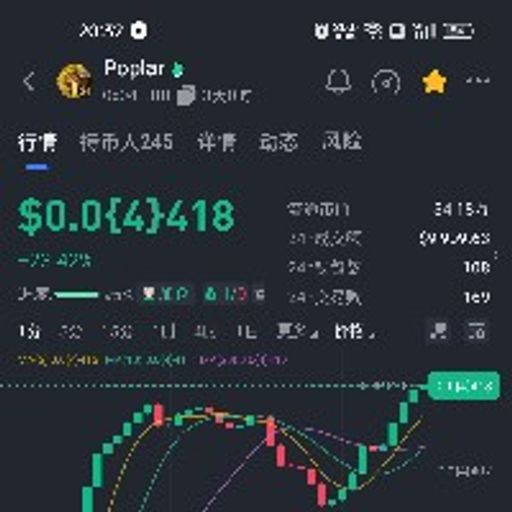
Tokens like HMSTR (currently trading at $0.00 with a -4.19% 24-hour change) and DODO ($0.01, -5.08% 24-hour change) represent speculative bets on decentralized systems. XRP ($1.43, -0.20% 24-hour change) continues its own narrative in the crypto ecosystem. Whether these particular projects achieve the scale of PayPal or Tesla remains uncertain, but the underlying thesis—that decentralized systems will reshape finance—follows Elon’s proven playbook of identifying the impossible and making it inevitable.
The Legacy Question
When we look back on the Musk brothers’ divergent paths, how should we measure impact? By wealth accumulated? By lives transformed? By systems revolutionized? By problems solved?
Elon Musk has created trillions in shareholder value and sparked a fundamental reimagining of what’s technologically possible. Kimbal Musk has quietly built a movement that touches students, communities, and food systems that would otherwise remain broken. Both are, in their own ways, billionaire visionaries. Both are, in their own ways, changing the world.
The real legacy of the Elon Musk brother story isn’t about choosing between them. It’s understanding that innovation takes many forms, and that true progress might require both the dreamers shooting for Mars and the builders nurturing Earth below.