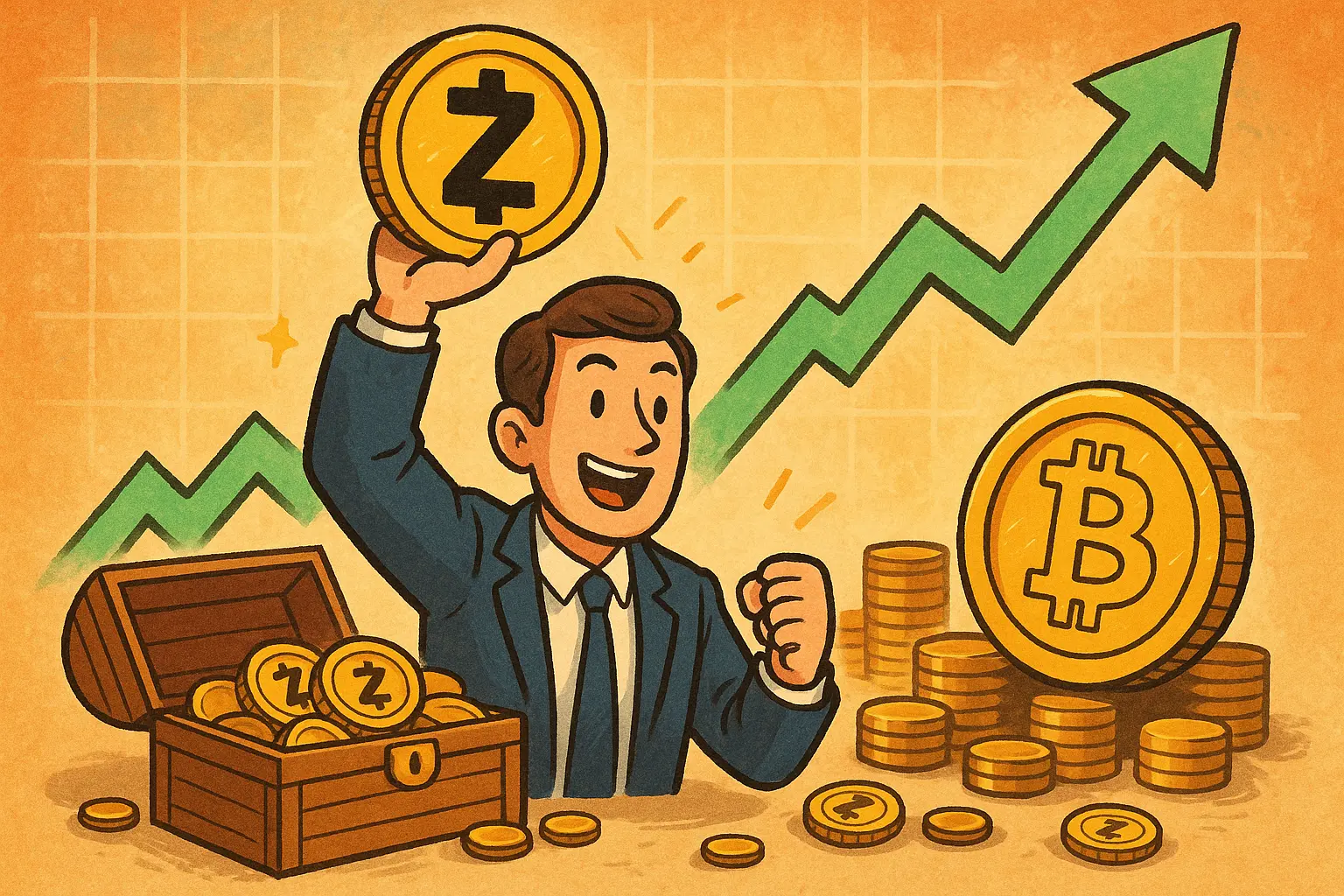
Nasdaq-listed company Cypherpunk Technologies has invested USD 29 million to acquire 56,418 ZEC, bringing its total holdings to 290,063 coins, approximately 1.76% of the circulating supply. The goal is to hold a 5% stake, marking a shift in corporate treasury strategy from transparent blockchain assets to privacy-oriented asset allocation. Over the past 12 months, Zcash has surged over 800%, while Bitcoin has declined 5% in the same period.
From Pharmaceutical Company to Privacy Coin Whale: A Glamorous Transformation
(Source: Google Finance)
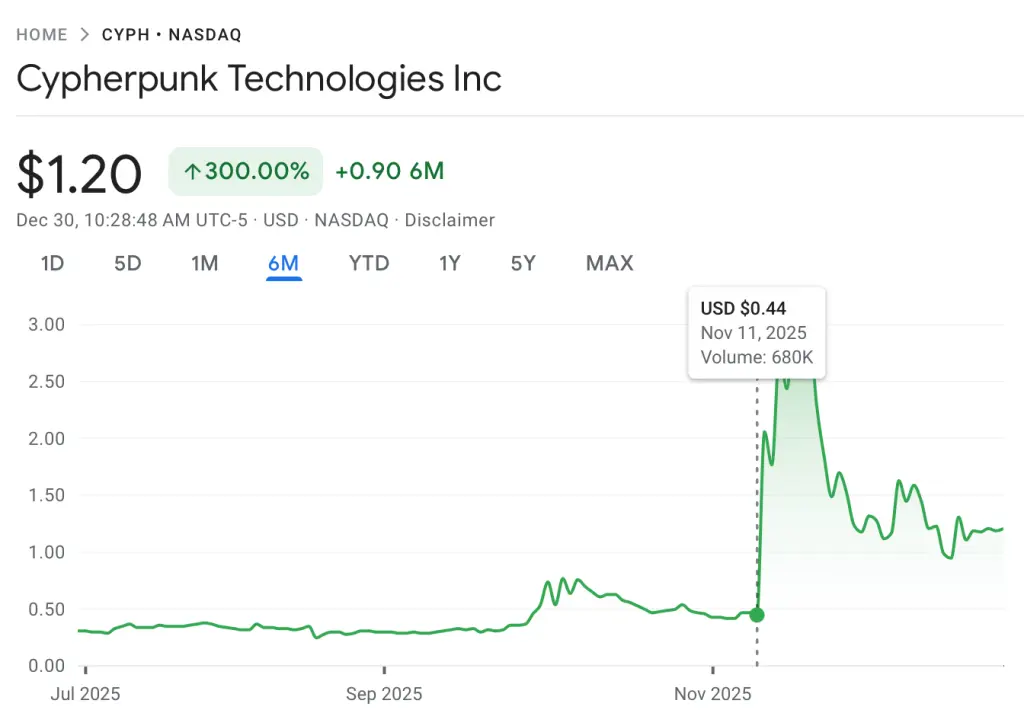
The story of Cypherpunk Technologies itself is full of drama. The company was formerly known as Leap Therapeutics, a biotech firm focused on tumor treatments. However, after a major transformation in November, the company rebranded as Cypherpunk Technologies, completely changing its business model and repositioning itself as a digital asset company focused on Zcash.
This cross-industry radical transformation is extremely rare in the public markets, but the market has validated this decision through its feet. According to Google Finance data, since the brand overhaul, the company’s stock price has risen nearly 170%, from about $0.44 to approximately $1.18. This increase far exceeds the growth rate typical of traditional pharmaceutical companies, indicating strong investor recognition of the privacy coin narrative.
Chief Investment Officer Will McEvoy has developed strategies around the increasing importance of financial privacy, while also planning to expand into other privacy-centric technology fields. This strategic vision is not only a response to the current regulatory environment but also a forward-looking layout for future financial privacy needs. Cypherpunk is working towards a long-term goal of holding a 5% stake in the Zcash network, which, if achieved, would make it the largest single holder after miners and the founding team.
Zcash Outperforms Mainstream Coins This Year
Zcash has performed the strongest in the cryptocurrency market this year. According to CoinGecko data, the token has increased over 800% in the past 12 months, with a current trading price of around $530. In comparison, Bitcoin has fallen about 5% over the same period, while ZEC has surged nearly 27% in just the past 7 days. This performance disparity highlights a market reassessment of privacy-oriented assets.
However, it is worth noting that Zcash’s daily trading volume has halved in the past 24 hours, down to about $499 million, indicating a slowdown in trading activity following its recent explosion. This volume contraction may suggest short-term profit-taking pressure or market anticipation of the next catalyst.
Even after the recent price surge, Zcash remains over 80% below its all-time high of $3,191.93. From this perspective, if Zcash truly becomes a treasury asset and gains institutional recognition similar to Bitcoin, its upside potential could be several times higher. Former BitMEX CEO Arthur Hayes tweeted that ZEC might be heading toward $1,000, noting that potential liquidity shifts could favor privacy-centric assets.
However, the market is not unanimously bullish. Analyst Eric Van Tassel warned that Zcash’s price could fall back to around $400, and macro investor Raoul Pal recently stated that Zcash’s rise appears more like capital rotation rather than a confirmed long-term trend. These differing opinions reflect market uncertainty about the prospects of privacy coins as corporate treasury assets.
Fundamental Differences Between Privacy Hedging and Transparent Reserves
Zcash is a fork of Bitcoin, launched in 2016, sharing many structural features such as a cap of 21 million tokens and a proof-of-work blockchain. The key difference lies in privacy: Zcash employs zero-knowledge proofs (called zk-SNARKs), allowing users to hide transaction details (such as sender, receiver, and amount) while still enabling optional transparency and auditability through view keys.
Core Differences Between Zcash and Bitcoin as Treasury Assets
Transparency Orientation: Bitcoin transactions are fully transparent and traceable; Zcash offers optional privacy protection.
Corporate Adoption Logic: Bitcoin is viewed as a store of value and inflation hedge; Zcash is seen as a privacy-focused hedging tool.
Regulatory Environment: Bitcoin has been approved for US spot ETFs; Zcash still faces regulatory uncertainty regarding privacy coins.
These features influence how people discuss ZEC as a treasury asset. Bitcoin’s appeal to corporations lies in its verifiable scarcity, sufficient liquidity, and increasingly clear regulatory outlook, further reinforced earlier this year by the approval of a US spot Bitcoin ETF. Companies holding Bitcoin often see it as a long-term store of value or macro hedge, with potential returns tied to price appreciation rather than operational revenue.
In contrast, companies adopting Zcash typically describe it as a privacy-centric hedging tool. Cypherpunk and a few other companies, including Reliance Global Group, hold ZEC citing the need to protect sensitive financial activities. Like Bitcoin, Zcash does not generate cash flow; any “income” from the treasury would come from unrealized or realized gains due to price increases.
Can MicroStrategy’s Model Be Replicated in Privacy Coins?
MicroStrategy’s bet on reserves of 671,000 BTC has popularized transparent blockchain reserves, while Cypherpunk’s accumulation of 290,000 ZEC indicates that companies are now hedging against the risks of financial regulation itself. The core logic of this strategic shift is: in an increasingly regulated environment, companies need tools to protect financial privacy.
However, the regulatory challenges facing privacy coins are much greater than those for Bitcoin. Many countries have classified privacy coins as high-risk, and some exchanges have delisted privacy coin trading pairs. Whether Cypherpunk’s aggressive stance is a bet on a regulatory shift toward greater respect for privacy rights, or merely speculative gambling, remains to be seen.
Market reactions show that Cypherpunk’s stock surged 170%, indicating some investors agree with this thesis. But unlike MicroStrategy, which has become a proxy stock for Bitcoin, whether Cypherpunk’s model can sustain long-term depends on whether Zcash can truly become a mainstream choice for corporate treasuries.
Disclaimer: The information on this page may come from third parties and does not represent the views or opinions of Gate. The content displayed on this page is for reference only and does not constitute any financial, investment, or legal advice. Gate does not guarantee the accuracy or completeness of the information and shall not be liable for any losses arising from the use of this information. Virtual asset investments carry high risks and are subject to significant price volatility. You may lose all of your invested principal. Please fully understand the relevant risks and make prudent decisions based on your own financial situation and risk tolerance. For details, please refer to
Disclaimer.
Related Articles
ETH 15-minute decline of 0.80%: On-chain large fund flows and DEX selling pressure resonate to trigger a downtrend
2026-03-11 15:00 to 2026-03-11 15:15 (UTC), ETH price briefly and rapidly declined within the range of 2042.35 to 2065.57 USDT, with a K-line return of -0.80% and an amplitude of 1.13%. Market volatility intensified during this period, with significantly increased attention, and short-term market pressure triggered market alertness.
The main driving force behind this anomaly is large-scale on-chain fund flows and sell pressure concentrated on decentralized exchanges (DEX). Monitoring data shows multiple large ETH transfers to trading platforms, suspected to involve institutions or whales.
GateNews10m ago
XRP Price Hints at Bullish Reversal as Negative Funding Rates Build Pressure on Short Sellers
XRP shows potential for a bullish reversal as market indicators align, with negative funding rates possibly triggering a short squeeze. Technical patterns and whale accumulation further support an upward move, indicating a significant price change may be imminent.
CryptometerIo37m ago
Shiba Inu (SHIB) regains momentum as buying pressure reaches the highest level of the month
The price of Shiba Inu (SHIB) is fluctuating around the 0.0000056 USD mark at the time of writing on Wednesday, after rising nearly 7% over the past two days. This recovery trend appears as on-chain indicators and derivatives market data begin to send positive signals. Trading volume is increasing.
TapChiBitcoin1h ago
Goldman Sachs: Hedge fund positioning may create conditions for a rebound in US stocks, with short positions rising to the highest since September 2022
Goldman Sachs report indicates that the structure of hedge fund positions in the US stock market is creating conditions for a market rebound. Speculators maintain long positions while shorting ETFs and futures. Short positions have reached their highest level since September 2022, reflecting market responses to uncertainty. If positive news emerges, it could trigger a rapid market rally.
GateNews1h ago
ETH 15-minute increase of 0.83%: Whales' capital inflow and DeFi lending demand resonate to drive the price
Between 13:30 and 13:45 (UTC) on March 11, 2026, ETH experienced a short-term fluctuation. The candlestick data shows a return of +0.83%, with a price range of 2046.07 to 2082.31 USDT, and an amplitude of 1.77%. Market activity increased during this period, with trading volume significantly higher than the previous cycle, and volatility exceeding the intraday average, attracting widespread market attention.
The main drivers of this fluctuation were the rapid inflow of large on-chain funds and active institutional accounts. Between 13:32 and 13:43,
GateNews1h ago
BTC 15-minute increase of 0.73%: Large capital inflows and technical breakout drive short-term rally
From 2026-03-11 13:00 to 2026-03-11 13:15 (UTC), the BTC price achieved a +0.73% return within 15 minutes, with a range quote of 69,338.6 to 69,975.0 USDT, and an amplitude of 0.92%. During this period, market activity significantly increased, trading volume surged compared to the previous period, market attention heated up, and short-term bullish sentiment dominated the market.
The main driver of this anomaly was large on-chain capital flows — in the first 10 minutes before the event, multiple large BTC transfers flowed into a major exchange's hot wallet, indicating
GateNews2h ago


