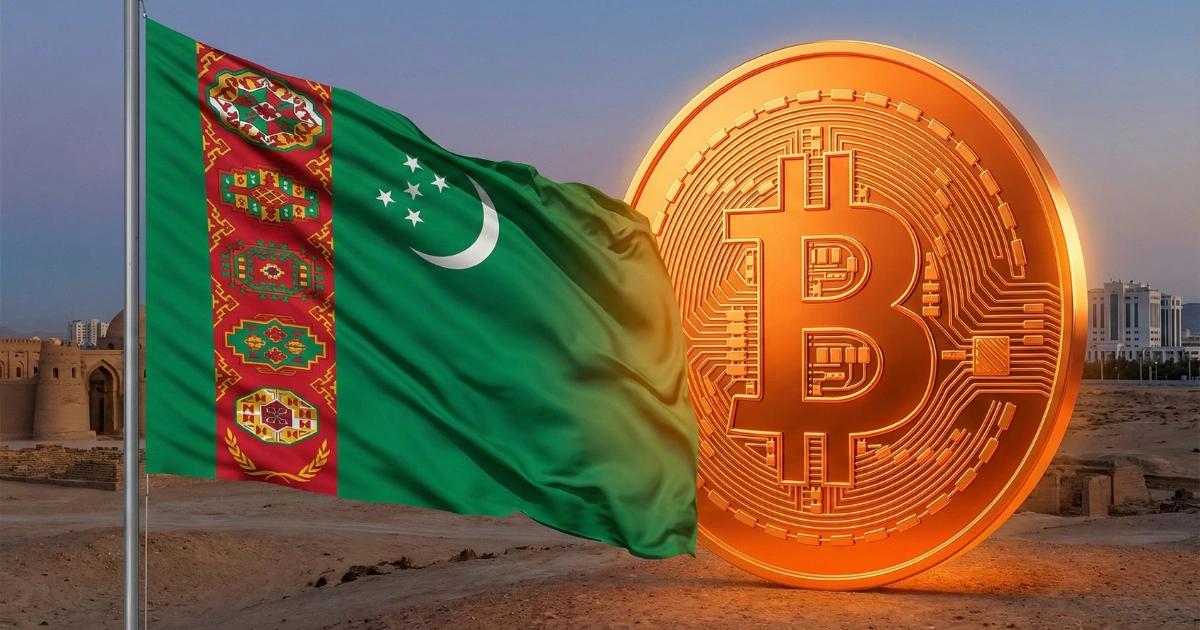
Turkmenistan’s New Year legalization of crypto mining and trading, adopting a central bank licensing system, does not recognize payment status, and shifts policy to attract foreign investment through energy advantages and to control financial risks.
Turkmenistan, the only neutral country in Central Asia, officially legalized cryptocurrency mining and trading activities on New Year’s Day, establishing a licensing system supervised by the central bank. This policy signifies a major shift in Turkmenistan’s economic policy. According to recent reports, the law incorporates virtual assets into civil law, allowing registered and approved enterprises and individuals to participate in cryptocurrency mining and trading, but it still does not recognize cryptocurrencies as a means of payment, legal tender, or securities. Domestic internet and information flows remain under strict government control. Why is Turkmenistan gradually opening up to cryptocurrency mining and trading? Below is an analytical report.
The Relationship Between Turkmenistan’s Energy Resources and Mining Costs
Turkmenistan possesses abundant natural gas resources, with electricity production often exceeding domestic consumption. Cryptocurrency mining is a high-energy-consuming activity; if properly planned, excess energy can be utilized to make mining economically viable. Other energy-rich countries (such as Kazakhstan) have also attracted large numbers of miners seeking low-cost electricity. For Turkmenistan, relaxing policies can reasonably utilize idle energy, converting energy costs into economic gains. For an economy reliant on natural gas exports, this is a feasible diversification strategy.
Opening Up Mining to Attract Foreign Investment
Turkmenistan’s economy heavily depends on natural gas exports, especially to China, making its economic structure relatively single-faceted. In recent years, the global digital asset industry has developed rapidly, with digital assets and mining becoming new fields capable of attracting foreign investment and technological input. Therefore, legalizing and regulating this sector not only responds to global trends but also aims to attract foreign capital and improve technological standards through a systematized industry.
A Closed Country Seeks Greater Economic Participation on the Global Stage
Although Turkmenistan still controls internet and information flows, legalization of mining and trading indicates a certain degree of openness. This is both a response to international digital asset regulations and a possible step by the government to gradually integrate into the global digital financial system while maintaining political control. For example, the introduction of electronic visas is part of this trend, aimed at facilitating the movement of foreign talent and investment.
Turkmenistan’s legalization approach involves strict regulation and does not recognize cryptocurrencies as a means of payment. This reflects the government’s continued effort to control the financial system and monetary sovereignty, avoiding risks to its monetary policy and capital flows. The high volatility and risks associated with cryptocurrencies in other countries may also lead the government to adopt a cautious legal framework rather than full liberalization.
Why Do Closed Countries Believe Opening Mining Can Boost the Economy?
Why is Turkmenistan opening up to mining? The author believes it is based on the following points:
- Energy advantage and cost-driven: Abundant energy and low mining costs enable closed countries to convert resource advantages into economic gains.
- Economic pressure: Relying on a single export economy requires new industries to support growth and attract foreign investment.
- Global competitive economic considerations: Even with political closedness, there is a conscious effort to secure a position in emerging global technological and economic fields.
- Gradual opening under risk control: Legalization does not mean liberalization; a controlled framework can mitigate financial and capital outflow risks.
Turkmenistan’s policy shift reflects a pragmatic strategy to maximize energy advantages and develop new economic spaces while maintaining political and informational control. Incorporating cryptocurrency mining and trading into a regulated framework is not full market liberalization but a controlled attempt to introduce emerging industries with spillover benefits without undermining national sovereignty. This choice highlights how small countries survive under economic pressures and international environment constraints.
- This article is reprinted with permission from: 《Chain News》
- Original title: “What is the underlying meaning of Turkmenistan, the only neutral country in Central Asia, legalizing cryptocurrency mining and trading?”
- Original author: DW
Disclaimer: The information on this page may come from third parties and does not represent the views or opinions of Gate. The content displayed on this page is for reference only and does not constitute any financial, investment, or legal advice. Gate does not guarantee the accuracy or completeness of the information and shall not be liable for any losses arising from the use of this information. Virtual asset investments carry high risks and are subject to significant price volatility. You may lose all of your invested principal. Please fully understand the relevant risks and make prudent decisions based on your own financial situation and risk tolerance. For details, please refer to
Disclaimer.


