


Iran is hit by US and Israel airstrikes! Bitcoin drops sharply, approaching $63,000
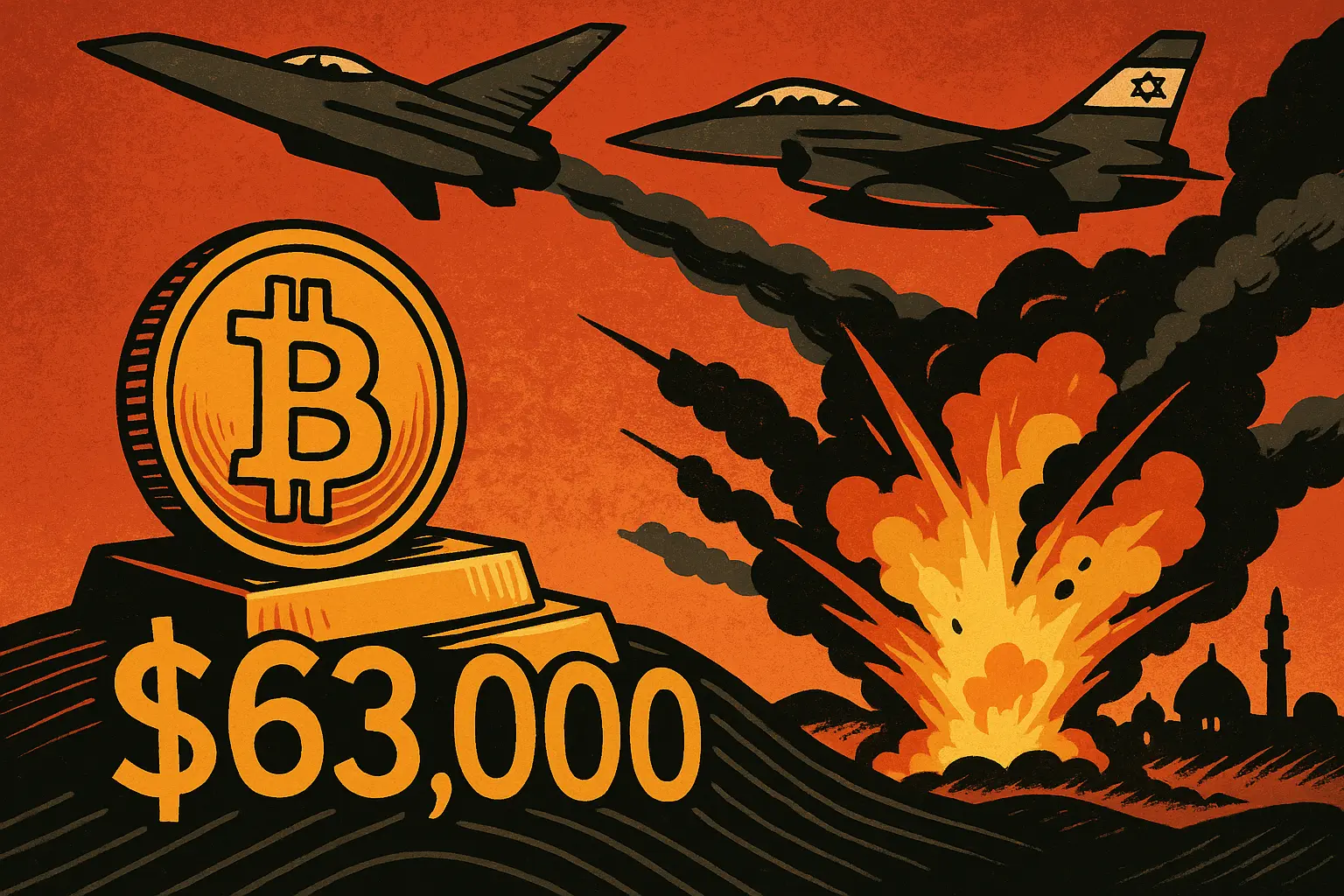
On February 28, after the United States and Israel launched a military attack against Iran, Bitcoin (BTC) plummeted approximately 3% within hours, briefly approaching $63,000, marking its lowest level since February 5. Israel’s Defense Minister announced an immediate nationwide state of emergency, and U.S. officials confirmed U.S. involvement to The Wall Street Journal.
Background of U.S. and Israel Airstrikes on Iran and Regional Risk Assessment
The airstrikes occurred amid clear geopolitical tensions: the U.S. has been amassing military forces in the Middle East for over a month, and diplomatic negotiations between the U.S. and Iran over nuclear plans have stalled. Israel’s Defense Minister Israel Katz declared an immediate nationwide state of emergency, signaling a sharp escalation.
President Trump stated: “Recently, the United States conducted significant military operations in Iran. Iran is trying to rebuild its nuclear program. Iran will never possess nuclear weapons. Iran is developing long-range missiles threatening the U.S. and other countries. Our goal is to eliminate the immediate threat posed by the Iranian regime to protect American citizens. We will destroy Iran’s missiles and level their missile industry. We will ensure Iran does not acquire nuclear weapons. We will completely destroy Iran’s navy. The U.S. has taken all possible measures to minimize risks to our military personnel in the region. Americans may suffer losses, and there may be casualties.”
This strike could trigger a larger regional conflict in one of the world’s most economically sensitive areas. If the situation worsens, energy prices, global supply chains, and financial markets could face broader impacts.
Key Elements of the Event and Market Impact
Perpetrators: U.S. (confirmed by officials to The Wall Street Journal) and Israel
Israel’s Response: Immediate nationwide state of emergency declared by the Defense Minister
Bitcoin Reaction: Dropped about 3% within hours, briefly approaching $63,000, lowest since February 5
Bitcoin’s Unique Role: The only major liquidity asset tradable over the weekend, acting as a “pressure valve” for geopolitical sell-offs
Regional Risk Context: One month of U.S. military buildup, breakdown of U.S.-Iran nuclear talks, increased risk of regional conflict escalation
Bitcoin’s “Pressure Valve” Mechanism: Why Weekend Geopolitical Shocks First Hit Crypto Markets
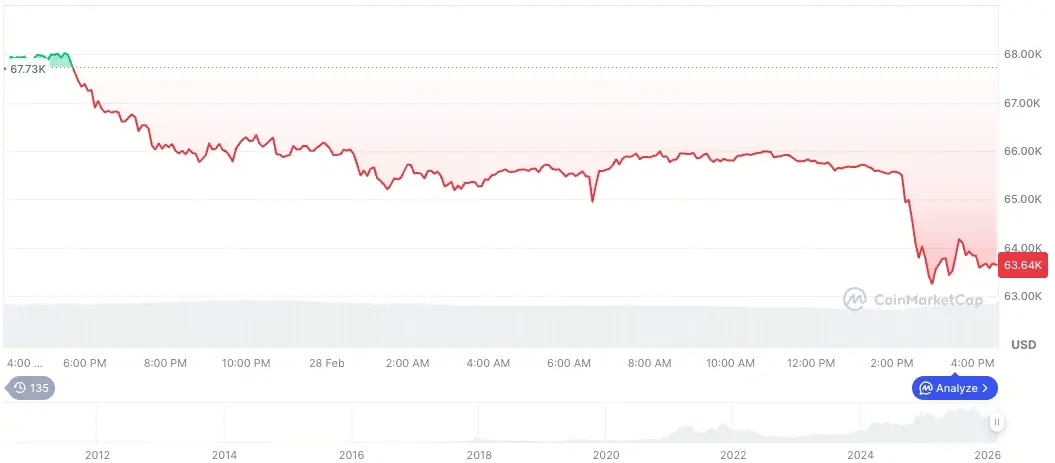
(Source: CMC)
Bitcoin’s decline continued a structural pattern observed in markets: Bitcoin trades 24/7, every day of the week, while stocks, bonds, and commodities markets are closed on weekends. This makes Bitcoin one of the few large liquidity assets that can be immediately liquidated during geopolitical risk surges when traditional markets are shut.
As a result, whenever major geopolitical events erupt over the weekend, Bitcoin often acts as a “pressure valve” for market risk sentiment—absorbing sell-offs that might otherwise spill over into stocks, commodities, and currencies when markets reopen. This drop brought Bitcoin back to levels not seen since the sharp decline on February 5 (when it briefly fell below $60,000), continuing its typical pattern of falling first and rebounding later under macro shocks.
Related Articles
Data: If BTC breaks above $66,985, the total liquidation strength of long positions on mainstream CEXs will reach $1.923 billion.
Data: The total maximum long positions for BTC and ETH have a loss of over $13 million, with no reduction in holdings yet.
The United States and Israel launch "Operation Judea Shield" to bomb Iran! BTC is sold off for $1.8 billion, with over 150,000 traders liquidated.