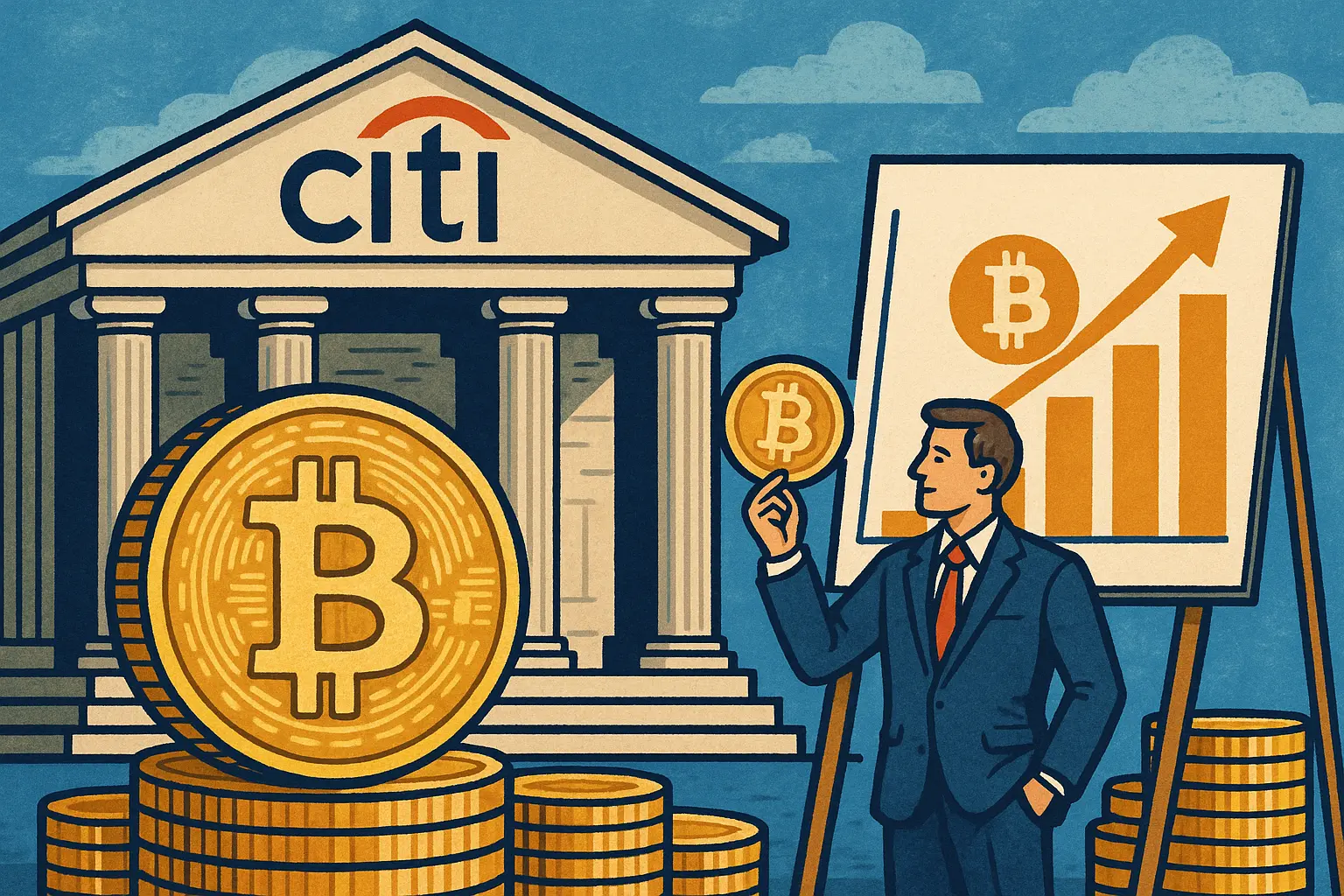
JPMorgan Chase’s Digital Asset Custody Head Nisha Surendran announced that the company plans to officially integrate Bitcoin services for institutional clients by 2026, with the core message being “making Bitcoin a tradable asset for banks.” This global financial giant, managing over $30 trillion in traditional assets, plans to provide Bitcoin with infrastructure on par with stocks and bonds within its existing institutional service framework to meet the growing demand from institutions.
JPMorgan’s Bitcoin Integration Plan: Four Core Services
According to Nisha Surendran, JPMorgan’s Bitcoin integration focuses on the following four key areas:
Institutional Custody: Providing regulated Bitcoin custody services for institutional clients, filling the long-standing gap in compliant safekeeping within traditional banking systems.
Asset Services: Incorporating daily management of Bitcoin (including transaction records, yield distribution, etc.) into existing institutional asset service channels.
Collateral Management: Exploring the use of Bitcoin as collateral, integrating it into the institution’s credit and financing frameworks.
Unified Reporting Standards: Offering institutional-level reports on Bitcoin holdings, enabling them to be displayed and managed alongside traditional stocks and bonds on the same platform.
JPMorgan had hinted as early as the end of 2025 that it was preparing to launch cryptocurrency custody services. This public statement marks that related work has entered the implementation stage.
Market Context and Competitive Landscape of “Banking Bitcoin”
JPMorgan’s move is not an isolated event but a reflection of traditional financial institutions accelerating their entry into the crypto infrastructure sector.
The main obstacle for institutional investors holding Bitcoin has historically been the lack of compliant custody solutions. Clear regulatory custody options, comprehensive risk control mechanisms, and reporting standards compliant with institutional requirements are prerequisites for large funds like sovereign wealth funds, pension funds, and hedge funds to participate. JPMorgan’s statement of “making Bitcoin bankable” essentially aims to fill this gap.
From a competitive perspective, JPMorgan and BNY Mellon have already expanded into digital asset services. JPMorgan’s entry indicates that the top three major systemic banks globally have now clearly positioned themselves in Bitcoin institutional services, with a clear trend of accelerating competition.
Community Reactions and Long-term Institutional Adoption Significance
JPMorgan’s announcement has sparked diverse interpretations within the crypto community. Some see it as a strong signal that “the gateway for institutional influx into Bitcoin has officially opened,” believing that infrastructure development by major banks will remove barriers for large-scale capital deployment. Others point out that Bitcoin’s core value lies in decentralization and self-custody; over-reliance on banking custodians contradicts Bitcoin’s original philosophy and introduces counterparty risks at the institutional level.
In the long-term structural impact, if JPMorgan successfully implements these services, it is expected to attract incremental capital flows from asset management firms, corporate finance departments, and institutional funds. This integration could gradually deepen Bitcoin’s role as a mainstream institutional investment asset, though the timeline will still depend on regulatory developments and the pace of institutional compliance adoption.
Frequently Asked Questions
Q: How does JPMorgan’s Bitcoin custody service differ from existing crypto exchanges’ custody?
JPMorgan offers regulated, institutional-grade custody under strict banking supervision, constrained by Federal Reserve and banking regulations, with fundamental differences in compliance frameworks, account segregation, and client protection mechanisms compared to platform-based custody on crypto exchanges. For institutional investors, bank-level custody solutions meet stricter fiduciary standards and are key prerequisites for large fund participation.
Q: What does “making Bitcoin bankable” specifically mean?
This phrase refers to three dimensions: first, providing a regulated, standardized custody environment; second, integrating Bitcoin risk and reporting management into existing institutional asset management platforms without system switching; third, leveraging mature banking collateral and credit frameworks to explore Bitcoin financing scenarios.
Q: What is the significance of JPMorgan’s move for long-term institutional adoption of Bitcoin?
If major systemic banks generally develop Bitcoin institutional service capabilities, it will significantly reduce operational friction and compliance costs for large capital entries, potentially triggering larger-scale institutional allocations. However, this “financialization” path also means Bitcoin’s circulation in the institutional market will increasingly depend on regulated intermediaries, diverging from Bitcoin’s original peer-to-peer, permissionless design.
Disclaimer: The information on this page may come from third parties and does not represent the views or opinions of Gate. The content displayed on this page is for reference only and does not constitute any financial, investment, or legal advice. Gate does not guarantee the accuracy or completeness of the information and shall not be liable for any losses arising from the use of this information. Virtual asset investments carry high risks and are subject to significant price volatility. You may lose all of your invested principal. Please fully understand the relevant risks and make prudent decisions based on your own financial situation and risk tolerance. For details, please refer to
Disclaimer.
Related Articles
Oil Prices May Surge to $200! Analysts Say Geopolitical Tensions Are Becoming Bitcoin's Biggest Price Driver
As Middle East tensions escalate, researchers point out that Bitcoin's price drivers are shifting from traditional economic indicators toward geopolitical risks. Recently, Bitcoin has demonstrated strong performance among safe-haven assets, showing that investors are reassessing its role, with institutional capital continuing to flow in, reflecting recognition of Bitcoin as a holdable asset.
GateNews2m ago
Matrixport Report: Conditions for Bitcoin's Rebound Are Gradually Taking Shape
Matrixport's report on March 13 indicated that the current sentiment in the cryptocurrency market is weak, trading volumes are low, and most traders are focusing on other assets. Bitcoin has declined for five consecutive months, the market capitalization of altcoins has decreased, conditions for a rebound are gradually emerging, and liquidity is improving.
GateNews4m ago
Bitcoin Tax Policy Suddenly Sparks Controversy: Brian Armstrong and Jack Dorsey Embroiled in Congressional Lobbying Scandal
The U.S. Congress has shown divisions in discussions regarding cryptocurrency tax policy, with the small transaction tax exemption proposal gradually applying only to stablecoins, triggering dissatisfaction among Bitcoin supporters. Industry leaders have clashed publicly over this, with the core of the debate centered on small transaction exemptions. Currently, cryptocurrencies are classified as property, and transactions require capital gains tax payments, resulting in high compliance costs.
GateNews12m ago
Analyst: If Bitcoin returns to $80,000, Strategy stock price could surge by 70%
Analysts believe that Bitcoin-related company MicroStrategy (MSTR), which has experienced a pullback, may be forming a bottom, and if Bitcoin prices resume their upward trend, the stock could rebound to $200. MSTR is currently trading at approximately $134, with nearly 50% potential upside. Bitcoin's price movements and changes in regulatory policies will directly affect the company's stock performance.
GateNews19m ago
Wintermute Suggests Bitcoin Miners Convert BTC Holdings into Yield-Bearing Assets to Counter Profitability Pressures
Wintermute notes that Bitcoin miners face profitability challenges due to reduced income after the halving and high energy costs, recommending that miners proactively manage their BTC holdings by adopting strategies such as using derivatives and lending protocols to enhance returns in response to market pressure.
GateNews31m ago
Miner profits under pressure! Wintermute states that Bitcoin mining companies must shift to AI or activate BTC asset yields.
Wintermute reports that Bitcoin miners face declining revenue pressure, with traditional mining profitability difficult to increase. Mining enterprises are considering transitioning to AI computing power business to maintain competitiveness, but this requires substantial capital investment. The report believes this profitability pressure differs from previous cycles and resembles more of an industry structural adjustment. The industry is expected to become more concentrated and efficient.
GateNews33m ago


