On February 28, the U.S.-Israel coalition launched the “Epic Firestorm” operation against Iran. Starting Monday, stock markets in South Korea, Taiwan, and Japan exploded sequentially. South Korea’s KOSPI plunged nearly 20% over two days, the largest cumulative decline since 2008; TSMC’s market value evaporated by nearly 2 trillion yuan in a single day, and PTT’s stock board began to wail. Japan’s Nikkei dropped over 4,000 points in three consecutive days, with the NISA generation witnessing what panic selling looks like.
(Background recap: Tokens are dead, long live stocks? DWF report: Over 80% of new tokens will break out in 2025, capital shifting to IPOs and M&As)
(Additional context: Bitcoin drops below $64,000, Ethereum holds at $1,800! US major indices and IBM plunge 13%, crypto markets dragged down again)
Table of Contents
Toggle
- South Korea: first 7%, then 12%, then brokerages suspend margin trading
- Taiwan: PTT Frog community in pain
- Japan: NISA users “attend class” for the first time
- The war is not over yet
After the February 28 holiday, many investors kept opening their brokerage apps, with numbers on the screen keeping them awake at night. After Monday’s open, account balances shrank each day.
South Korea: first 7%, then 12%, then brokerages suspend margin trading
On Monday (March 2), the Seoul stock market opened with a 3.44% decline. No one paid much attention, thinking it would rebound—a belief built by many Korean retail investors during the AI-driven rally. Over the past six months, the KOSPI had already risen 48% from its lows, with Samsung and SK Hynix leading the charge past 6,000 points. Korean media called it “the world’s most aggressive bull market.”
The problem was, much of this rally was fueled by margin loans. According to data from the Korea Financial Investment Association, by early March, the market margin balance had reached 32.67 trillion won (about $223 billion), hitting a record high. Many investors used only 30-40% margin, heavily leveraged into semiconductor stocks. During the rise, leverage was a sword of勇者; during the fall, it was a fool’s sword.
On Tuesday, the KOSPI fell another 7.24%. Desperate posts appeared on Korean online forums, with some calculating how much further they could be forced to sell, others just posting screenshots showing account losses of 47%.
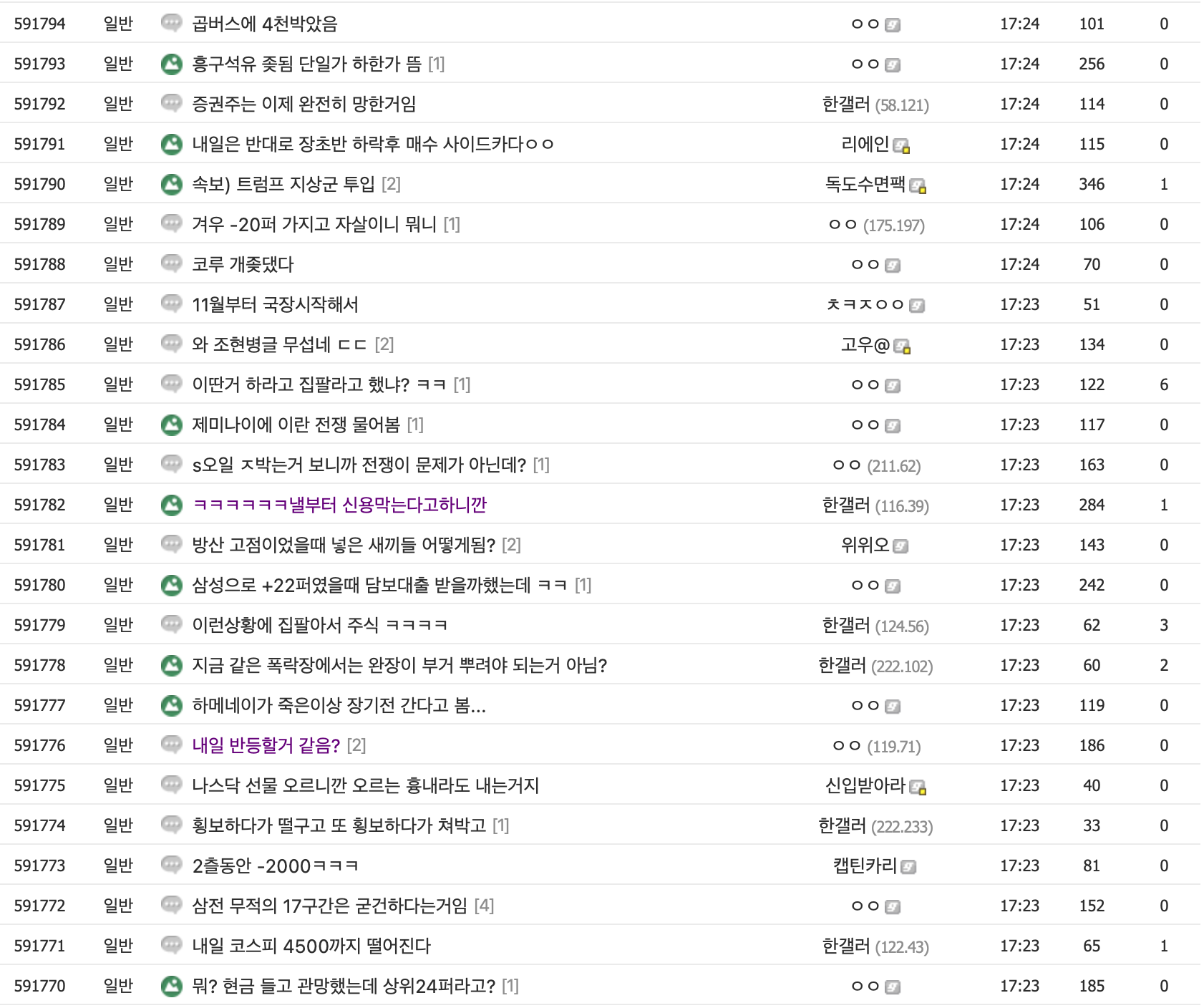
On Wednesday, March 4, the real crash happened.
Shortly after opening, the KOSPI dropped over 8%. The Korea Exchange immediately triggered a circuit breaker, halting trading on both the KOSPI and KOSDAQ for 20 minutes. This was the first simultaneous circuit breaker since August 5, 2024.
After a brief pause, selling pressure continued. Intraday, the decline approached 12%, with a two-day total nearly 20%, marking the worst since the 2008 financial crisis. The Korean won also fell below 1,500 to the dollar, reaching a historic low not seen since 2009.
More brutal details: Some Korean brokerages announced suspension of margin services during trading hours. Retail investors who could “borrow to buy and top up if it falls” suddenly found their options to meet margin calls cut off.
NH Investment & Securities traders told media, “We see retail investors’ buying power on dips today is much weaker than yesterday, because fear of margin calls is dominating the market.”
That afternoon, the servers of the Korean Dc-inside stock community forum became very slow at peak times.
Taiwan: PTT Frog community in pain
Taiwan’s market started with the TAIEX futures. During the weekend holiday, offshore markets once plunged 700 points. PTT stock board users didn’t wait for Monday’s open—they started predicting the outcome on Sunday afternoon, with comments like “Dare not look on Monday,” “Frog funds are all trapped, just hoping for a small dip.”
On Monday (March 2), Taiwan stocks declined relatively modestly, giving some relief that the fall might be absorbed.
But by Wednesday (March 4), everyone realized the previous day was just a buffer.
That day, the weighted index dropped over 1,373 points intraday, the fourth-largest intraday decline in Taiwan stock history. TSMC (2330) fell more than 70 NT dollars, breaking below 1,900, dragging the index down over 600 points. In one day, market cap evaporated nearly 2 trillion NT dollars, leaving 27.5 trillion NT dollars.
For many retail investors holding TSMC, their retirement plans were “updated in real time.” Before this, margin debt had risen to 346.6 billion NT dollars, a 17.5-year high, meaning many retail investors borrowed at high points to add positions, now facing forced liquidation.
On PTT’s stock board, someone posted a screenshot asking, “Can it still be saved?” someone replied with just “Run.” Others wrote, “My dad’s retirement fund is all in, he doesn’t know what happened today, I dare not call him.”
Such posts usually peak two hours after market close. Who knows what tomorrow will bring.
Japan: NISA users “attend class” for the first time
Japan’s market sentiment is somewhat different.
Over the past two years, the Japanese government has heavily promoted NISA (Tax-Free Small Investment Account) and iDeCo (Personal Pension Plan), attracting many young people and retirement preppers who had never invested before. Their logic is simple: small amounts, long-term holding, tax-free growth, preparing for old age.
The problem is, most entered the market at high levels but have never experienced a crash.
Since March 2, the Nikkei 225 has fallen for three days straight, with a drop of over 2,033 points (3.06%) on Wednesday alone, totaling over 4,000 points in three days. Almost all sectors declined simultaneously: Toyota down 6.1%, Sony down 6.3%, Mitsubishi Heavy Industries down 5.3%. The semiconductor sector’s decline was even more brutal. The Nikkei VIX (fear index) soared to its highest level since August 2024, shocking many Japanese.
On social platform X, many NISA investors posted about losses. Some said, “I thought NISA was safe.” others said, “The government told us to invest, but didn’t say it would crash like this.” Still others posted screenshots of their account losses, asking, “Should I stop-loss or keep waiting?”
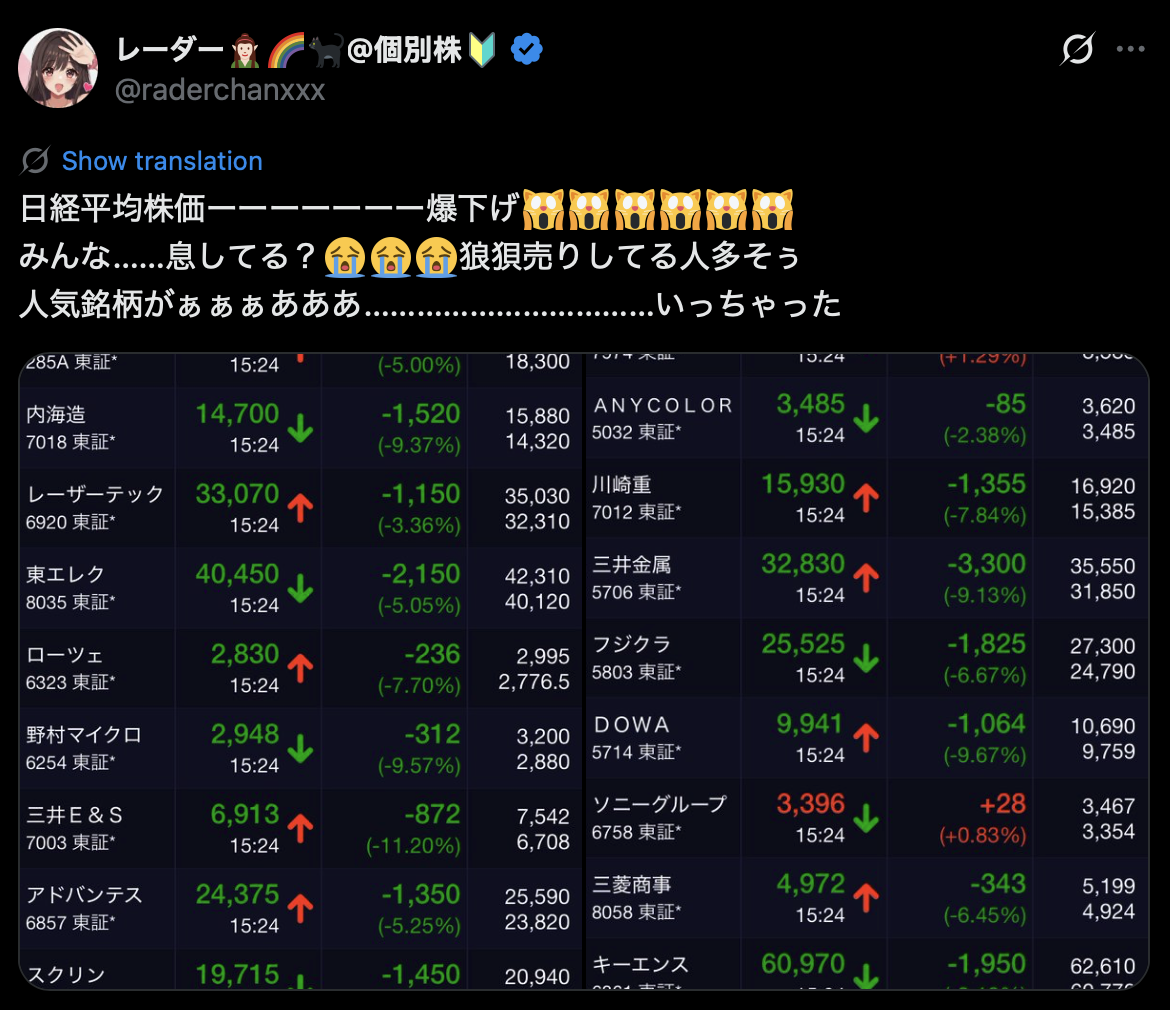
New retail investors in Japan just learned what “buying on dips” means. Now they need to learn a harder question: where is the bottom?
The war is not over yet
As of the March 4 close, the Asian markets entered a kind of “post-injury silence.” The Korean central bank held an emergency press conference, and the Financial Services Commission chair called for emergency response plans.
Taiwan stocks closed lower amid a tug-of-war between foreign selling and retail buying with limited strength.
Japanese analysts generally say that unless oil prices stabilize, the market will struggle to stop falling in the short term.
The index figures will eventually recover. But the time spent staring at screens this week will be remembered by many retail investors who entered after the pandemic for a long time.


